
-1.svg)
Teen stress is a growing concern, shaped by academic expectations, peer influence, family dynamics, and the digital pressures of social media. While some level of stress is a regular part of development, excessive and unmanaged stress negatively impacts both physical health and emotional resilience.
Warning signs of teen stress appear as headaches, irritability, sleep problems, withdrawal, or declining academic performance. Effective management strategies include fostering open communication, teaching coping techniques, encouraging balanced routines, and seeking professional support when needed. Psychologists play a critical role in helping teens build resilience, develop problem-solving skills, and regulate emotions.
The importance of early recognition cannot be overstated, as chronic stress is linked to depression, anxiety, and suicidal ideation. In North Carolina, nearly two-thirds of adolescents with depression do not receive treatment, according to the National Institute of Mental Health, 2023, underscoring the urgency for comprehensive stress management approaches that support both teens and their families.
What Are The Top 10 Teen Stressors in Teens?
The top 10 teen stressors are academic demands, social media pressures, peer influence, family conflicts, body image insecurities, activity overcommitment, relationship challenges, future anxieties, bullying experiences, and health concerns. Teenagers today navigate numerous pressures that significantly impact their mental well-being and overall development.
According to Nagabharana, T. K.’s 2021 study, ‘What stresses adolescents? A qualitative research on perceptions of stress, stressors, and coping mechanisms among urban adolescents in India., Family conflicts and academic pressures constitute the primary stressors in their daily lives.
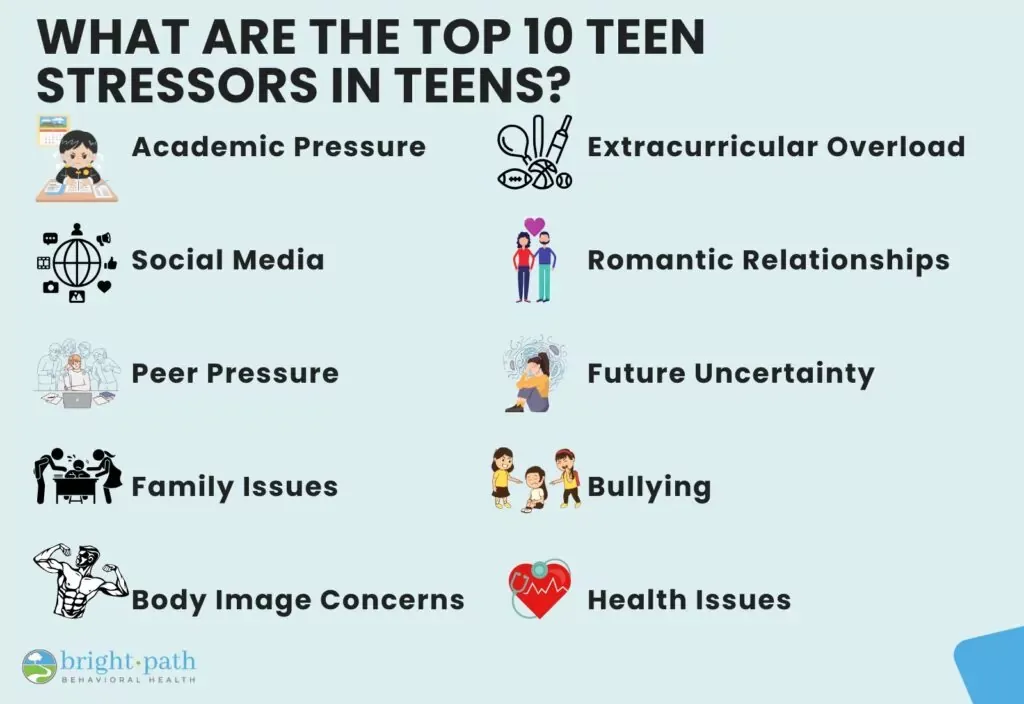
Here are the top 10 teen stressors in detail:
- Academic Pressure
Teens juggle heavy workloads of homework, exams, and extracurricular commitments while preparing for college or future careers. The pressure to maintain high grades and meet expectations from parents, teachers, and themselves creates ongoing stress that leads to anxiety, sleep problems, and burnout.
2. Social Media
Online platforms expose teens to constant comparisons with peers and influencers who present idealized versions of their lives. This exposure fosters unrealistic standards of success and beauty while also increasing the risk of cyberbullying, trolling, and social exclusion. The need for likes, followers, and validation adds additional stress to their daily lives.
3. Peer Pressure
The desire to fit in with friends or avoid rejection makes teens vulnerable to peer influence. This leads to risky behaviors such as experimenting with substances, engaging in unsafe relationships, or compromising personal values. The tension between individuality and belonging creates significant emotional strain.
4. Family Issues
Home environments play a critical role in teen mental health. Divorce, ongoing conflict between parents, financial struggles, neglect, or lack of emotional support at home make teens feel insecure and overwhelmed. These stressors reduce their sense of stability and intensify feelings of anxiety or sadness.
5. Body Image Concerns
Adolescents undergo rapid physical changes, and many struggle to accept their appearance. Societal beauty standards and media portrayals intensify insecurities, leading to low self-esteem, unhealthy dieting, or even eating disorders. The pressure to look a certain way dominates their self-perception and creates chronic stress.
6. Extracurricular Overload
While sports, clubs, and hobbies help teens grow, overscheduling leaves them exhausted and without adequate downtime. Trying to excel in multiple areas alongside academic demands results in fatigue, reduced enjoyment, and mental burnout. The lack of balance between rest and productivity heightens stress.
7. Romantic Relationships
The ups and downs of first relationships, breakups, and the emotional complexities of dating bring new challenges for teens. Navigating love, intimacy, and rejection feels overwhelming and contributes to feelings of insecurity, distraction from academics, and emotional stress.
8. Future Uncertainty
Concerns about getting into the right college, choosing a career path, and preparing for adulthood weigh heavily on teens. The unpredictability of the future and the fear of failure trigger ongoing anxiety, making it difficult for teens to focus on the present.
9. Bullying
Bullying, whether in person or online, remains a significant source of stress for adolescents. Victims experience lowered self-esteem, social withdrawal, academic struggles, and mental health challenges such as depression or anxiety. The anonymity of cyberbullying makes it even harder to escape harassment.
10. Health Issues
Chronic medical conditions, poor nutrition, lack of physical activity, and sleep deprivation directly affect teens’ ability to manage stress. These health issues reduce energy levels, weaken emotional resilience, and increase vulnerability to stress-related symptoms such as fatigue, irritability, and difficulty concentrating.
How Do I Tell The Exact Stressors Affecting My Child?
You can identify the exact stressors affecting your child by creating a safe and open environment that encourages honest communication. Pay close attention to both verbal and non-verbal cues, as these reveal hidden worries.
Use open-ended questions to invite detailed responses, and observe changes in behavior, mood, or routines that may signal distress. Notice patterns or specific situations that trigger stress reactions, such as schoolwork, friendships, or family dynamics.
It is also helpful to consult teachers, counselors, or other trusted individuals who interact with your child regularly, as they provide valuable insights. Most importantly, keep communication ongoing and reassess stressors over time, since challenges and pressures change as your child grows.
What Are The Signs of Stress in Teens?
The signs of stress in teens include physical manifestations like headaches and sleep disturbances, emotional changes such as irritability and anxiety, withdrawal from social activities, difficulty concentrating, strained relationships, and frequent emotional outbursts.
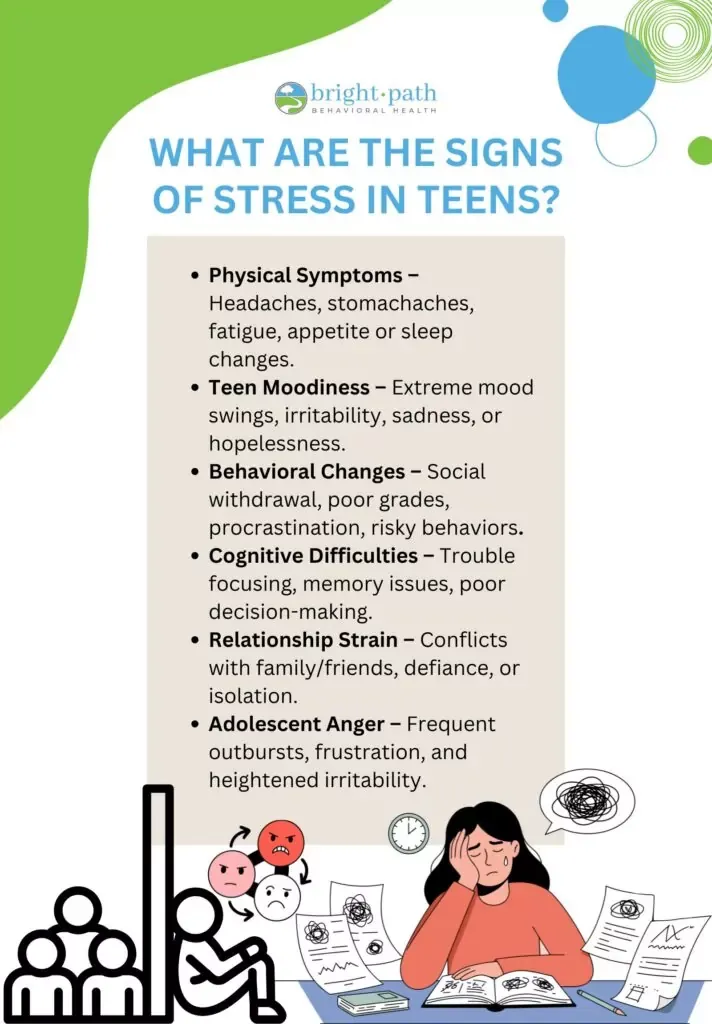
Here are the common signs of stress in teens:
Physical Symptoms
Teens experiencing stress exhibit physical symptoms, including frequent headaches, stomachaches, and unexplained discomfort. Stress causes fatigue, appetite changes, weight fluctuations, and sleep disturbances, such as insomnia or excessive sleeping. Stress also weakens the immune system, increasing susceptibility to illnesses.
Teen Moodiness
Stress significantly impacts a teen’s emotional well-being, with moodiness being one of the most noticeable signs. Teens under pressure often exhibit extreme mood swings, shifting from irritability to withdrawal within short periods. This teen moodiness manifests as overreactions to minor setbacks and hypersensitivity to criticism.
The fluctuating moods coincide with increased anxiety, restlessness, and overwhelming feelings. When stress persists, their moodiness intensifies, leading to deeper emotional issues like prolonged sadness, frequent crying, and a pervasive sense of hopelessness.
Behavioral Changes
Stress leads to noticeable changes in a teen’s behavior. Teens withdraw from family and friends, isolating themselves socially. They avoid previously enjoyed activities or hobbies. Stress affects academic performance, causing declines in grades and a lack of motivation to complete assignments. Procrastination increases, and teens engage in risky behaviors as coping mechanisms or distractions.
Cognitive Difficulties
Teens under stress experience cognitive challenges. Stress impairs concentration, hinders memory recall, and complicates decision-making and problem-solving. Stress reduces the ability to process information and results in decreased academic performance.
Changes in Relationships
Stress strains relationships with family, friends, and peers. Teens exhibit increased conflict with family members and display disobedient or defiant behavior. Stress complicates conflict management, leading to more argumentative or distant interactions with friends. These changes result in fluctuations in social interactions and weaken support systems.
Adolescent Anger
Adolescent anger manifests through emotional outbursts and breakdowns more frequently than usual. Stressed teenagers express adolescent anger with increased intensity, leading to heightened frustration and irritability. These outbursts occur in response to seemingly minor triggers due to heightened emotional sensitivity.
What Are Effective Stress Management Strategies For Helping Your Child Or Teenager?
The effective stress management strategies for helping your child or teenager include fostering open communication, teaching relaxation techniques, promoting balanced lifestyles, and building positive relationships. Establishing healthy routines, developing problem-solving abilities, and managing technology use are also crucial for reducing anxiety in young people.
Here are some common effective ways to manage strategies for helping children or teenagers:
Foster Open Communication
Create a safe, non-judgmental space for your child or teen to express their feelings and concerns. Actively listen without dismissing their experiences, which helps them feel validated and understood.
Teach Healthy Coping Mechanisms & Relaxation Techniques
Encourage activities that help manage stress in positive ways. This includes physical exercise, engaging in hobbies, journaling, or creative outlets like art and music. Introduce relaxation methods such as deep breathing, guided imagery, progressive muscle relaxation, and mindfulness or meditation practices.
Promote a Balanced Lifestyle
Help your child or teen maintain a healthy routine by emphasizing the importance of regular sleep, a nutritious diet, and consistent physical activity. A balanced lifestyle also means setting aside time for relaxation, socializing, and interests beyond school or work.
Teach Time Management Skills
Work together to create a schedule or to-do list that prioritizes tasks and breaks larger projects into manageable steps. Encourage taking regular breaks and offer strategies to avoid procrastination, reducing feelings of overwhelm.
Support Healthy Relationships
Encourage your child to build and nurture positive connections with family, friends, and peers. Healthy relationships provide a valuable support network that helps buffer against stress.
Encourage Problem-Solving
Teach your child how to approach stressors methodically by breaking problems down into smaller parts, brainstorming possible solutions, and evaluating the pros and cons. This helps build resilience and self-efficacy when facing challenges.
Set Realistic Expectations
Guide your child in setting achievable goals and focusing on progress rather than perfection. Celebrate small achievements and help them maintain a balanced perspective between academic or extracurricular pursuits and other life aspects.
Limit Excessive Technology Use
Encourage regular breaks from screens and social media. Reducing digital exposure helps lessen negative comparisons and cyberbullying pressures, supporting better mental and emotional health.
How a Psychologist Helps Teens With Stress?
A psychologist helps teens with stress by providing professional assessment and intervention. They help teens by assessing stress levels, teaching effective coping strategies, and introducing relaxation and stress reduction techniques.
Psychologists guide teens to challenge negative thought patterns, provide emotional support and validation, and assist with time management skills. They also develop teens’ problem-solving abilities, build resilience and self-esteem, and collaborate with parents and schools to create supportive environments.
Through personalized guidance and evidence-based approaches, psychologists empower teens to manage stress effectively and improve their overall mental well-being.
What Are the Four A’s of Stress Management?
The “Four A’s” of stress management are Avoid, Alter, Adapt, and Accept, which provide strategies for identifying unnecessary stressors, modifying challenging situations, adjusting personal responses, and acknowledging unchangeable circumstances.
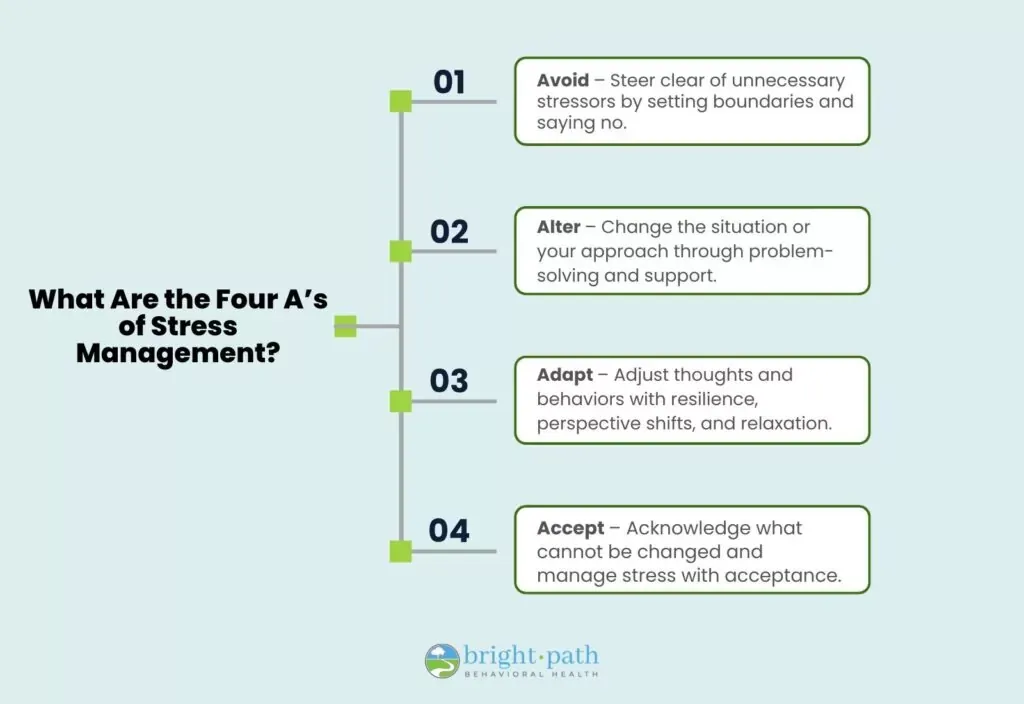
Here are the four A’s of stress management below:
- Avoid: This involves identifying and avoiding unnecessary stressors whenever possible. It includes setting boundaries, saying no to additional commitments, or removing oneself from stressful situations.
- Alter: The alter approach focuses on making changes to the stressor itself or the way one interacts with it. This could involve problem-solving, finding alternative solutions, or seeking support to modify the situation for better stress management.
- Adapt: The adapt strategy involves adjusting one’s thoughts, attitudes, or behaviors to better cope with stress. This includes practicing relaxation techniques, changing perspective, developing resilience, or adopting healthier lifestyle habits.
- Accept: Acceptance involves acknowledging and accepting the things that cannot be changed or controlled. It means recognizing that specific stressors are beyond one’s control and developing a more accepting and adaptive mindset to manage the associated stress.
Can Stress in Teens Lead to Suicide?
Yes, stress in teens leads to suicide in severe cases. Overwhelming and unmanaged teen stress contributes to suicidal thoughts. Adolescence involves significant physical, emotional, and social changes that create intense pressure. Sources of stress include academic expectations, peer relationships, family conflicts, and underlying mental health conditions such as depression and anxiety. Some teens consider suicide as an escape from this accumulated stress. Recognizing warning signs and providing appropriate support proves crucial for prevention.
How To Prevent Teen Suicide Due To Stress?
Preventing teen suicide from stress requires creating open communication channels, recognizing warning signs, and seeking professional help immediately when needed. Practical strategies for Preventing Teen Suicide involve teaching healthy coping mechanisms, promoting strong support networks, and limiting access to means of self-harm. Parents should foster environments where teens feel safe discussing their feelings, while schools implement mental health education and screening programs. Regular physical activity, adequate sleep, and mindfulness practices help manage stress levels. Remember that any talk of suicide should be taken seriously and addressed promptly with professional intervention.
Can Parenting Support Groups Help Identify Early Signs Of Teen Stress?
Yes, parenting support groups effectively identify early signs of teen stress through shared experiences and expert guidance. Parents who participate in parenting support groups gain valuable knowledge about behavioral changes, withdrawal, and physical symptoms indicating teen distress.
These communities provide practical tools for recognizing subtle warning signs missed in daily interactions. Group discussions highlight everyday stress triggers like academic pressure, social difficulties, and family dynamics. The collective wisdom from other parents proves invaluable for early intervention before problems escalate to severe mental health concerns.
How To Find A Teen Mental Health Treatment Centre in North Carolina?
To find a teen mental health treatment center in North Carolina, search specialized facilities like Bright Path Behavioral Health that offer comprehensive outpatient services, individualized treatment plans, and after-school programs for adolescents.
Quality teen mental health providers will have experienced clinical teams, encourage family involvement, and provide multiple levels of care ranging from standard outpatient to intensive programs tailored specifically for teenagers’ unique needs.