
-1.svg)
Social Anxiety in Adolescents is a mental health condition marked by intense fear of judgment, embarrassment, or rejection in social settings. Teens with social anxiety avoid interactions, struggle with public speaking, and experience physical symptoms like sweating, trembling, or blushing. In North Carolina, over 10% of children aged 3-17 were diagnosed with depression or anxiety in 2020, a nearly 49% increase since 2016.
Symptoms of social anxiety in teens include persistent worry about social situations, self-conscious thoughts, avoidance behaviors, and physiological distress. Types of social anxiety range from performance anxiety (fear of being judged in tasks) to interaction anxiety (difficulty speaking with peers), observation anxiety, dating anxiety, and academic or workplace social fears.
Treatment options for social anxiety in adolescents center on early recognition and intervention: cognitive behavioral therapy, exposure-based techniques, medication in some cases, plus strategies like relaxation training, goal setting, and building social skills. Consistent support helps adolescents manage symptoms of social anxiety, improve daily functioning, and rebuild social confidence.
What is Social Anxiety in Adolescents?
Social anxiety in adolescents is a condition where teenagers experience intense fear, nervousness, and discomfort in social situations. It goes beyond the shyness or nervousness that many young people feel.
Adolescents with social anxiety worry excessively about being judged, embarrassed, or humiliated by others. They fear being the center of attention, speaking in public, or engaging in conversations.
A study conducted by Jefferies P, Ungar M, titled “Social Anxiety in Young People: A Prevalence Study in Seven Countries,” surveyed 6,825 males and females and participants scored lower than the midpoint on the social anxiety measure, but 36% scored above the threshold for Social Anxiety Disorder (SAD), emphasizing that social anxiety is a common issue among adolescents.
What Are the Types of Social Anxiety in Teens?
The types of social anxiety in teens include performance anxiety, interaction anxiety, observation anxiety, dating anxiety, and workplace or academic anxiety. Social anxiety varies widely in how it presents and affects individuals.
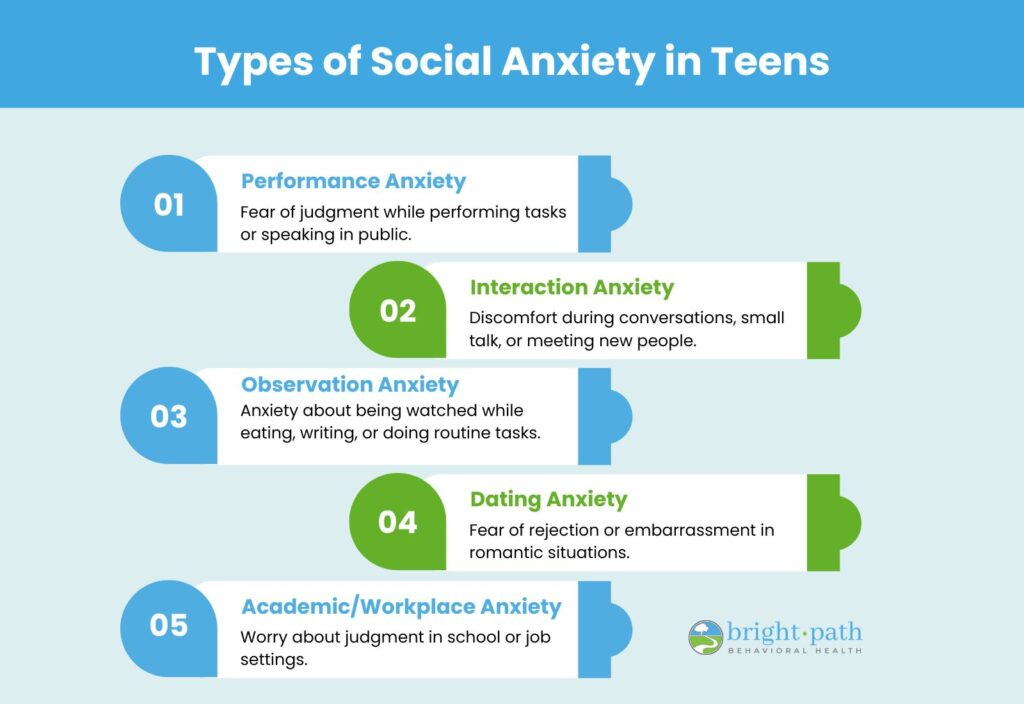
Here are some common types of social society in teens:
- Performance Anxiety: This type centers around a fear of being judged while performing tasks, especially in front of an audience.
- Interaction Anxiety: Those with interaction anxiety feel overwhelmed and self-conscious during everyday social interactions, like meeting new people or making small talk.
- Observation Anxiety: This involves a fear of being watched while performing routine activities, like eating in public or writing in front of others.
- Dating Anxiety: Dating anxiety involves fear and worry around romantic or dating scenarios, including the anticipation of rejection or embarrassment. This type can make dating feel intimidating, leading to avoidance of romantic relationships despite interest.
- Workplace or Academic Anxiety: This type is specific to professional or educational environments, often involving fear of judgment from peers, supervisors, or authority figures.
What are the 10 Strategies for Building Confidence In Socially Anxious Teenagers?
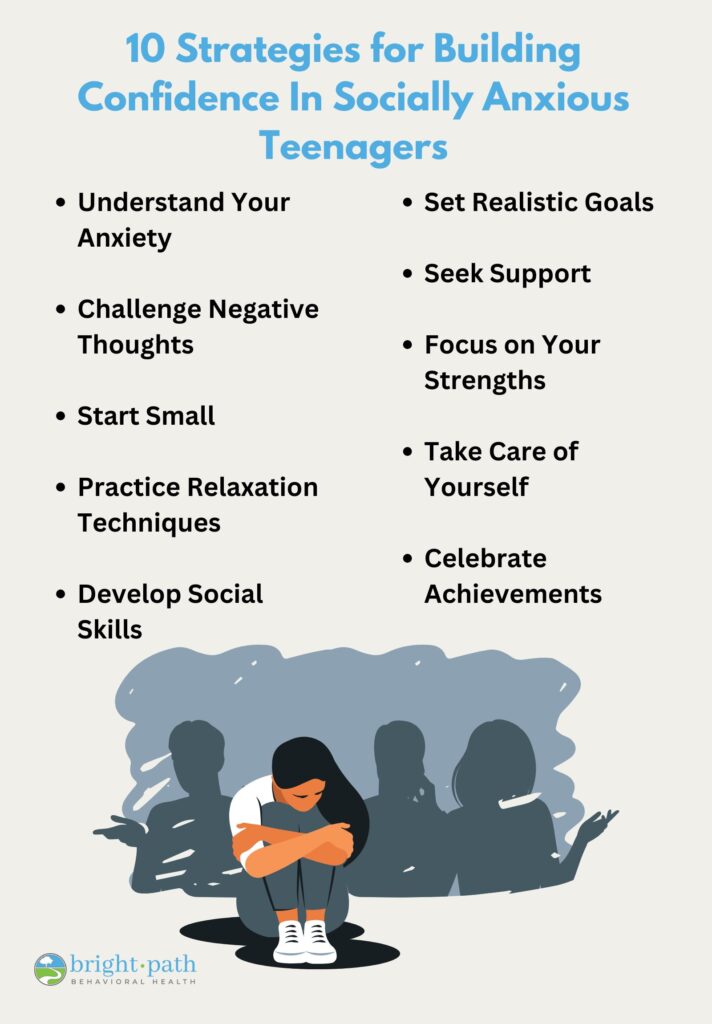
The 10 strategies for building confidence when a teenager is socially anxious are:
1. Understand Your Anxiety
Learning about social anxiety, its symptoms, causes, and personal impact gives teens clarity and perspective. Education is the first step to identifying triggers and developing coping strategies.
2. Challenge Negative Thoughts
Recognizing and reframing negative thinking patterns reduces the fear of judgment. As highlighted by Robert Yeilding, PsyD (NSAC), replacing irrational thoughts with realistic ones builds a healthier mindset.
3. Start Small
Gradual exposure builds confidence. Teens with social anxiety begin with familiar people or small groups, then progress to larger gatherings as comfort increases.
4. Practice Relaxation Techniques
Methods such as deep breathing, mindfulness meditation, or muscle relaxation calm both body and mind, reducing anxiety before and during social interactions.
5. Develop Social Skills
Participating in clubs, volunteering, or group activities provides practice for communication, listening, and assertiveness skills, which are essential for building confidence.
6. Set Realistic Goals
Small, achievable goals create momentum. Each success, no matter how minor, pushes teens beyond their comfort zone and fosters long-term growth.
7. Seek Support
Talking with trusted friends, family, or a therapist offers encouragement and accountability. External support helps normalize experiences and provides guidance.
8. Focus on Your Strengths
Acknowledging talents and interests builds self-esteem. Engaging in activities that highlight these strengths helps teens feel more capable in social situations.
9. Take Care of Yourself
Adequate sleep, balanced nutrition, exercise, and stress management support overall well-being. A healthy lifestyle strengthens emotional resilience and confidence.
10. Celebrate Achievements
Rewarding progress, even small wins, reinforces positive behavior. Celebrating milestones motivates continued effort in overcoming social anxiety.
How Can I Tell If My Teenager Has Social Anxiety?
You can tell if your teenager has social anxiety by watching for consistent patterns of fear and avoidance in social situations. Common signs of social anxiety in teens include intense anxiety around unfamiliar people, skipping gatherings or class participation, and excessive worry about being judged or embarrassed.
Teens show physical symptoms such as rapid heartbeat, sweating, trembling, nausea, or headaches when facing social interactions. Teens with anxiety struggle to start or maintain conversations, avoid public speaking, and appear withdrawn or overly self-conscious. Low self-esteem, negative self-perceptions, and academic decline linked to anxiety are also common.
Emotional distress, such as irritability, restlessness, or mood swings tied to social situations, further indicates a problem. While isolated symptoms don’t confirm social anxiety, a consistent pattern that interferes with daily life should prompt professional evaluation and support.
What Are the Treatment Options for Social Anxiety?
The treatment options available for social anxiety are Cognitive behavioral therapy, exposure therapy, medications, mindfulness meditation, and deep breathing exercises.
The most common and effective approaches include:
- Interpersonal Relationships: Teens with social anxiety often avoid conversations, friendships, or group activities due to fear of judgment, leading to isolation and loneliness.
- Academic Performance: Anxiety prevents class participation, presentations, or asking questions, limiting learning and lowering academic success.
- School Attendance: Many avoid school or miss classes because of overwhelming social fears, which directly impacts grades and well-being.
- Emotional Well-being: Persistent worry and self-consciousness lead to low self-esteem, negative self-perception, and feelings of inadequacy.
- Physical Symptoms: Rapid heartbeat, sweating, trembling, dizziness, or nausea intensify anxiety and make social interactions harder to manage.
- Future Opportunities: Untreated social anxiety restricts higher education, job interviews, and career paths requiring social confidence.
What Causes Social Anxiety in Adolescents?
Social anxiety in adolescents arises from a variety of factors, including biological, environmental, and psychological influences.
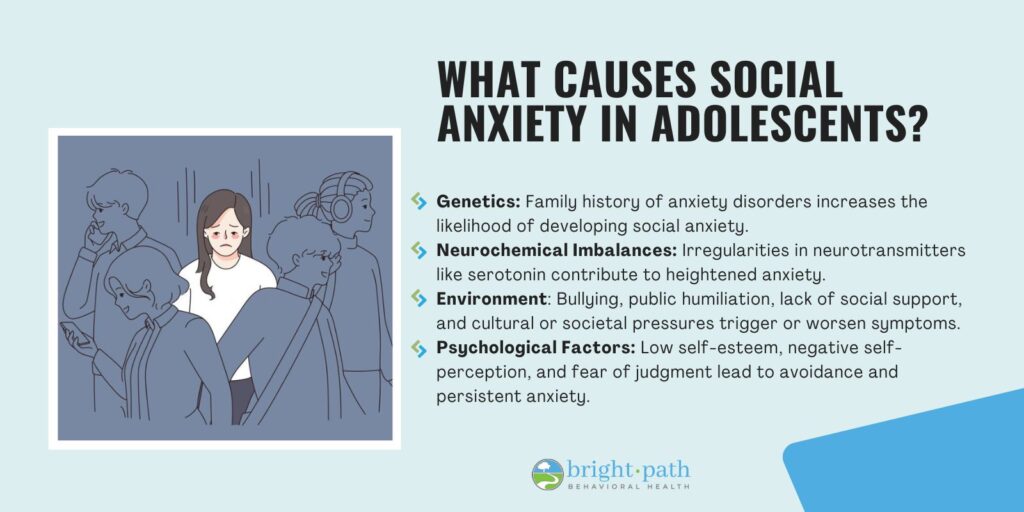
The causes of social anxiety in adolescents include the following:
- Genetics: Genetics plays a role, as social anxiety tends to run in families. Adolescents with a family history of anxiety disorders have a higher risk of developing social anxiety themselves.
- Neurochemical imbalances: Neurochemical imbalances related to anxiety, particularly involving neurotransmitters like serotonin, also play a role in social anxiety.
- Environment: Environmental factors also contribute. Traumatic experiences, such as bullying or public humiliation, trigger or exacerbate social anxiety in adolescents. Negative social interactions or a lack of social support further contribute to its development. Cultural and societal pressures to conform or achieve specific standards increase anxiety levels in social situations.
- Psychological factors: This includes negative self-evaluation and cognitive biases. Adolescents with low self-esteem, a tendency to perceive themselves negatively, or a fear of judgment, are more prone to social anxiety. They excessively worry about being scrutinized or embarrassed in social interactions, leading to avoidance behaviors.
How Does Social Anxiety Affect Teenagers?
Social anxiety affects teenagers in various ways, including interpersonal relationships, academic performance, school attendance, and their emotional well-being. Many teens struggle to make friends, avoid social activities, or withdraw due to fear of judgment and rejection, which leads to loneliness.
In school, teens with social anxiety avoid speaking in class, giving presentations, or asking questions, limiting learning and lowering grades. Severe anxiety contributes to school refusal or frequent absences, further harming academic progress. Emotionally, teens experience persistent worry, low self-esteem, and distorted self-perception, which intensify feelings of inadequacy.
Physical symptoms of social anxiety in teenagers, such as sweating, rapid heartbeat, trembling, nausea, or dizziness, make social situations even harder to manage. If untreated, social anxiety reduces future opportunities by limiting confidence in interviews, higher education, and careers that require interaction or networking.
How is social anxiety different from shyness?
Social anxiety is different from shyness, as social anxiety is more intense and pervasive. Shyness is a personality trait characterized by discomfort or hesitation in social situations, whereas social anxiety involves excessive fear and avoidance that significantly impacts daily life.
How long does treatment for social anxiety take?
The duration of treatment for social anxiety varies depending on individual circumstances. Treatment ranges from several weeks to several months or longer. It is important to work closely with a mental health professional to develop a personalized treatment plan and regularly assess progress.
What coping strategies are beneficial for teens transitioning to high school or college?
Visiting the new school campus to reduce unfamiliarity, establishing a routine early on, and connecting with support services like a school counselor or an anxiety support group are among the coping strategies that are particularly helpful for teens transitioning to high school or college.
Transitioning to high school or college is a daunting experience for teens with social anxiety. The coping strategies build a foundation for managing social anxiety in new and challenging environments.
How to help a teenager with social anxiety?
To help a teen with social anxiety, show empathy, provide a supportive environment, and encourage open communication. Educate yourself about social anxiety, seek professional help, and assist your teenager in accessing appropriate treatment.
Encourage them to engage in social activities at their own pace, but avoid pushing them into uncomfortable situations.
How does understanding the causes of moodiness in teenagers help in managing social anxiety?
Understanding the underlying causes of moodiness, such as hormonal changes, stress, or lack of sleep, helps differentiate between typical adolescent behavior and symptoms of social anxiety.
This distinction is crucial in developing appropriate strategies for support and intervention, ensuring that social anxiety is treated with targeted approaches that address specific emotional and behavioral needs.
Can social anxiety develop in adulthood?
Yes, social anxiety can develop or worsen in adulthood. New social challenges, life changes, or increased responsibilities contribute to the onset of social anxiety. Seeking professional help is important regardless of when social anxiety emerges.
How can building confidence in adolescents with social anxiety help prevent the development of borderline personality disorder (BPD)?
Building confidence in adolescents with social anxiety helps prevent the development of borderline personality disorder (BPD) by fostering a healthier sense of self-worth and emotional stability. Adolescents with social anxiety struggle with low self-esteem and fear of social rejection, which are also risk factors for BPD.
Adolescents develop stronger interpersonal relationships and better emotional regulation by implementing strategies that enhance social skills, self-acceptance, and resilience. These improvements can reduce the likelihood of BPD traits, such as intense fear of abandonment and unstable relationships, thereby promoting overall mental health and stability.
What are the warning signs of teen suicidal thoughts that parents should watch for in adolescents with social anxiety?
Parents should be vigilant for warning signs like withdrawal from friends and family, significant changes in eating or sleeping patterns, persistent feelings of hopelessness or worthlessness, and a preoccupation with death or dying.
Other warning signs of teen suicidal thoughts are a sudden decline in academic performance, giving away prized possessions, or engaging in risky behaviors. It’s crucial for parents to maintain open communication, provide emotional support, and seek professional help if any of these signs are present. Early intervention prevents the escalation of suicidal thoughts and promotes mental health recovery.
What is the root cause of social anxiety disorder?
The root cause of social anxiety disorder involves a combination of genetic predisposition, brain chemistry, and environmental factors. Adverse early life experiences, such as bullying or criticism, also increase the risk.
What is the best treatment for social anxiety?
The most effective treatment for social anxiety combines cognitive-behavioral therapy (CBT) with exposure therapy. It helps individuals gradually face feared situations. In some cases, medication like SSRIs is also prescribed to manage symptoms.
What worsens social anxiety?
Social anxiety is worsened by avoiding social situations and focusing on self-critical thoughts over time. High stress, lack of sleep, and substance use also intensify symptoms.