
-1.svg)
The roles parents play in teen addiction recovery are foundational, not peripheral. While therapists and clinical teams lead treatment, it’s consistent parental involvement that determines whether a teen completes recovery or relapses. A 2022 report by the North Carolina Department of Health and Human Services found that adolescents with engaged parents were 40% more likely to complete treatment programs successfully.
Recovery is not limited to therapy sessions; it extends into the home through structure, trust, emotional availability, and modeling healthy behaviors. Addiction strains family dynamics, but when parents learn how to communicate openly, reinforce treatment goals, and create safe boundaries, they directly influence positive outcomes.
How Does Parental Involvement Improve Teen Addiction Treatment?
Parental involvement improves teen addiction treatment by boosting engagement, stabilizing emotional health, and reinforcing recovery skills at home. Teens do better when they feel supported, not just by professionals, but by the people who matter most: their families.
A 2021 study by the University of North Carolina at Chapel Hill titled “Family-Based Interventions in Adolescent Substance Use Treatment” found that teens with consistent family engagement were twice as likely to maintain sobriety at 6-month follow-ups than those receiving individual therapy alone.
Listed below are ways parents can improve teen addiction treatment.
- Increased Treatment Engagement: Teens with involved parents are more likely to attend sessions, complete assignments, and participate actively in therapy.
- Emotional Anchoring: A parent’s presence offers emotional safety, helping teens process anxiety, frustration, or shame without isolation.
- Accountability and Structure: Parents establish routines that reinforce treatment goals, like curfews, check-ins, and designated recovery time.
- Motivation for Change: Knowing their parents believe in their recovery gives teens emotional fuel to stay the course during difficult phases.
In Wake Forest, families that lean into this role, from showing up to sessions to learning alongside their teen, play a vital part in helping treatment stick.
What Challenges Do Parents Face When Supporting a Teen in Recovery?
Parents face emotional, psychological, and relational challenges when supporting a teen in recovery, feeling overwhelmed, guilty, and unsure how to balance involvement with independence.
A 2020 report by the North Carolina Office of Rural Health titled “Family Voices in Behavioral Health Treatment” stated that over 60% of NC parents supporting a teen through substance use treatment reported high levels of emotional burnout and uncertainty about how to help effectively.
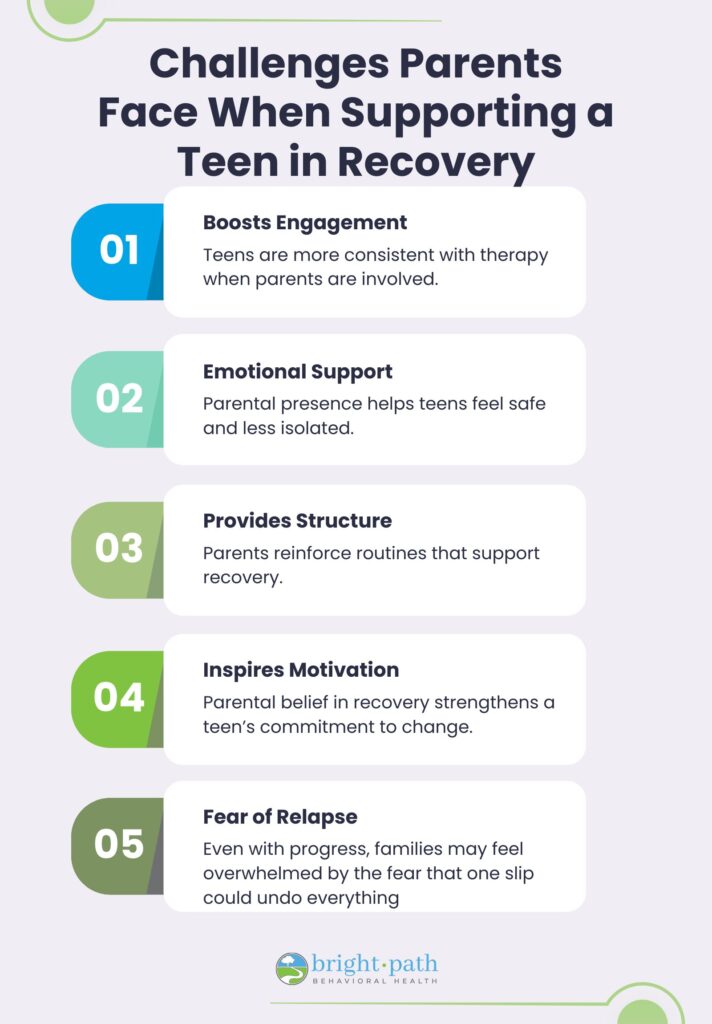
Listed below are Common challenges parents face when supporting a teen in recovery.
- Recognizing the Problem
Many parents struggle to accept that their teen is battling addiction, especially when denial or secrecy masks the severity. - Managing Guilt and Blame
It’s common to question past parenting decisions and wonder, “Did I miss the signs?” - Balancing Support and Autonomy
Parents must walk a fine line, being involved without becoming controlling, letting their teen grow while staying connected. - Emotional Fatigue
Supporting a child in recovery is exhausting. Parents ignore their mental health in the process. - Fear of Relapse
Even during progress, the fear that one mistake could undo everything will be paralyzing for families. Based on the teenage brain and fragility.
In Wake Forest, support groups and family-inclusive therapy help parents feel less alone and more prepared for this demanding but critical role.
Why Is Communication So Important During Teen Recovery?
Communication is essential during teen recovery because it builds trust, reduces conflict, and helps teens feel understood and supported, key ingredients for lasting change.
A 2021 research brief by Duke University’s Center for Child and Family Policy titled “Family Dynamics and Adolescent Substance Use Recovery” found that open parent-teen communication reduced relapse risk by 38% among NC adolescents in outpatient treatment.
Listed below are components of effective communication for teen recovery.
- Active Listening: Letting your teen speak freely, without interrupting or reacting, makes them feel safe and respected.
- Constructive Expression of Concerns: Use “I” statements to express worries (“I feel scared when…”), which prevents defensiveness and promotes dialogue.
- Requesting Feedback: Asking, “What do you need from me right now?” or “How can I support you better?” helps teens feel empowered.
- Consistency and Honesty: Being honest about your own emotions (without overburdening them) builds mutual trust.
- Avoiding Judgment or Lectures: Teens in recovery are defensive or ashamed. Compassionate tone matters more than perfect words.
In Wake Forest, family therapists and IOP programs coach parents through communication strategies, so you’re not navigating this alone.
Why Is Self-Care Important for Parents of Teens in Recovery?
Self-care is essential for parents of teens in recovery because burnout, anxiety, and emotional exhaustion make it harder to provide stable, compassionate support at home.
A 2022 survey by the North Carolina Parent Resource Center titled “Supporting the Supporters” found that 72% of parents caring for teens in addiction treatment reported mental health strain, with many neglecting their well-being to “stay strong” for their child.
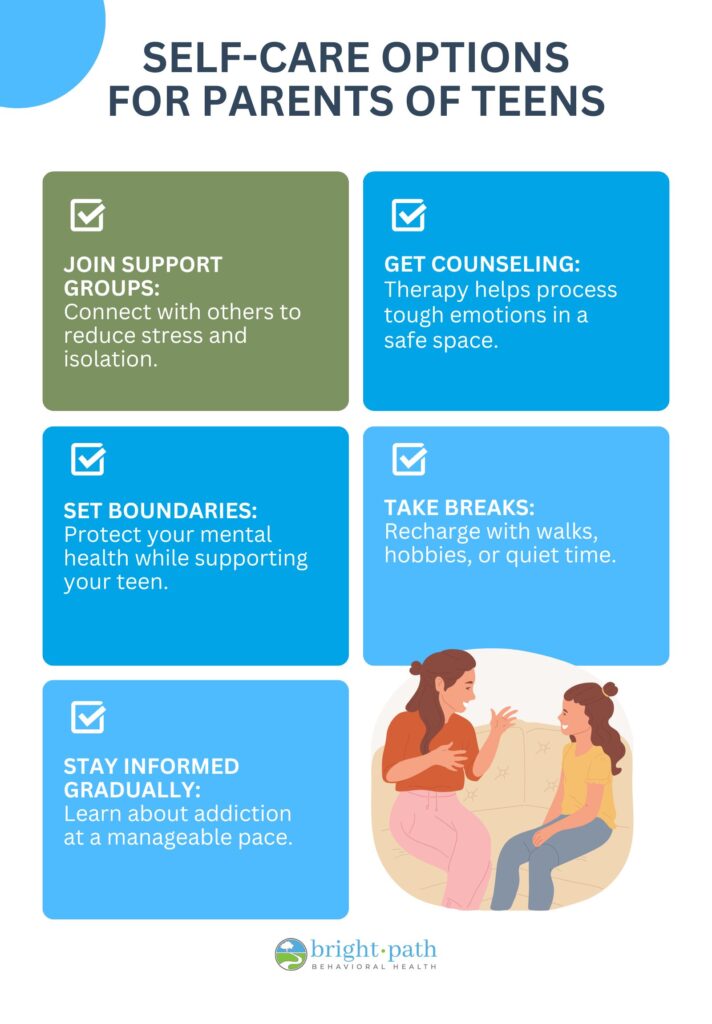
Listed below are Ways parents in Wake Forest practice self-care.
- Join a Support Group: Groups like Al-Anon or local family peer circles offer shared wisdom and reduce isolation.
- Seek Therapy: Counseling gives parents a space to process guilt, fear, or frustration without judgment.
- Set Emotional Boundaries: Supporting your teen doesn’t mean sacrificing your own mental stability.
- Make Time for Breaks: Walks, hobbies, or short time-outs help you recharge and avoid resentment.
- Stay Informed, Not Overwhelmed: Learn about addiction gradually, without drowning in worst-case scenarios.
Your well-being directly impacts your teen’s environment. In Wake Forest, taking care of yourself is not selfish; it’s part of building a stronger foundation for your child’s recovery.
How Can Families and Communities Support Teen Recovery Together?
Families and communities support teen recovery best when they work as a team, reinforcing treatment goals, reducing stigma, and surrounding the teen with consistent, healthy messages.
A 2021 statewide initiative by the NC Department of Public Instruction titled “Whole Child NC” emphasized that teens with coordinated support from family, school, and peer networks showed higher retention and success in outpatient recovery programs.
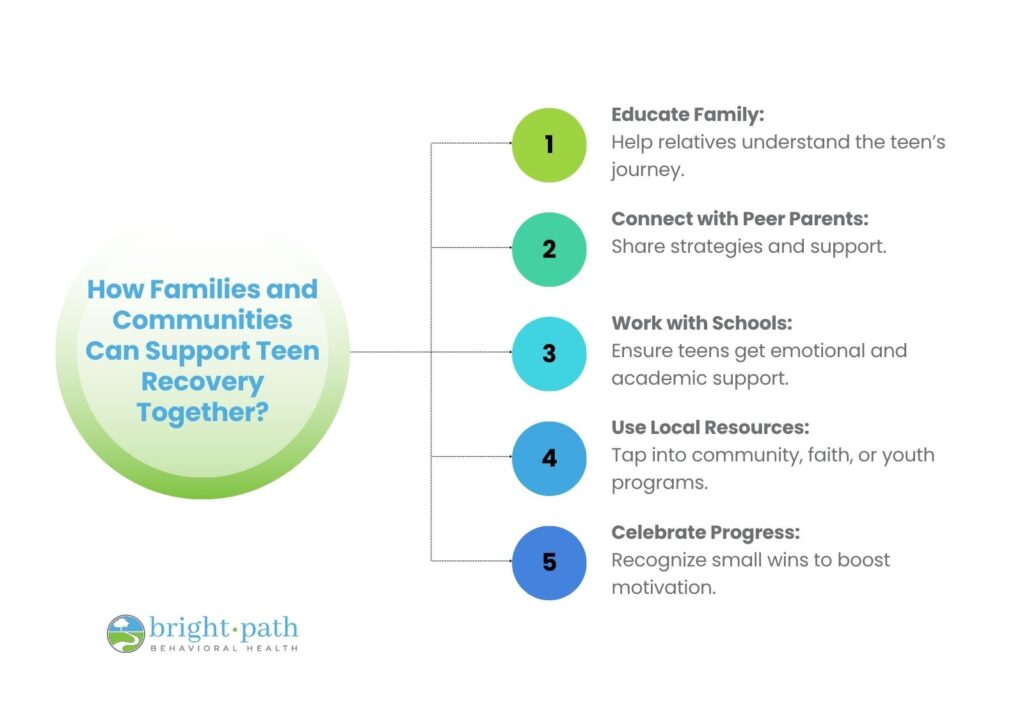
Listed below are Ways to build a recovery-supportive community for teens.
- Educate the Extended Family: Involve siblings, grandparents, and close relatives in understanding the teen’s treatment plan and emotional needs.
- Connect with Other Parents: Peer parents in Wake Forest share what’s worked, offer emotional backup, and help reduce shame.
- Collaborate with Schools: Notify school counselors or trusted teachers so they will provide academic flexibility and emotional monitoring.
- Engage Local Resources: Utilize local faith groups, mental health nonprofits, or community youth programs to strengthen the recovery network.
- Celebrate Milestones: Acknowledge recovery progress, no matter how small, to help teens feel valued and motivated.
Recovery is stronger when it’s not a secret. In Wake Forest, bringing family and community into the fold transforms isolation into empowerment.
What’s the Parents’ Role in a Teen Partial Hospitalization Program (PHP)?
In a teen Partial Hospitalization Program (PHP), parents play a key role by reinforcing structure at home, providing emotional support, and helping their teen apply therapeutic skills outside of sessions.
A 2022 case report by the NC Behavioral Health Alliance titled “Family Integration in Youth PHP Outcomes” found that teens whose parents maintained consistent routines and daily check-ins at home after PHP were 50% more likely to show improved mood and behavior by the end of treatment.
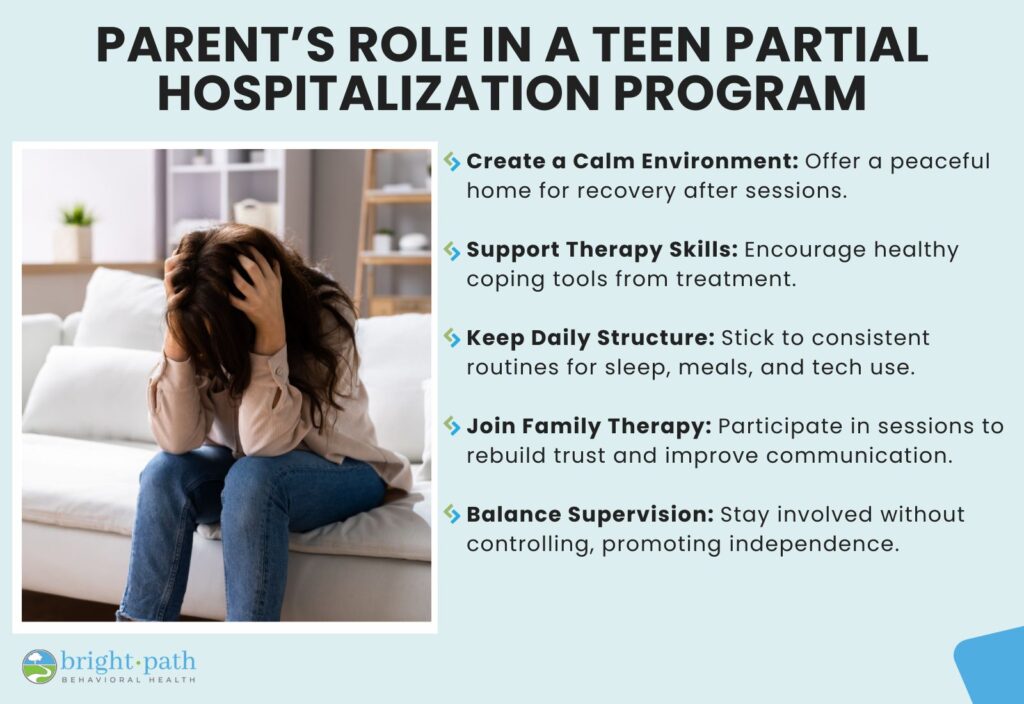
Listed below are ways parents support teens’ PHP success.
- Provide Post-Treatment Stability: After daily sessions, teens need a calm, supportive space to decompress and reflect.
- Reinforce Therapeutic Tools: Encourage your teen to use coping strategies learned in PHP, like journaling, deep breathing, or boundary setting.
- Maintain a Home Routine: Regular sleep, meals, and screen-time limits help sustain the structure provided in treatment.
- Attend Family Therapy: Many PHPs in the Wake Forest area include family components, which are valuable for communication repair and trust-building.
- Monitor Without Micromanaging: Stay engaged while still giving your teen space to build independence and self-regulation.
In Wake Forest, your presence after PHP hours is not just helpful, it’s an essential extension of the clinical care your teen receives during the day.
How Can Parents Support a Teen in an Intensive Outpatient Program (IOP)?
Parents can support a teen in an Intensive Outpatient Program (IOP) by ensuring consistent attendance, creating space for recovery at home, and staying actively involved in any family therapy components. In an IOP, teens are balancing treatment with school and daily life, so your role is to provide structure, emotional safety, and encouragement without overwhelming them.
Remind them of session times, help track progress, and talk openly about what they’re learning, if they’re willing to share. Many Wake Forest-based IOPs offer parent workshops or evening family sessions, which give you tools to better support your teen. Staying engaged while respecting your teen’s autonomy reinforces the idea that you’re not just watching; they’re not alone in this.
Where to Get Teen Addiction Treatment (PHP or IOP) in Wake Forest, NC?
You can get treatment for teen addiction at specialized rehab centers in Wake Forest, NC. These services are offered through a combination of local behavioral health clinics, outpatient programs, and therapy-based treatment centers. Many facilities provide structured treatment plans, such as Partial Hospitalization Programs (PHP) and Intensive Outpatient Programs (IOP), which include therapy, counseling, and medication management. Some centers also offer family-centered support as a part of anxiety treatment for teens to help teens and their loved ones navigate the recovery process together. It’s essential to verify program availability and insurance coverage before seeking treatment.
Does Insurance Cover Teen Addiction Treatment in North Carolina?
Yes, insurance generally covers teen addiction treatment in North Carolina, including PHP, IOP, individual therapy, and family counseling. Both private insurance and NC Medicaid are legally required to provide mental health and substance use treatment benefits at the same level as medical care, under federal parity laws.
Most treatment centers in or near Wake Forest offer help to verify insurance and explain out-of-pocket costs before enrollment. If you’re unsure what your plan covers, call the member services number on your card and ask directly about “adolescent outpatient substance use coverage. For Medicaid enrollees, additional case management and transportation support will be available.