
-1.svg)
Oppositional Defiant Disorder (ODD) is a behavioral condition marked by persistent defiance, hostility, and disobedience toward authority figures. If you or someone you know experiences ODD, it creates significant challenges at home, school, and in social settings. In North Carolina, where emergency department visits for youth suicide-related behaviors increased fivefold from 2011 to 2020, proper diagnosis and treatment of conditions like ODD are crucial.
This condition is classified as a disruptive behavior disorder and is distinct from typical childhood defiance due to the severity and consistency of the symptoms. According to the American Academy of Child & Adolescent Psychiatry, 1% to 16% of all school-age children and adolescents have ODD.
The primary symptoms of ODD include angry mood changes, argumentative behavior, and hurtful tendencies. Children with ODD often argue with authority, refuse to follow rules, and have frequent temper tantrums, disrupting daily life.
ODD arises from genetic, biological, and environmental factors, including family history, harsh parenting, and early emotional traits. When your teen struggles with persistent anger, defiance, and argumentative behavior, it’s important to understand that these behaviors stem from complex origins rather than simple disobedience or “acting out.” Many North Carolina families face similar challenges, and recognizing these underlying factors is the first step toward helping your child develop healthier emotional responses.
Treatment of ODD focuses on addressing symptoms and underlying causes. Cognitive Behavioral Therapy (CBT) helps develop healthier coping strategies, while family therapy improves communication. In severe cases, medication supports co-occurring conditions like ADHD or anxiety.
What is Oppositional Defiant Disorder (ODD)?
Oppositional Defiant Disorder (ODD) is a behavioral condition characterized by a persistent pattern of anger, irritable mood, argumentative or defiant behavior, and vindictiveness toward authority figures. These behaviors are disproportionate to typical childhood behaviors, occurring frequently and consistently over at least six months. ODD is diagnosed when these behaviors significantly impair social, academic, or family functioning.
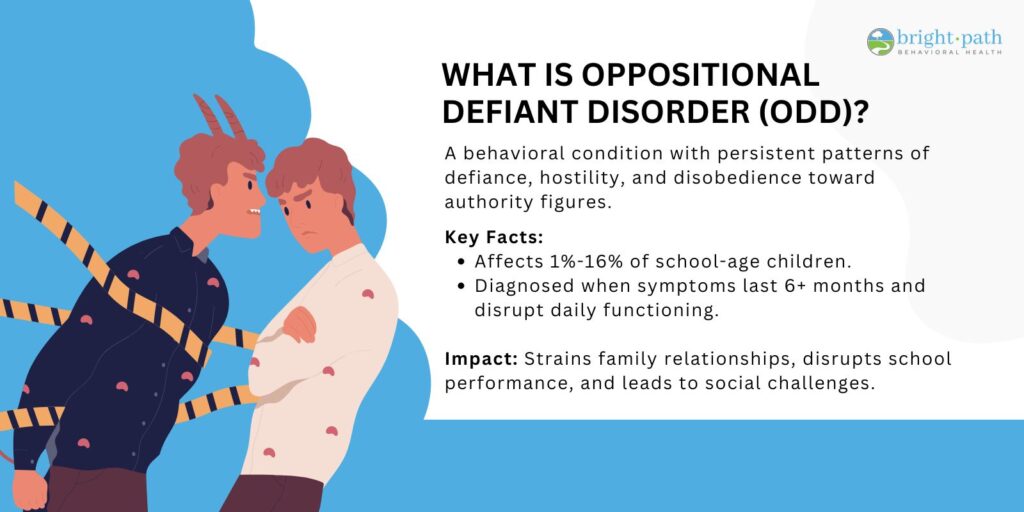
Children with ODD experience difficulties in their normal and school life. Their defiant and argumentative behavior strains relationships with peers and family members, leading to social isolation. In school, these children struggle with authority figures like teachers, disrupt classroom environments, and face academic challenges due to their inability to focus or comply with rules. This hinders their educational development and leads to disciplinary measures, further exacerbating the problem.
If a child’s oppositional behaviors persist beyond six months, the risk of developing more severe conditions increases. Prolonged ODD leads to conduct disorder, characterized by more aggressive and destructive behaviors, or even antisocial personality disorder in adulthood. However, ODD is not always a chronic condition. Approximately 70% of individuals with ODD experience symptom resolution by age 18, as studied by Riley M, Ahmed S, Locke A. et al., 2016, titled “Common Questions About Oppositional Defiant Disorder.”
Despite these positive outcomes, individuals diagnosed with ODD are highly likely to develop other mental health conditions. In North Carolina, from 2018 to 2019, 15.1% of adolescents experienced past-year major depressive episodes, highlighting the potential for comorbid mental health challenges.
How Common is Oppositional Defiant Disorder?
Oppositional Defiant Disorder (ODD) is relatively common. According to the American Academy of Child & Adolescent Psychiatry, 1% to 16% of all school-age children and adolescents have ODD. ODD is more commonly diagnosed in boys than girls, and its prevalence tends to decrease with age. According to a meta-analysis of non-referred children by Demmer DH, Hooley M, Sheen J, McGillivray JA, Lum JA. et al. 2017, titled “Sex Differences in the Prevalence of Oppositional Defiant Disorder During Middle Childhood: a Meta-Analysis,” found that the prevalence ratio of ODD in boys to girls was 1.59:1. A longitudinal study of children ages 9 to 16 found that boys were about 50% more likely to be diagnosed with ODD than girls.
What are the Symptoms of Oppositional Defiant Disorder?
The symptoms of Oppositional Defiant Disorder (ODD) include angry and irritable mood, argumentative and defiant behavior, and hurtful or revengeful behavior. These symptoms are characterized by persistent patterns of behaviors that interfere with social, academic, or family functioning. Children with ODD exhibit these behaviors more frequently and intensely than their peers, causing significant distress for themselves and those around them.
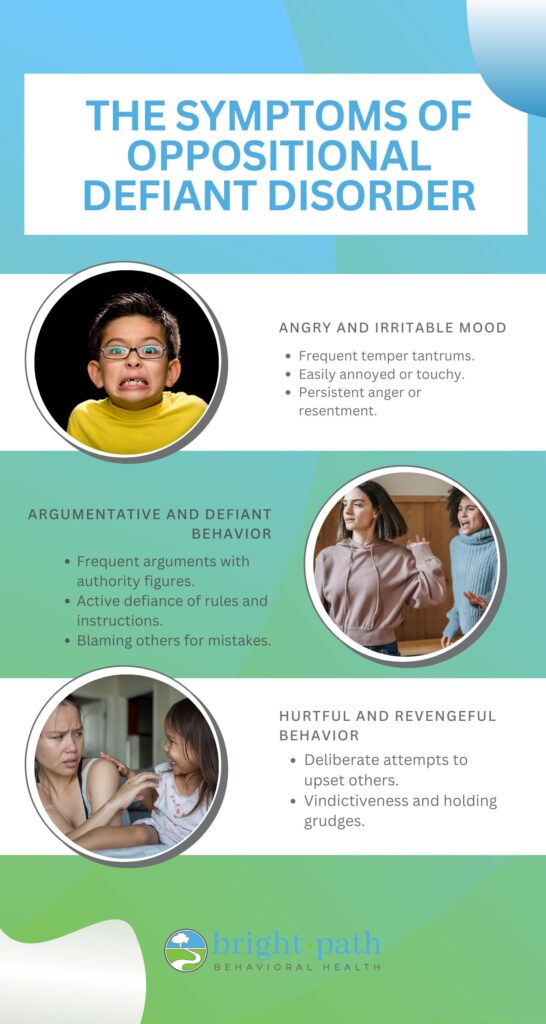
The symptoms of ODD are given below:
1. Angry and Irritable Mood
Children with ODD demonstrate an angry and irritable mood characterized by frequent temper outbursts and persistent feelings of frustration. These emotions are disproportionate to the situation and escalate quickly. This mood not only disrupts their relationships but also affects their ability to interact in social and academic settings.
Symptoms of angry and irritable mood in ODD include:
- Frequent temper tantrums: These tantrums are intense emotional outbursts involving behaviors such as screaming, crying, throwing objects, or physical aggression.
- Easily annoyed or touchy: Children with ODD perceive neutral interactions as personal attacks, resulting in exaggerated responses.
- Persistent anger or resentment: A chronic sense of frustration or irritability is common in children with ODD.
2. Argumentative and Defiant Behavior
Argumentative and defiant behavior is a hallmark of ODD. Children consistently challenge authority and refuse to comply with rules or requests. This behavior manifests in family settings and classrooms, impacting academic and interpersonal relationships.
Symptoms of argumentative and defiant behavior in ODD include:
- Frequent arguing with authority figures: Children with ODD frequently engage in verbal disputes with adults, such as parents, teachers, and caregivers, over routine instructions or expectations.
- Actively defying rules: These children deliberately ignore rules or instructions, acting in direct opposition to authority. For instance, they refuse to complete assigned tasks or intentionally engage in prohibited behaviors.
- Blaming others for their mistakes or behavior: A main symptom of ODD is the refusal to accept responsibility for one’s actions. Children attribute their negative behaviors or outcomes to external factors, such as blaming siblings, peers, or unfair treatment by adults.
3. Hurtful and Revengeful Behavior
Children with ODD display hurtful and revengeful behavior, acting out with the intent to harm others emotionally or physically. This behavior is usually premeditated and stems from perceived grievances, reinforcing cycles of conflict.
Symptoms of hurtful and revengeful behavior in ODD include:
- Deliberate attempts to upset others: Children with ODD intentionally provoke or irritate peers, family members, or authority figures to elicit an emotional response.
- Vindictiveness: Vindictive behaviors involve a desire for retaliation. Children hold grudges and act out in response to perceived wrongdoings, sometimes over trivial matters. This pattern of revengeful behavior is particularly disruptive to relationships and is associated with underlying issues of impulsivity and a heightened need for control. Research from the American Academy of Child and Adolescent Psychiatry supports this. It shows that children with ODD engage in retaliatory actions to cope with frustration.
- Lack of empathy: Children with ODD struggle to recognize or care about the feelings of others, showing indifference to the emotional impact of their actions.
What Are The Causes of Oppositional Defiant Disorder?
The causes of oppositional defiant disorder (ODD) are multifaceted and encompass genetic, biological, and environmental factors. This disorder arises due to the interplay of inherited traits, neurobiological mechanisms, and adverse environmental conditions. Together, these factors influence the development of the defiant, irritable, and argumentative behaviors seen in ODD.
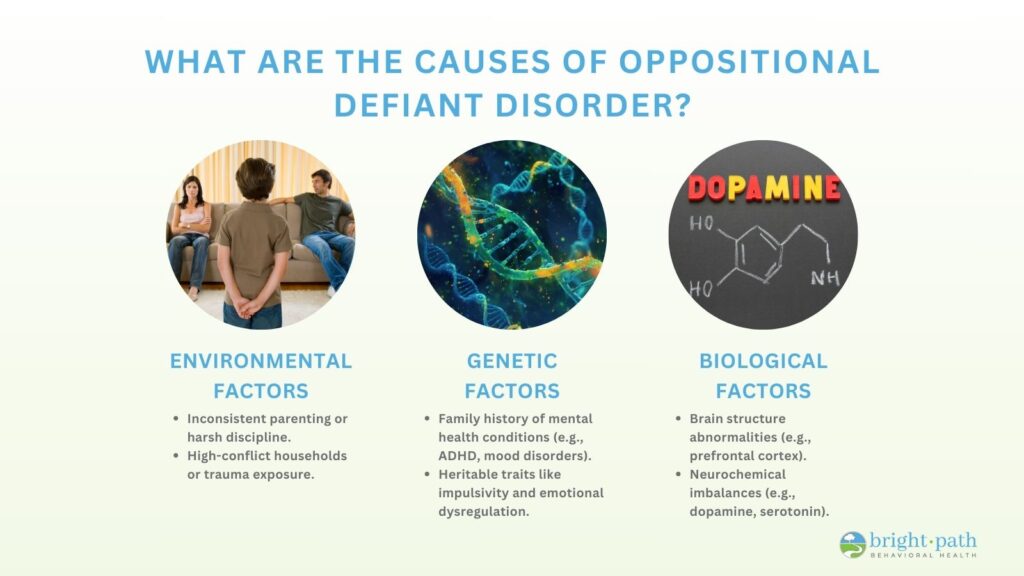
The causes of Oppositional Defiant Disorder (ODD) include:
1. Genetic Factors
Genetic predisposition plays a significant role in the development of ODD. Children with a family history of mental health disorders such as ADHD, mood disorders, or substance abuse are at a higher risk of exhibiting oppositional behaviors.
2. Biological Factors
Biological factors, including brain structure and neurochemical imbalances, are linked to ODD. Abnormalities in brain regions like the prefrontal cortex, which is responsible for impulse control and emotional regulation, predispose children to oppositional behaviors. Additionally, imbalances in neurotransmitters like dopamine and serotonin, which regulate mood and behavior, are associated with ODD. A study by Christensen LL, Baker BL. et al. 2021, titled “The Etiology of Oppositional Defiant Disorder for Children with and without Intellectual Disabilities: A Preliminary Analysis,” noted that children with ODD frequently exhibit hyperactivity in stress-response systems, contributing to heightened irritability and defiance.
3. Environmental Factors
Environmental influences, such as inconsistent parenting, exposure to abuse, or a lack of supportive relationships, significantly impact the development of ODD. Children raised in high-conflict households or those experiencing neglect develop oppositional behaviors as a coping mechanism. A study by Patterson GR et al. 1989, titled “A Developmental Perspective on Antisocial Behavior,” emphasized that coercive parenting practices, such as harsh discipline and a lack of positive reinforcement, are strong predictors of ODD symptoms. Socioeconomic stress and peer rejection further exacerbate the condition.
What Are The Risk Factors For Oppositional Defiant Disorder?
The risk factors for oppositional defiant disorder include childhood trauma experiences, innate personality traits affecting emotional regulation, problematic parenting approaches, unstable home environments, and exposure to chronic stress conditions.
Here are the key risk factors for oppositional defiant disorder:
- History of Child Abuse or Neglect: Experiencing abuse or neglect disrupts emotional regulation and leads to defiance as a protective behavior.
- Difficult Temperament: Children with high emotional reactivity and impulsivity struggle to adapt, increasing the risk of oppositional behaviors.
- Inconsistent or Harsh Parenting: Erratic discipline and lack of positive reinforcement foster defiance in children.
- Family Issues: Instability, such as parental divorce or financial stress, impacts emotional well-being and models aggressive behaviors.
- Exposure to High-Stress Environments: Living in high-stress areas affects a child’s ability to regulate emotions and behaviors, increasing the risk of ODD.
You may also be interested in our other articles such as:
Disruptive Mood Dysregulation Disorder (DMDD) In Teens: Definition, Symptoms, Effects, And Treatment
Paranoid Personality Disorder (PPD) in teens: Definition, Symptom, Causes, Diagnosis and Treatment.
How is Oppositional Defiant Disorder Diagnosed?
Oppositional Defiant Disorder (ODD) diagnosis occurs through a mental health professional’s comprehensive evaluation. This evaluation includes observing behavior patterns and assessing their impact on the child’s daily functioning. Diagnostic criteria from the Diagnostic and Statistical Manual of Mental Disorders, Fifth Edition (DSM-5) or the International Classification of Diseases, Tenth Revision (ICD-10) confirm the diagnosis. The DSM-5 specifies that a child exhibits a persistent pattern of angry or irritable mood, argumentative or defiant behavior, or vindictiveness lasting at least six months. Symptoms appear during interactions with at least one individual who is not a sibling.
Health professionals carefully assess your child’s behaviors to understand their severity and frequency, especially when challenges arise in social, educational, or family settings. They utilize diagnostic tools like structured interviews, parent-teacher questionnaires, and screening tests such as the Child Behavior Checklist (CBCL) and the Oppositional Defiant Disorder Rating Scale (ODDRS) to evaluate symptoms and rule out other conditions like ADHD or anxiety.
This thorough evaluation also considers family history and insights from caregivers and educators, ensuring an accurate diagnosis and a personalized treatment plan that truly meets your child’s needs.
How is Oppositional Defiant Disorder Treated in North Carolina?
Oppositional Defiant Disorder is treated through various methods, including behavioral therapies, individual counseling, and, in some cases, medications in North Carolina.
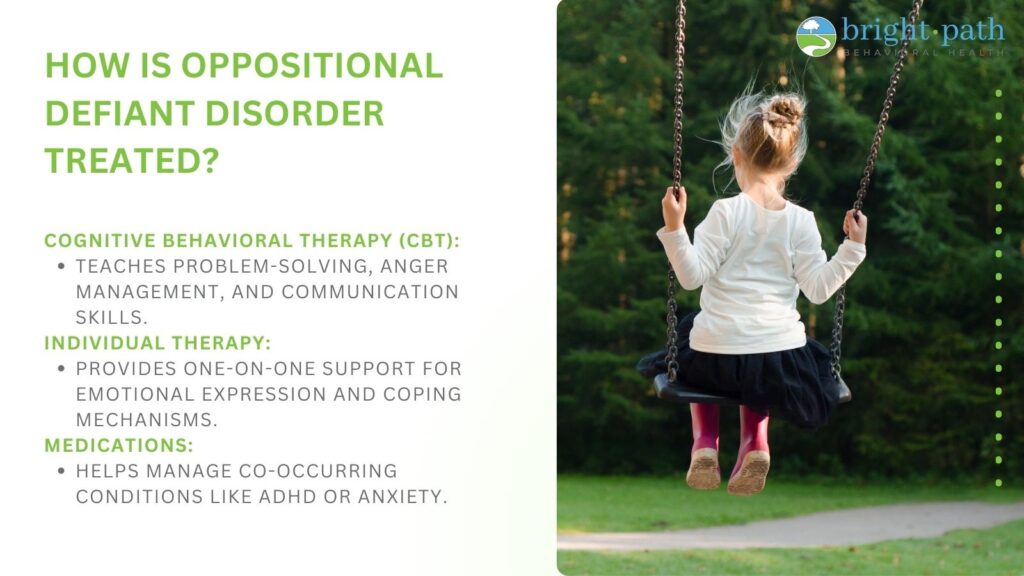
Oppositional Defiant Disorder is treated through various methods as follows:
Cognitive Behavioral Therapy (CBT)
CBT is a structured, evidence-based treatment that focuses on changing negative thought patterns and behaviors. It includes techniques like problem-solving and communication skills training. For your child with ODD, CBT helps them understand the consequences of their actions and provides healthier ways to resolve conflicts.
Individual Therapy
Individual therapy offers a one-on-one counseling environment where your child works with a trained therapist to address emotional issues and develop coping skills. This approach includes play therapy and role-playing exercises tailored to your child’s developmental stage. It helps them recognize triggers and learn adaptive behaviors, leading to better relationships and reduced ODD symptoms.
Medications
Medications are sometimes prescribed to manage ODD symptoms, especially when your child also faces conditions like ADHD or anxiety. Selective serotonin reuptake inhibitors (SSRIs) help with mood regulation, while stimulants address ADHD symptoms. While medications do not cure ODD, they reduce symptom severity, allowing your child to benefit more from therapy. Research supports the combined use of medication and behavioral interventions for the best outcomes in managing ODD.
What are the Complications of Untreated Oppositional Defiant Disorder?
The complications of untreated oppositional defiant disorder include poor academic or professional performance, strained interpersonal relationships, substance use disorders, and even more severe psychological conditions. Many individuals with untreated ODD develop antisocial behaviors or legal issues and face challenges with impulse control, which increases the risk of self-harm or suicide. These complications emphasize the importance of early diagnosis and effective treatment to mitigate long-term consequences.
The complications of untreated oppositional defiant disorder include:
- Poor Academic and Work Performance: Children with untreated ODD struggle in school due to defiant behaviors and conflicts with teachers and peers. Poor academic performance leads to a lack of educational opportunities, which extend into adulthood, affecting career prospects. Adults face similar challenges in maintaining steady employment, leading to financial instability.
- Substance Use Disorder: Untreated ODD increases the likelihood of developing substance use disorders in adolescence or adulthood. The persistent defiance and impulsivity associated with ODD drive individuals toward self-medication using drugs or alcohol, compounding their difficulties and creating additional health risks.
- Antisocial Behavior and Legal Problems: Untreated ODD escalates into more severe conduct disorders, including criminal behavior. Persistent defiance and disregard for societal norms lead to legal issues, such as arrests or incarceration, further isolating the individual from support systems.
- Impulse Control Problems: Difficulty in controlling impulses is a hallmark of untreated ODD. This manifests in reckless behaviors such as unsafe driving, physical altercations, or financial irresponsibility. Such actions lead to accidents, injuries, or strained relationships.
- Strained Interpersonal Relationships: Persistent oppositional behaviors alienate family members, friends, and colleagues. The inability to sustain healthy relationships results in isolation, loneliness, and a lack of social support, exacerbating psychological distress.
- Increased Risk of Suicide: Individuals with untreated ODD are at a higher risk of developing severe mood disorders, which lead to suicidal ideation or attempts. The combination of impulsivity, emotional distress, and lack of coping mechanisms contributes significantly to this risk. Effective suicide prevention strategies, including appropriate therapy, family support, and crisis resources, are essential in addressing these challenges and providing individuals with ODD the tools they need to manage emotional regulation and develop healthy coping mechanisms.
Can Oppositional Defiant Disorder Be Prevented?
Yes, oppositional defiant disorder (ODD) is preventable, or its impact is minimized through early intervention and supportive environments. While you cannot change genetic and biological factors, addressing environmental and behavioral influences significantly reduces the risk of developing the disorder or lessens its severity.
Positive parenting practices, such as setting clear expectations, maintaining consistent discipline, and encouraging open communication, mitigate oppositional behaviors in at-risk children. Early identification of traits like high emotionality and impulsivity and interventions such as social skills training and problem-solving strategies, prevent the escalation of defiant behaviors.
Creating a stable and nurturing home environment, minimizing exposure to conflict or abuse, and providing access to mental health support serve as essential prevention strategies. While strong genetic predispositions do not allow complete prevention of Oppositional Defiant Disorder (ODD), these measures improve outcomes for children showing early signs of oppositional behaviors.
How To Deal With Oppositional Defiant Disorder in North Carolina?
To deal with Oppositional Defiant Disorder (ODD) in North Carolina, it is important to implement consistent, structured strategies that address the child’s behavioral challenges while fostering a supportive and nurturing environment.
Our specialized team in North Carolina offers structured support with evidence-based treatments for teens with Oppositional Defiant Disorder (ODD). We create practical strategies to restore peace at home and help your child build healthier relationships. Our comprehensive approach addresses defiant behaviors and underlying issues. You deserve expert guidance, and your child deserves the chance to thrive.
Clear rules and expectations establish boundaries, while positive reinforcement encourages good behavior. Stay calm during conflicts and avoid power struggles. Listening to your child’s perspective builds trust and reduces hostility.
Behavioral therapy develops coping mechanisms and problem-solving skills. Family therapy enhances interactions and addresses underlying dynamics. School support through IEPs and teacher collaboration proves beneficial. Maintaining physical and emotional well-being through proper sleep, nutrition, and stress management supports overall improvement.
What Mental Health Conditions are Commonly Associated with Oppositional Defiant Disorder?
Mental health conditions that are commonly associated with oppositional defiant disorder include attention deficit hyperactivity disorder (ADHD), conduct disorder, depression, anxiety, learning disorders, and communication disorders.
Is Attention Deficit Hyperactivity Disorder (ADHD) Commonly Associated with Oppositional Defiant Disorder (ODD) in Teens?
Attention deficit hyperactivity disorder (ADHD) is commonly associated with oppositional defiant disorder (ODD) in Teens. ODD is estimated to co-occur with teen ADHD in approximately 50% to 60% of population-based samples as per Seppä, S.’s 2024 study, ‘Associations of Symptoms of ADHD and Oppositional Defiant Disorder (ODD) in Adolescence With Occupational Outcomes and Incomes in Adulthood’, Adolescents with both conditions show significantly worse outcomes, including higher unemployment rates, more sick days, lower educational attainment, and reduced income levels in adulthood compared to their peers with either condition alone or without these conditions.
Can trauma lead to ODD?
Yes, trauma can lead to Oppositional Defiant Disorder (ODD). Research by Broekhof R, Nordahl HM, Tanum L, Selvik SG. et al. 2023, titled “Adverse childhood experiences and their association with substance use disorders in adulthood: A general population study (Young-HUNT),” indicate that adverse childhood experiences, including abuse, neglect, or exposure to violence, significantly increase the risk of developing ODD. Trauma disrupts emotional regulation and coping mechanisms, potentially manifesting as defiant, argumentative, or oppositional behaviors. Children who experience trauma develop heightened emotional reactivity and maladaptive responses to perceived authority or stress, which are hallmark symptoms of ODD.
A study by Mikolajewski AJ, Scheeringa MS. et al. 2022, titled “Links between Oppositional Defiant Disorder Dimensions, Psychophysiology, and Interpersonal versus Non-interpersonal Trauma” highlights the strong correlation between early-life trauma and the emergence of disruptive behavior disorders, including ODD. Effective interventions should address underlying trauma to manage ODD symptoms and promote emotional healing.
What is the Difference Between Conduct Disorder and Oppositional Defiant Disorder?
The main difference between conduct disorder and oppositional defiant disorder (ODD) is the severity and nature of the behaviors exhibited. While ODD involves defiant, argumentative, and vindictive behaviors directed toward authority figures, conduct disorder (CD) is characterized by more severe behaviors that violate societal norms and the rights of others, such as aggression, theft, and destruction of property.
Oppositional Defiant Disorder (ODD) primarily manifests as persistent disobedience, irritability, and defiance. Children with ODD argue with authority figures, exhibit frequent temper tantrums, and deliberately annoy others. These behaviors occur within family or school settings but do not escalate to the level of criminal or overtly harmful actions.
Conduct Disorder (CD) involves a broader and more serious pattern of behavior, including aggression toward people or animals, deceitfulness, theft, and significant rule violations. Individuals with CD engage in criminal activities, such as arson or robbery, and show little remorse or empathy for their actions.
Similarities between the two conditions include difficulties in regulating emotions and behavior stemming from environmental, genetic, or psychological factors. Both disorders co-occur with ADHD or anxiety disorders and require intervention to prevent long-term negative outcomes.
The distinction lies in the severity and impact of the behaviors. ODD is seen as less severe and precedes CD if untreated, but CD includes criminal and antisocial actions that significantly disrupt societal norms.