
-1.svg)
Meditation for teens focuses on mindfulness and emotional regulation, offering support for those facing addiction or substance use challenges. It encourages self-awareness and mental clarity, helping you navigate emotions and experiences during adolescence.
Types of meditation include mindfulness, guided, loving-kindness, transcendental, and body scan practices. These methods enhance self-awareness, emotional control, and relaxation, equipping you to handle the ups and downs of teenage life.
Meditation is used in structured school programs, therapy sessions, and daily routines like study breaks or sports training. Community workshops also teach mindfulness to build coping skills and resilience.
The benefits of meditation include better focus, emotional strength, and overall well-being, all of which support recovery from addiction.
In North Carolina, 43% of high school students reported feelings of sadness or hopelessness, and fewer than half had a positive self-image. The percentage of students who felt good about themselves plummeted from 80% in 2011 to only 49% in 2021. These alarming trends underscore the urgent need for effective stress management strategies, such as meditation.
The efficacy of meditation is supported by research indicating that consistent practice leads to reduced cravings and a lower likelihood of relapse. A 2022 U.S. survey found that only 1.9% of 34,525 adults practiced mindfulness meditation in the past year. Among those, 73% meditated for general wellness and disease prevention, while 92% sought relaxation and stress reduction, and over half aimed to improve their sleep.
What is Meditation?
Meditation is a practice that involves focusing the mind and cultivating awareness, leading to enhanced mental clarity, emotional balance, and a deep sense of peace.
You’ll find that meditation includes techniques like mindfulness, concentration, and visualization, helping you connect with your inner self and understand your thoughts and feelings more deeply. Rooted in ancient spiritual traditions from the Indian subcontinent, meditation appears in texts like the Upanishads and teachings of Buddhism and Jainism. For over 5,000 years, it has evolved through cultures and is now a globally recognized tool for personal growth and mental well-being.
In the United States, over 46 million adults (19% of the adult, civilian, noninstitutionalized population) currently practice some form of meditation, as indicated in a study by James Macinko published in Research Gate in 2019 titled “Factors Associated with the Use of Meditation, U.S. Adults 2017.”
What Does Meditation Do To The Teen’s Brain?
Meditation impacts the teenage brain by promoting structural and functional changes that enhance emotional regulation, attention, and overall mental health. Regular meditation practice has been associated with increased gray matter density in the prefrontal cortex, which is critical for decision-making, impulse control, and self-regulation.
According to Yuan, J. P.’s 2020 study, ‘Gray Matter Changes in Adolescents Participating in a Meditation Training’, while the 12-week TARA program resulted in gray matter volume decreases in the left posterior insula (p = 0.019, d = 0.47), these changes align with meditation’s documented benefits for reducing stress, anxiety, and depression. The study supports previous findings that meditation affects self-regulation mechanisms, including attention control, emotion regulation, and self-awareness, which are particularly valuable during adolescence, a crucial developmental period characterized by significant neurological changes.
What Are The Types Of Meditation?
The types of meditation are mindfulness meditation, transcendental meditation, loving-kindness meditation, body scan meditation, and guided visualization. Each technique employs different approaches to help enhance mental clarity, emotional balance, and overall well-being.
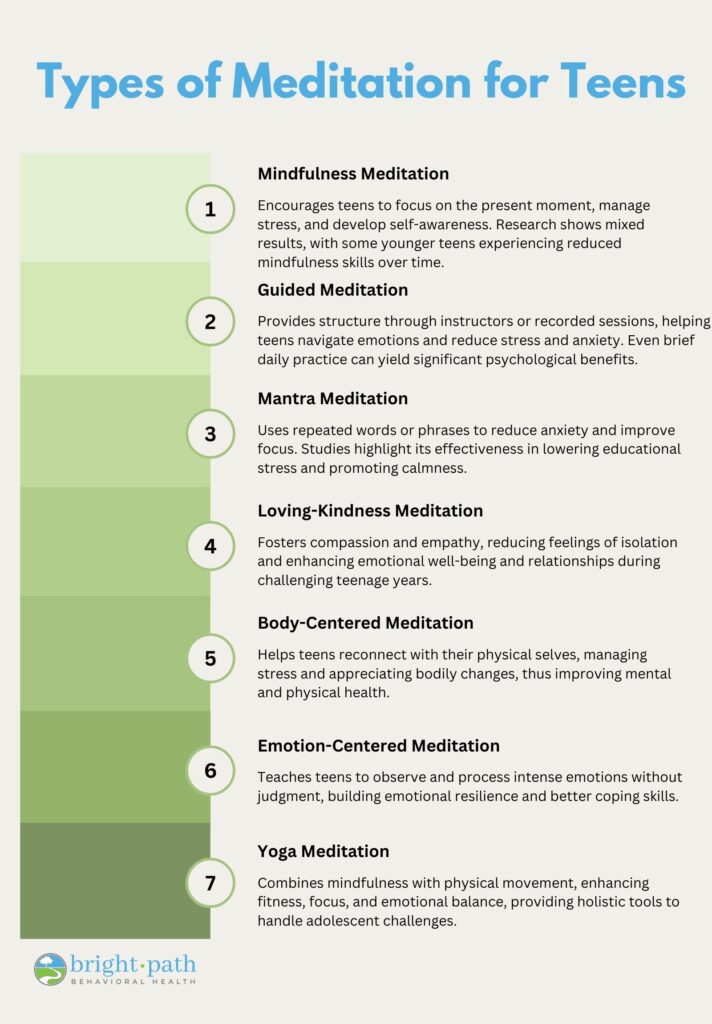
The types of meditation are explained below:
Mindfulness Meditation
Mindfulness meditation benefits you by encouraging focus on the present moment, helping manage stress from school and social pressures. By paying attention to your breath or bodily sensations, you develop greater self-awareness and learn to approach challenges with a calm and open mindset.
Guided Meditation
Guided meditation supports you, especially if you’re new to the practice. With guidance from an instructor or recording, you explore themes like relaxation or self-esteem. This structured approach makes it easier to engage, giving you tools to navigate emotions and thoughts effectively.
Mantra Meditation
Mantra meditation offers you a simple yet powerful way to focus your mind using a word or phrase. Repeating a mantra reduces anxiety and enhances concentration, providing a sense of calm and clarity during the ups and downs of teenage life.
According to research by Dr. Anita S., published in the Global Journal of Human Social Sciences in 2014 titled “Educational Stress in Adolescents: Chanting Mantras as a Powerful Coping Strategy,” chanting mantras significantly helps reduce educational stress in adolescents. The study showed that adolescents in the experimental group had a noticeable drop in stress levels, with the average score for “Pressure from Society” decreasing from 13.28 before the intervention to 7.99 afterward. In comparison, the control group saw only a slight increase in stress, highlighting how effective mantra meditation is as a coping method for adolescents dealing with educational pressures (p < .01).
Loving-Kindness Meditation
Loving-kindness meditation helps you cultivate compassion for yourself and others, which is essential during the challenging teenage years. By sending positive thoughts to yourself and those around you, you foster empathy, reduce feelings of isolation, and strengthen relationships while enhancing emotional well-being.
Body-Centered Meditation
Body-centered meditation allows you to reconnect with your physical self during a time of constant change. By focusing on bodily sensations, you learn to appreciate your body and manage stress, supporting both your mental and physical health.
Emotion-Centered Meditation
Emotion-centered meditation guides you to acknowledge and process emotions without judgment. This practice becomes especially important as you navigate intense feelings during adolescence. Observing emotions mindfully builds resilience and equips you to handle challenges more effectively.
Yoga Meditation
Yoga meditation combines movement and mindfulness, offering you a way to align your body and mind. Through focused breathing and gentle poses, you release tension, improve concentration, and create a sense of calm, helping you feel grounded in your daily life.
What Are The Applications Of Meditation?
The applications of meditation include treating anxiety, reducing stress, managing chronic pain, enhancing emotional regulation, and improving focus and attention. Each of these applications plays a crucial role in helping adolescents cope with the complexities of their emotional and physical well-being.
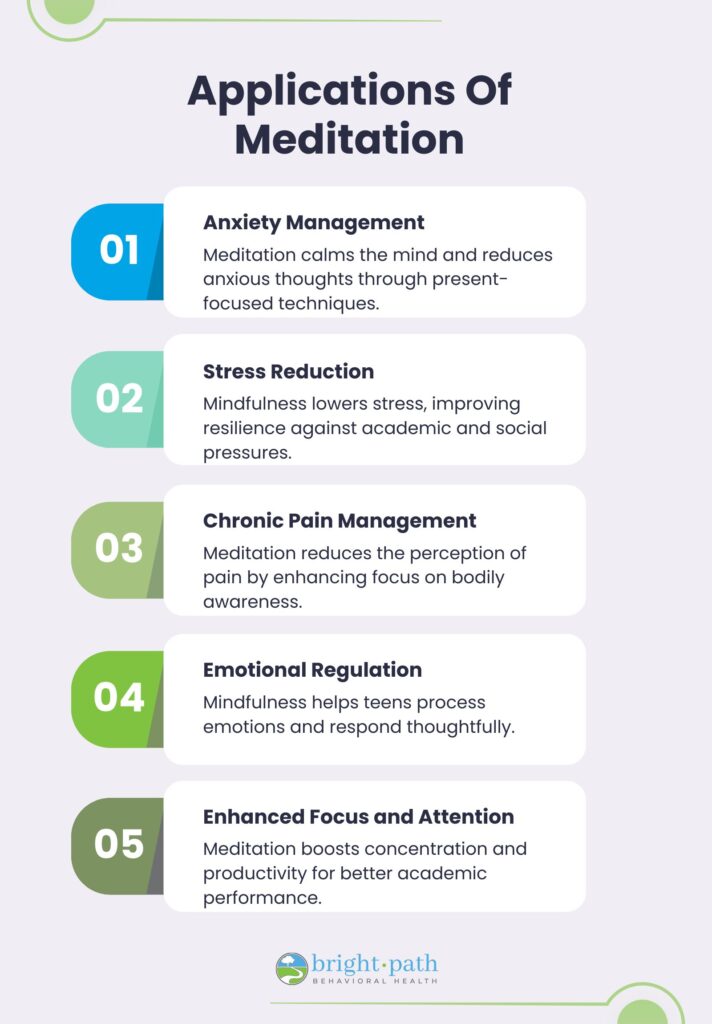
Common applications of meditation include:
- Anxiety Management: Meditation helps teens manage anxiety by encouraging them to focus on the present moment, reducing worry about the future. Techniques such as deep breathing and mindfulness diminish the intensity of anxious thoughts and promote a sense of calm. In 2022, 11% of North Carolina children aged 3 to 17 received a diagnosis of depression or anxiety from a healthcare provider, marking a 48.7% increase from 2016. The reduction of anxiety with meditation was measured as an average of 0.56 standard deviations, which is considered a large effect size, according to a meta-analysis by Ellentika C., et al published in Plos One in 2022 titled “The effects of mindfulness-based interventions on symptoms of depression, anxiety, and cancer-related fatigue in oncology patients: A systematic review and meta-analysis.”
- Stress Reduction: Regular meditation practice activates the body’s relaxation response, lowering stress levels. This helps you manage academic demands and social pressures, building emotional resilience and fostering a more balanced state of mind. A pilot study by Pragati G., et al published in Sage Journals in 2023, “The Effect of Mindfulness Practice on Adolescents,” found that mindfulness practice significantly reduces stress in adolescents. Before the intervention, participants had an average score of 23.74 on the Perceived Stress Scale (PSS). After the intervention, the average score dropped to 18.85, showing a meaningful improvement (p < .001). This highlights that mindfulness effectively lowers stress levels in teens.
- Chronic Pain Management: Mindfulness techniques help you take control of how you perceive pain. By noticing bodily sensations without judgment, you shift focus away from discomfort, reducing the intensity of the pain experience.
- Emotional Regulation: Meditation builds self-awareness, helping you recognize and process emotions more effectively. This practice strengthens emotional intelligence, empowering you to respond thoughtfully instead of reacting impulsively.
- Enhanced Focus and Attention: Mindfulness trains your mind to stay present and attentive, improving concentration. With a sharper focus, you engage more fully in studies and activities, boosting productivity and performance.
You may also be interested in our other articles such as:
Motherhood and Mindfulness: Building Resilience through Self-Compassion
Teen Mental Health: Meaning, Issues, Causes, Symptoms and Effect
What Are The Benefits Of Meditation?
The benefits of meditation are physical, mental, and emotional, offering improvements such as reduced muscle tension and lower blood pressure, enhanced focus and clarity of thought, increased self-awareness, and better mood regulation. These advantages significantly enhance the overall well-being of teens, helping them navigate the challenges of adolescence with greater ease and resilience.
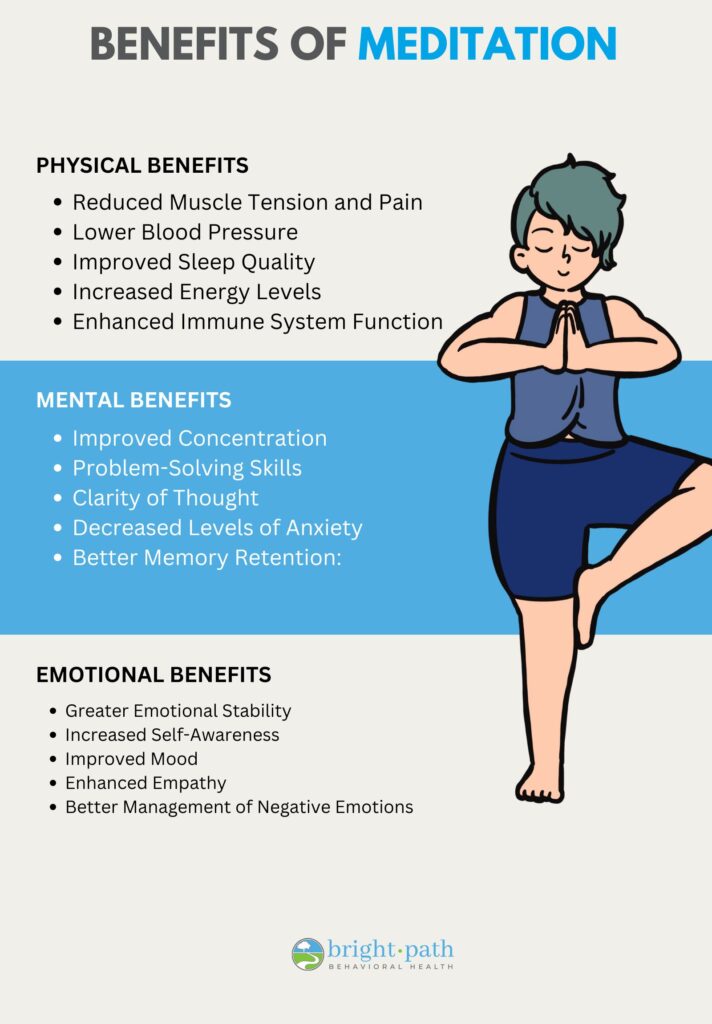
Physical Benefits of Meditation
Physical Benefits of Meditation include reduced muscle tension, lower blood pressure, improved sleep quality, increased energy, and enhanced immune function. Meditation helps relax your body, calm your nervous system, and improve overall physical health.
The common physical benefits of meditation include:
- Reduced Muscle Tension and Pain: Meditation helps you relax, easing muscle tension and releasing physical stress stored in your body. Focusing on your breath and practicing mindfulness lowers the perception of pain, making chronic discomfort easier to manage.
- Lower Blood Pressure: Regular meditation calms your mind and body, reducing stress levels and helping your heart work more efficiently. This relaxation response contributes to improved cardiovascular health and sustained lower blood pressure over time.
- Improved Sleep Quality: Meditation prepares you for restful sleep by calming racing thoughts and reducing anxiety. Techniques like mindfulness or guided imagery help you relax before bed, making it easier to fall asleep and stay asleep for better overall health.
- Increased Energy Levels: Reduced stress and a calm mind restore your energy levels. Meditation revitalizes you, enhancing mental clarity and focus, which boosts productivity and promotes a greater sense of well-being.
- Enhanced Immune System Function: Meditation supports your immune system by reducing stress and promoting relaxation. Lower inflammation and improved immune response help you stay healthier and more resilient.
Mental Benefits of Meditation
Mental benefits of meditation are sharpening mental faculties, improving concentration, enhancing creativity, providing greater clarity of thought, and decreasing anxiety and stress. Meditation fosters a focused and productive mindset for teens facing academic pressures.
The mental benefits of meditation include:
- Improved Concentration: Meditation trains your mind to stay present, enhancing focus and attention. This helps you complete tasks more efficiently.
- Problem-Solving Skills: A relaxed mind fosters creativity and innovation, encouraging new ideas and effective solutions.
- Clarity of Thought: Meditation reduces mental clutter, giving you clearer thinking to process information and make better decisions.
- Decreased Anxiety: Relaxation techniques calm your mind and body, lowering anxiety for improved focus and emotional balance.
- Better Memory Retention: Meditation enhances focus and strengthens neural connections, helping you retain and recall information more effectively.
Emotional Benefits of Meditation
The emotional benefits of meditation are fostering a greater sense of well-being, developing emotional stability, increasing self-awareness, and improving mood. Meditation promotes mindfulness, enabling better management of negative emotions. Meditation enhances empathy and compassion towards others, which is vital during the formative teenage years.
The emotional benefits of meditation include:
- Greater Emotional Stability: Meditation trains you to observe thoughts and feelings without reacting, building resilience, and helping you respond to stress with calmness and clarity.
- Increased Self-Awareness: Focused attention in meditation deepens your understanding of yourself, helping you reflect on thoughts and behaviors to recognize emotional patterns.
- Improved Mood: Meditation reduces stress and promotes relaxation, fostering a positive outlook and lowering symptoms of depression for better emotional well-being.
- Enhanced Empathy: By connecting with your emotions, meditation strengthens compassion and understanding, reducing feelings of isolation and fostering deeper connections with others.
- Better Management of Negative Emotions: Mindfulness practices teach you to acknowledge emotions without judgment, equipping you to handle negativity with healthier responses.
How Effective Is Meditation For Mental Health?
Meditation is a very effective tool for improving mental health in teens, particularly in reducing symptoms of anxiety and depression. It has over 80% success rate in reducing academic burnout and social anxiety symptoms among teenagers, per experimental research by Zabihullah A., et Al published in the Annals of Medicine and Surgery in 2023 titled “The effectiveness of adolescent-oriented mindfulness training on academic burnout and social anxiety symptoms in students.”
If you are not sure where to find support for your teen in North Carolina, our adolescent mental health treatment programs in North Carolina offer holistic approaches tailored to their unique needs. We provide comprehensive outpatient therapy that equips teens with effective coping strategies while addressing underlying issues.
How To Properly Meditate?
To properly meditate, start slowly, set a consistent schedule, find a quiet, comfortable space to sit or lie down, allow thoughts to arise without judgment, and gently bring your focus back when you drift.
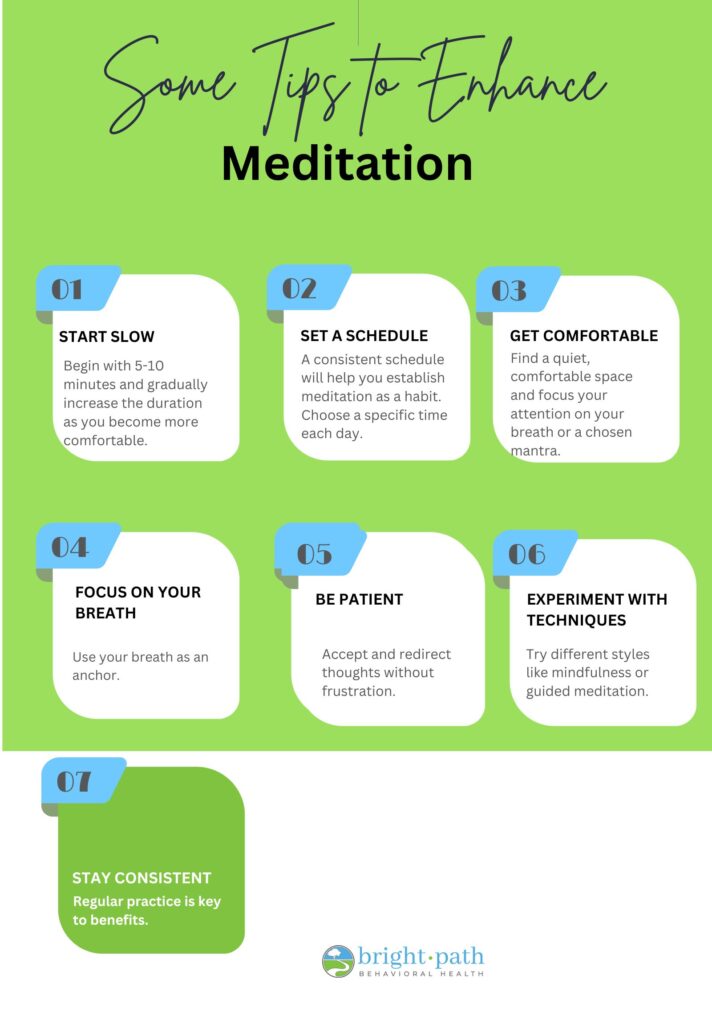
Here are some meditation tips to enhance your practice:
- Start slow: Begin with 5-10 minutes and gradually increase the duration as you become more comfortable.
- Set a schedule: A consistent schedule will help you establish meditation as a habit. Choose a specific time each day.
- Get comfortable: Find a quiet, comfortable space and focus your attention on your breath or a chosen mantra.
- Focus on your breath: Use your breath as an anchor.
- Be patient: Accept and redirect thoughts without frustration.
- Experiment with techniques: Try different styles like mindfulness or guided meditation.
- Stay consistent: Regular practice is key to benefits.
Does Meditation Help With Anxiety
Yes, meditation helps with anxiety. Meditative Therapies significantly reduced anxiety symptoms compared to control groups, with a standardized mean difference indicating moderate effectiveness (SMD = -0.52 to -0.59), as found by a systematic review and meta-analysis of randomized controlled trials by Kevin W., et al published in the Depression Anxiety Journal in 2013 titled” This shows that meditation not only alleviates anxiety symptoms but also equips individuals with better coping mechanisms for stress.
How Does Meditation Reduce Stress?
Meditation reduces stress by promoting relaxation and altering the brain’s response to stressors. When individuals engage in meditation, they experience a decrease in the activity of the amygdala, a brain region associated with stress and anxiety. This reduction in amygdala activity can lead to lower levels of anxiety and improved emotional regulation.
A pilot study by Pragati G., et al published in Sage Journals in 2023 “The Effect of Mindfulness Practice on Adolescents” found a significant reduction in perceived stress among adolescents participating in the mindfulness intervention, with pre-intervention scores on the Perceived Stress Scale (PSS) averaging 23.74 (SD = 6.26) and post-intervention scores dropping to 18.85 (SD = 6.43), resulting in a statistically significant improvement (p < .001).
Furthermore, mindfulness meditation enhances self-awareness and fosters greater control over one’s thoughts and emotions, which mitigates stress responses.
What Mental Health Resources For Teens Are Available For Families In North Carolina?
Mental health resources for teens in North Carolina include the 988 Suicide & Crisis Lifeline, providing 24/7 support, NCDHHS’s Adolescent Health Resource Center, offering comprehensive information, SAMHSA’s National Helpline for treatment referrals, and NAMI’s specialized family support. North Carolina YMCAs actively promote teen mental health awareness, while NC 211 connects individuals with local services.
Additionally, our adolescent mental health center in Wake Forest serves as a vital resource for teens and families, offering specialized treatment programs, compassionate professional care, and evidence-based therapies that complement these community resources while providing personalized mental health support for adolescents in crisis.