
-1.svg)
Social Anxiety Disorder (SAD), commonly referred to as social phobia, is characterized by an intense fear of social situations that lead to embarrassment or humiliation. People with this disorder experience overwhelming anxiety in situations where they are scrutinized or judged by others, leading to significant distress and avoidance behaviors. Social Anxiety Disorder (SAD) impacts approximately 7% of adults in the U.S. each year, with about 12.1% experiencing it at some point in their lives, according to a study by the National Institute of Mental Health (NIMH) titled “Social Anxiety Disorder.”
Symptoms of social anxiety include fear of being judged, excessive worry about upcoming social events, physical symptoms like sweating or trembling, and avoidance of social situations. In teenagers, social anxiety manifests as reluctance to participate in class, fear of speaking in front of peers, and heightened self-consciousness about their appearance or actions. This affects their mental health, leading to isolation, depression, or academic challenges. Symptoms in children include extreme shyness, crying or tantrums in social situations, reluctance to speak, and withdrawal from play activities. It is crucial to recognize these symptoms early to provide appropriate support.
The causes of Social Anxiety Disorder (SAD) are multifaceted, including genetic predisposition, environmental factors, and neurobiological influences. Research by Murray B. published in the American Journal of Medical Genetics in 2018 titled “Genetic Risk Variants for Social Anxiety” indicates that the genetic correlation between social anxiety and extraversion (rg = -0.52) suggests that lower levels of extraversion also contribute to the development of SAD. Risk factors of SAD include a family history of anxiety disorders, negative experiences in social settings, and personality traits such as high sensitivity or low self-esteem.
Treatment for social anxiety disorder includes cognitive-behavioral therapy (CBT), exposure therapy, and medication (e.g., SSRIs). For teens, therapy focuses on developing coping strategies and building social skills. While social anxiety is managed effectively, a complete “cure” varies; many individuals learn to cope with their anxiety and lead fulfilling lives.
The most effective ways to overcome social anxiety include gradual exposure to feared social situations, cognitive restructuring to challenge negative thoughts, and seeking professional help. Support groups and peer therapy also provide valuable encouragement and strategies for coping.
What Is Social Anxiety Disorder?
Social Anxiety Disorder (SAD) is a mental health condition characterized by an intense fear of social situations where individuals are judged or scrutinized by others. This overwhelming fear manifests as excessive self-consciousness, leading to avoidance behavior that interferes with daily life. According to the National Institute of Mental Health (NIMH), The findings of the study titled “Social Anxiety in Young People: A Prevalence Study in Seven Countries,” authored by Philip Jefferies and Michael Ungar, have been accepted for publication in PLOS One indicate significant variations in social anxiety prevalence across countries, with the U.S. reporting the highest rates at 57.6% of participants exceeding the SAD threshold, while Indonesia reported the lowest at 22.9%.
SAD is classified under anxiety disorders in the Diagnostic and Statistical Manual of Mental Disorders (DSM-5), which outlines specific criteria for diagnosis, including enduring fear or anxiety related to social interactions. Scientific studies reveal that individuals with SAD are at a higher risk of developing comorbid conditions, such as depression or substance abuse. Research by StatPearls titled “Social Anxiety Disorder: Recognition, Assessment and Treatment” indicates that around 53% of those with SAD also experience a major depressive episode at some point. These statistics underscore the significant impact of social anxiety on mental health and daily functioning, highlighting the importance of understanding and addressing this disorder.
What Is Social Anxiety?
Social anxiety is a persistent and intense fear of social situations that extends beyond the normal nervousness experienced by most individuals. While it’s natural to feel anxious before public speaking or attending social gatherings, those with social anxiety endure overwhelming self-consciousness and dread that significantly impair their daily functioning. Unlike fleeting and manageable nervousness, social anxiety manifests as persistent performance anxiety, characterized by a fear of being judged or humiliated in front of others.
Global prevalence estimates for Social Anxiety Disorder (SAD) indicate that 1.3% of individuals experience symptoms in the past 30 days, 2.4% in the past year, and 4.0% over their lifetime, according to research by Dan J. et al published in BMC Medicine in 2017 titled “The cross-national epidemiology of social anxiety disorder: Data from the World Mental Health Survey Initiative.” Rates are lowest in low and lower-middle-income countries, as well as in the African and Eastern Mediterranean regions, while they are highest in high-income countries, particularly in the Americas and the Western Pacific. The age of onset for SAD is typically early, with the greatest persistence observed in upper-middle-income countries, Africa, and the Eastern Mediterranean.
This heightened emotional response often leads to avoidance behaviors, such as skipping social events or evading eye contact, which exacerbate feelings of isolation. Interpersonal fears about how one is perceived by peers dominate thoughts, resulting in chronic distress. Consequently, social anxiety creates a cycle of avoidance and emotional turmoil, making it increasingly difficult for those affected to engage in typical social interactions.
What Are the Symptoms of Social Anxiety Disorder?
The symptoms of Social Anxiety Disorder (SAD) include fear of social interactions, rapid heartbeat, and exhibition of avoidance patterns. People with this disorder experience social phobia, which is characterized by intense fear and anxiety triggers related to social situations.
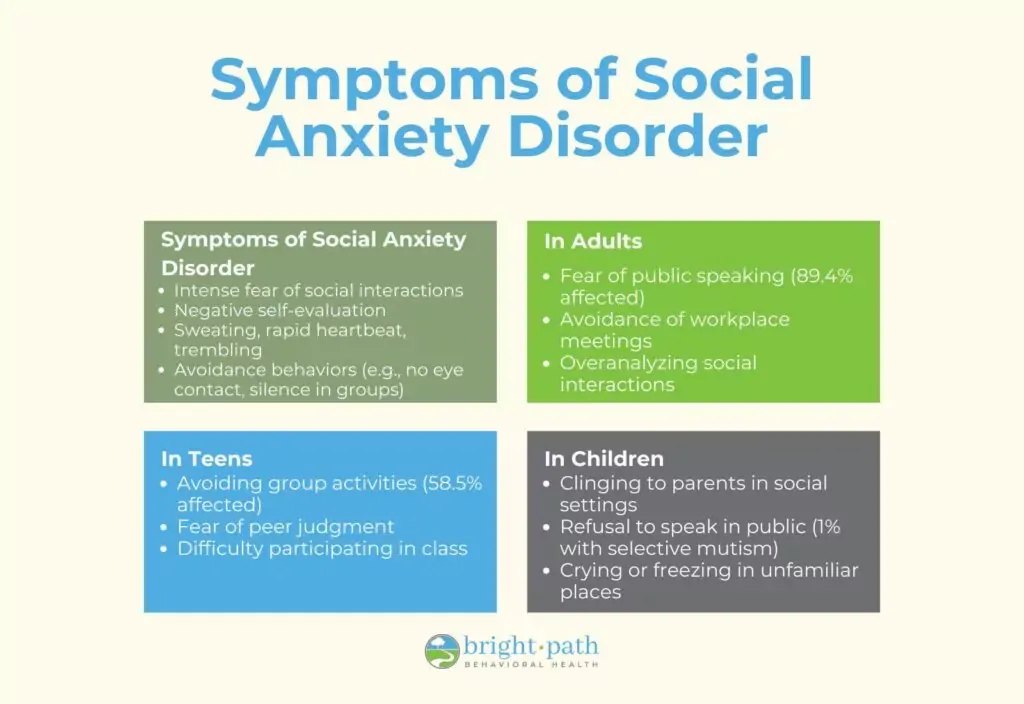
Below are the primary symptoms associated with SAD:
- Emotional symptoms: These include intense fear of social interactions and negative self-evaluation, where patients constantly assess themselves harshly, fearing embarrassment or humiliation. Emotional distress like comorbid depression has a lifetime prevalence of 20% to 70% among individuals with social anxiety disorder, according to a study published by Wikipedia in 2025 titled “Anxiety Disorder.”
- Physical symptoms: Common physical manifestations are sweating, rapid heartbeat, and trembling, which occur even in low-stress situations, heightening the sense of anxiety.
- Behavioral symptoms: Individuals exhibit avoidance patterns, such as avoiding eye contact or experiencing difficulty speaking in groups. These behaviors stem from the desire to evade situations that provoke anxiety.
What Are the Symptoms of Social Anxiety in Adults?
The symptoms of Social Anxiety Disorder in adults include fear of public speaking, avoidance of workplace meetings, and overanalyzing of social interactions. These symptoms lead to a negative impact on their careers and relationships.
Below are specific symptoms commonly observed in adults:
- Fear of public speaking: A pervasive dread of speaking in front of groups, leading to avoidance of such situations. Approximately 89.4% of individuals with social anxiety disorder experience a fear of public speaking, as indicated in a 2025 research by Magnetic Speaking titled “7 Unbelievable ‘Fear of Public Speaking’ Statistics.”
- Avoidance of workplace meetings: Reluctance to participate in meetings or group discussions due to fear of judgment or criticism.
- Overanalyzing social interactions: Constantly revisiting and scrutinizing past conversations, worrying about how they were perceived.
What Are the Symptoms of Social Anxiety in Teens?
The symptoms of Social Anxiety Disorder in teens are avoiding group activities, fear of being judged by peers, and difficulty participating in class.
Below are specific symptoms of social anxiety in teens:
- Avoiding group activities: Many teens with social anxiety tend to steer clear of social gatherings, clubs, or team sports due to an overwhelming fear of judgment. A 2018 study in Lithuanian secondary schools examined 1,722 participants (46.1% male, 53.9% female) using the Social Anxiety and Avoidance Scale for Adolescents. Analysis revealed that 58.5% of the adolescents experienced high social anxiety, and 14.7% displayed significant avoidance behavior, according to a study by Research Gate published in 2021 titled “Social Anxiety in 15–19 Year Adolescents in Association with Their Subjective Evaluation of Teen Mental Health and Physical Health.”
- Fear of being judged by peers: A significant concern for socially anxious teens is the fear of being negatively evaluated by their peers. This fear leads to excessive worry about how they are perceived in social situations, contributing to feelings of isolation.
- Difficulty participating in class: Many adolescents with social anxiety struggle to engage in classroom discussions or activities, fearing embarrassment or making mistakes. Studies show that social anxiety hinders academic performance, with many teens avoiding participation altogether due to anxiety.
What Are the Symptoms of Social Anxiety in Children?
The symptoms of Social Anxiety Disorder in children are clinging to parents in social situations, refusing to speak in front of others, and crying in unfamiliar environments. These symptoms impact their social development and interactions.
The symptoms of social anxiety in children are given below:
- Clinging to parents in social situations: Many children with social anxiety feel secure only when near their caregivers, refusing to engage with peers or unfamiliar adults.
- Refusing to speak in front of others: Some children exhibit selective mutism, choosing not to speak in certain social settings despite being verbal at home or in comfortable environments. A study by Chaya R. et al. published in Eur Child Adolescent Psychiatry in 2021 titled “Diagnosing selective mutism: a critical review of measures for clinical practice and research” suggests that 1% of children face selective mutism due to social anxiety.
- Crying or freezing in unfamiliar environments: In new or stressful situations, children with social anxiety become overwhelmed, leading to tears or an inability to move or respond.
When Does Social Anxiety Become Chronic?
Social anxiety becomes chronic when it persists for an extended period, leading to long-term anxiety and disruptions in daily life. Chronic Social Anxiety Disorder (SAD) results in persistent avoidance of social situations, causing functional impairment in areas like academics, career, and relationships. This ongoing avoidance leads to additional mental health issues, such as depression. Professional intervention is essential when social anxiety interferes with daily functioning, as indicated by persistent anxiety, isolation, difficulty performing tasks, or physical symptoms like panic attacks. Early recognition of these signs is crucial for effective treatment and support.
What Causes Social Anxiety Disorder?
SAD is caused by a combination of hereditary influences, brain chemistry imbalances, and past negative social experiences. Genetic predisposition plays a significant role, as individuals with a family history of anxiety disorders are up to 2 to 3 times more likely to develop social anxiety themselves. Additionally, neurotransmitter imbalances, particularly involving serotonin and dopamine, have been linked to anxiety disorders.
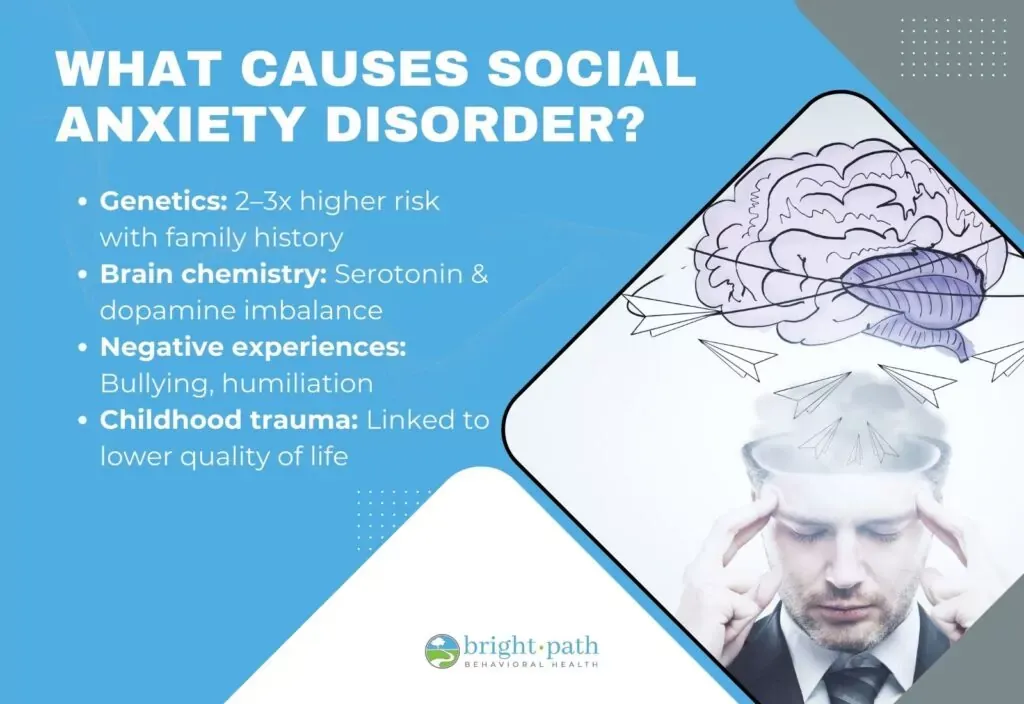
Past negative social experiences, such as bullying or humiliation, also contribute to the development of social anxiety. Furthermore, people with social anxiety and a history of childhood trauma reported significantly lower quality of life compared to healthy controls, with a mean difference of 107.08 points (p < 0.001) compared to those with trauma and 98.04 points (p < 0.001) compared to those without trauma, as mentioned in a 2019 research by Carolien J. et al published in the South African Journal of Psychiatry in 2019 titled “Social anxiety disorder and childhood trauma in the context of anxiety (behavioral inhibition), impulsivity (behavioral activation) and quality of life.” Together, these factors create a complex interplay that increases vulnerability to social anxiety disorder.
Can Social Anxiety Suddenly Be Developed?
Yes, social anxiety can develop suddenly, especially in response to stressful events or significant life transitions. Late-onset anxiety is triggered by experiences such as social trauma, which occurs due to bullying, public humiliation, or rejection. Research by Anthony J. et al published in the Journal of Psychopathology and Behavioral Assessment abbreviation in 2014 titled “The Relevance of Age of Onset to the Psychopathology of Social Phobia” shows that Out of 194 people studied, about 33% point to a specific stressful event that triggered their social phobia, while 45.6% reported ongoing stress around the time their anxiety began.
Neurological changes, such as alterations in brain function or chemistry, also play a role, as the brain’s response to stress becomes heightened during challenging periods. Also, negative social feedback, such as criticism or ridicule in social situations, reinforces feelings of inadequacy and anxiety, leading to the sudden onset of social anxiety. This combination of factors highlights how quickly and unexpectedly social anxiety manifests, particularly during vulnerable times in a person’s life.
How Is Social Anxiety Disorder Treated?
Social anxiety disorder is treated through cognitive behavioral therapy, medication, and exposure therapy.
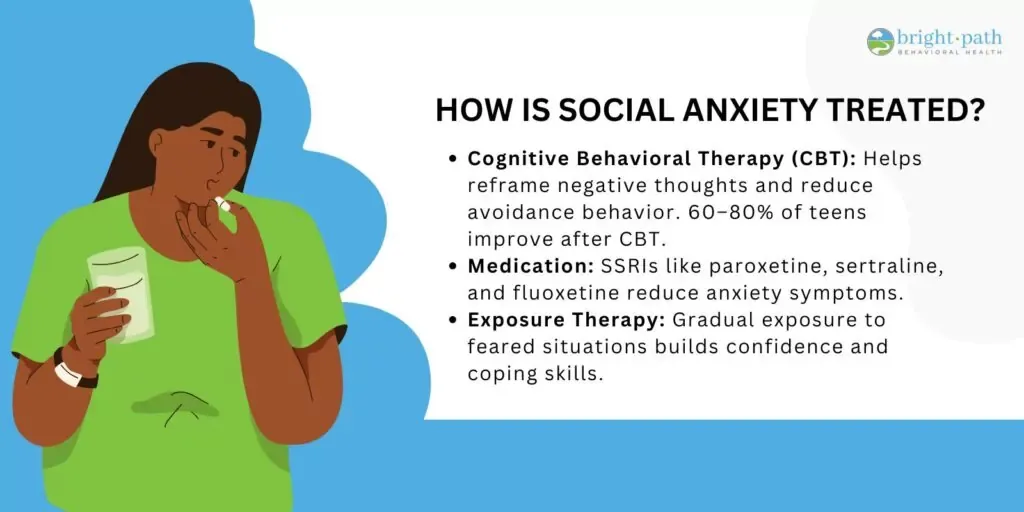
Below are the social anxiety treatments for teens, adults, and children:
- Cognitive Behavioral Therapy (CBT): CBT is a structured, time-limited therapy that focuses on changing negative thought patterns and behaviors associated with social anxiety. Between 60% and 80% of young people experience significant improvement in their anxiety symptoms after CBT treatment, according to a study by Philip C. et al.. published in Psychiatry Online in 2015 titled “CBT for Adolescents With Anxiety: Mature Yet Still Developing.”
- Medication: Pharmacological treatments for social anxiety disorder (SAD) include selective serotonin reuptake inhibitors (SSRIs) such as sertraline and fluoxetine, which are commonly prescribed. A systematic review by Taryn W. et al. published in Acta Neuropsychiatrica in 2020 titled “Pharmacological treatments for social anxiety disorder in adults: a systematic review and network meta-analysis” found that paroxetine was particularly effective in reducing symptom severity compared to placebo, with other SSRIs like escitalopram and fluvoxamine also showing positive responses. However, fluvoxamine had higher dropout rates due to adverse effects. Overall, these medications play a crucial role in the management of SAD, with paroxetine recommended as a first-line treatment option.
- Exposure Therapy: Exposure therapy is a behavioral intervention that involves gradual exposure to feared social situations, aiming to desensitize individuals to their anxiety triggers. This method has been shown to significantly reduce social anxiety over time, helping individuals confront and manage their fears effectively. Notably, a 2024 study published in Verywell Minds 2024 titled “How to Practice Exposure Therapy for Social Anxiety Disorder” indicates that 15% to 30% of people experience public speaking anxiety, highlighting the commonality of social fears. As individuals progressively face these situations, they build coping skills, leading to improved functioning in daily life. For those with severe symptoms, seeking professional guidance is essential to ensure effective management and support throughout the exposure process.
What Is the Difference Between Social Anxiety And Shyness?
The difference between social anxiety and shyness is primarily rooted in their definitions and impacts on daily life. Shyness is considered a personality trait characterized by discomfort or awkwardness in social situations, but it does not lead to significant distress or avoidance of social interactions. Many people who identify as shy still engage in social activities without major impairment in their lives. In contrast, social anxiety disorder (SAD) is a diagnosable mental health condition that involves intense fear, embarrassment, or humiliation in social situations, leading to avoidance behaviors. Individuals with SAD experience distress that severely hinders their ability to function in daily life, affecting relationships, work, and overall quality of life.
According to a study by the Social Anxiety Institute titled “Shyness… Or Social Anxiety Disorder?” while about 50% of individuals with social anxiety report having been shy, less than 25% of shy individuals meet the criteria for social anxiety disorder. This highlights that shyness and social anxiety are different constructs, with social anxiety disorder being associated with greater severity of symptoms and functional impairment.
Can Social Anxiety Disorder Be Cured?
Yes, social anxiety can be cured depending on various factors, including the individual’s commitment to treatment and the specific therapeutic approaches used. Long-term coping strategies, such as ongoing therapy, mindfulness practices, and self-help techniques, enhance treatment outcomes and help maintain progress.
Therapy, particularly cognitive behavioral therapy (CBT), has also proven effective, with about 60-80% of participants reporting a reduction in anxiety symptoms, per a study by Philip C. et al.. published in Psychiatry Online in 2015 titled “CBT for Adolescents With Anxiety: Mature Yet Still Developing.”. Chronic versus episodic anxiety also plays a role; those with episodic anxiety find it easier to achieve and maintain remission due to the less persistent nature of their symptoms. Implementing self-help strategies, such as gradual exposure to social situations and relaxation techniques, supports long-term management and contributes to a lasting cure.
How Does Social Anxiety Disorder Affect Daily Life?
SAD affects daily life by causing functional impairment across various domains, including career progression, friendships, and romantic relationships. In the workplace, individuals avoid meetings, presentations, or networking opportunities due to fear of judgment, which hinders their professional growth and limits advancement opportunities. This avoidance led to missed promotions and job changes, perpetuating a cycle of anxiety. Research by the National Institue of Mental Health titled “Social Anxiety Disorder” shows that 29.9% of adults with SAD experience serious impairment in their ability to function in work and social roles, as measured by the Sheehan Disability Scale
In terms of friendships, social anxiety results in isolation and social withdrawal, as individuals choose to stay home rather than engage in social activities. This creates feelings of loneliness and exacerbates anxiety, making it even more challenging to form new connections. Romantic relationships also suffer, as the fear of intimate interactions prevents individuals from pursuing or maintaining meaningful partnerships. Overall, the persistent anxiety and avoidance behaviors associated with social anxiety disorder significantly diminish one’s quality of life, leading to chronic stress and potential co-occurring mental health issues, such as depression.
What Are the Risk Factors for Social Anxiety Disorder?
Common risk factors for social anxiety disorder are family history, negative social experiences, and personality traits.
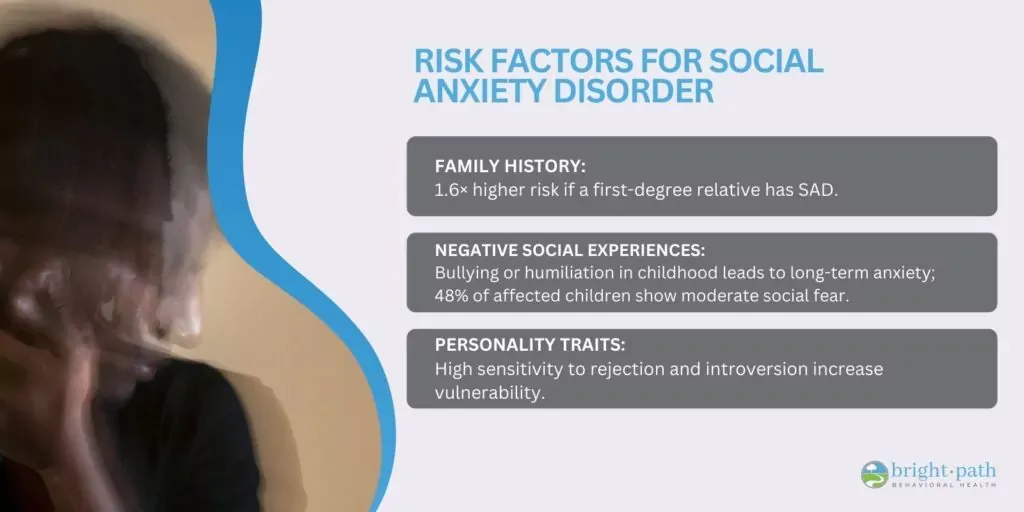
The risk factors for social anxiety disorder are given below:
- Family history: A genetic predisposition increases the likelihood of developing social anxiety disorder, as individuals with a family history of anxiety disorders are at a higher risk. First-degree relatives of individuals with SAD have a lifetime prevalence of 10.6% compared to 6.5% in control groups, indicating a 1.6-fold increased risk, per a study by Knappe et al published in the Social Science Open Access Repositor in 2010 titled “Familial risk factors in social anxiety disorder: calling for a family-oriented approach for targeted prevention and early intervention.”
- Negative social experiences: Experiences such as bullying or humiliation during childhood significantly impact an individual’s self-esteem and social confidence, increasing the risk of developing social anxiety. A study by Neamat M. et al. published in the Egyptian Journal of Health Care in 2021 titled “Correlation Between Bullying and Social Anxiety Among Burn” shows that nearly 48% of children experienced moderate levels of social fear and anxiety, highlighting how these negative experiences lead to increased anxiety. Furthermore, with over 71.9% of children suffering severe psychological effects and academic challenges due to bullying, it’s clear that such experiences have lasting detrimental effects on mental health and overall development.
- Personality traits: People with high sensitivity to rejection or those who are naturally more introverted are more susceptible to social anxiety. These traits make them more vulnerable to anxiety in social situations.
How Is Social Anxiety Disorder Diagnosed?
Social anxiety disorder is diagnosed using the DSM-5 criteria, psychological assessments, and validated anxiety scales. According to the DSM-5, diagnosis requires intense fear or anxiety in social situations, lasting at least six months and causing significant impairment in daily functioning. Psychologists use standardized scales like the Liebowitz Social Anxiety Scale (LSAS), which has demonstrated sensitivity in identifying the disorder.
Recent findings also support the use of the Social Interaction Anxiety Scale (SIAS-6) and the Social Phobia Scale (SPS-6), which have shown strong internal consistency (McDonald’s ω of .87 for SIAS-6 and .88 for SPS-6 in adults) and high discriminative ability, according to a study by Andras N. et al. published in BMC psychiatry in 2021 titled “Psychometric properties of the social interaction anxiety scale and the social phobia scale in Hungarian adults and adolescents.” These scales effectively differentiate individuals with social anxiety disorder from those without, further enhancing the reliability of social anxiety assessments.
How Can Social Anxiety Disorder Be Prevented?
Social anxiety disorder is partially prevented through childhood confidence-building, early social skills training, and stress management techniques. Early social skills training equips children with the tools to navigate social situations effectively, which decreases the incidence of social anxiety. Additionally, teaching stress management techniques, such as mindfulness, leads to a reduction in anxiety symptoms among adolescents.
Recent findings by Srividya R. et al published in T and F online in 2016 titled “Mindfulness, stress coping and everyday resilience among emerging youth in a university setting: a mixed methods approach” indicate that mindfulness practices significantly improve stress coping and resilience in first-year college students, with a reported decrease in perceived stress levels from a pre-test mean of 3.87 (SD = 0.28) to a post-test mean of 3.77 (SD = 0.28). Implementing these strategies during formative years enhances resilience and decreases the likelihood of developing social anxiety disorder, promoting healthier social interactions.
How Do Social Anxiety Disorders Impact Mental Health?
SAD impacts mental health, leading to comorbidity with depression, substance abuse, and increased suicidal tendencies. Individuals with social anxiety are three times more likely to experience depression, illustrating a strong anxiety-depression link.
Many resort to self-medication with substances like alcohol, resulting in nearly 20% developing an alcohol use disorder, per research by ADAA in 2024 titled “Social Anxiety Disorder and Alcohol Abuse.” The fear and avoidance associated with social anxiety also lead to feelings of hopelessness, raising the risk of suicidal thoughts.
How Can Lifestyle Changes Help Manage Social Anxiety Disorder?
Lifestyle changes can reduce social anxiety symptoms through exercise, mindfulness, and social exposure. These strategies promote overall well-being and resilience.
Below are some practical approaches:
- Exercise: Exercise reduces cortisol levels and increases endorphins, helping to alleviate anxiety symptoms. Research by Maya A. et al. published in the Front Hum Neurosci. In 2021 titled “Physical Activity as a Treatment for Social Anxiety in Clinical and Non-clinical Populations: A Systematic Review and Three Meta-Analyses for Different Study Designs” showed that the effectiveness of PA was more pronounced, resulting in a significant effect size of d = -0.22 (p = 0.001). These findings suggest that regular exercise not only enhances overall well-being but also serves as a promising strategy for reducing anxiety, particularly in clinical populations.
- Mindfulness and meditation: This helps manage anxious thoughts and promotes relaxation, enhancing emotional regulation. Research by Corinne N. et al. published in Frontiers in Psychology in 2020 titled “Mindfulness-Based Interventions for Adolescent Social Anxiety: A Unique Convergence of Factors” indicates that mindfulness-based interventions (MBIs) can significantly reduce symptoms of social anxiety disorder (SAD), with effect sizes ranging from 0.30 to 1.0.
- Social exposure: Social exposure involves gradual practice in low-stress environments to build confidence and reduce avoidance.
What Are the Most Effective Ways to Overcome Social Anxiety?
The most effective way to overcome SAD is through cognitive restructuring, gradual exposure therapy, and breathing techniques. These personal strategies enhance coping mechanisms and build social confidence.
The key techniques for overcoming social anxiety include the following:
- Cognitive restructuring: Involves changing negative thoughts and beliefs about social situations to foster a more positive mindset. A 2014 study by Bethany S. et al. published in the Journal of Anxiety Disorders titled “The impact of cognitive restructuring and mindfulness strategies on postevent processing and affect in social anxiety disorder” demonstrated that cognitive restructuring effectively reduced post-event processing (PEP) in individuals with social anxiety disorder. PEP encompasses the reflective thoughts that often occur after social situations
- Gradual exposure therapy: Focuses on facing fears step by step, allowing individuals to gradually build comfort in social settings. Research by Nayeefa C. et al published in Frontiers in Psychology in 2022 titled “The gold-standard treatment for social anxiety disorder: A roadmap for the future” indicates that exposure therapy can lead to significant reductions in anxiety symptoms, with effect sizes ranging from 0.80 to 1.53 in clinical studies.
Breathing and relaxation techniques: Help manage physiological symptoms of anxiety, promoting a sense of calm during stressful situations.