
-1.svg)
If your child or a loved one is showing signs of hallucinations, delusions, or disorganized thinking, this is more than just teen behavior; it could be a psychotic disorder.
Psychotic disorders are severe mental health conditions that disrupt how a person thinks, feels, and behaves, causing them to lose touch with reality. For teens in Wake Forest, North Carolina, these disorders shatter educational progress, social life, and emotional stability.
In North Carolina, rising mental health needs make early detection even more critical. A study by the North Carolina LME-MCOs found that 67% of individuals treated between 2021 and 2022 were diagnosed with a mental illness. Many of these diagnoses begin in adolescence, are missed due to stigma or confusion with typical developmental changes. Unfortunately, 45% of adults in NC who needed care in 2021 couldn’t access it due to cost. Teens are especially vulnerable, with nearly 12% experiencing a substance use disorder annually, triggering or worsening psychotic episodes.
Recognizing symptoms early, connecting with specialized care, and starting comprehensive treatment dramatically improve outcomes. This guide explains the types, symptoms, causes, and treatment options for psychotic disorders for Wake Forest families navigating this challenge.
What is a psychotic disorder?
A psychotic disorder is a mental illness that causes a loss of contact with reality. It leads to symptoms like hallucinations (hearing or seeing things that aren’t there) and delusions (false beliefs held despite evidence), which severely disrupt how a person thinks, feels, and behaves. Teens experiencing psychosis become isolated, disorganized, or confused, making everyday functioning at home or school extremely difficult.
Psychotic disorders take many forms, with schizophrenia, schizoaffective disorder, and brief psychotic disorder being the most recognized. These conditions emerge suddenly or gradually, with episodes that impair emotional regulation and cognition. In Wake Forest and across North Carolina, the rise in adolescent mental health struggles makes early diagnosis critical. According to the Youth Risk Behavior Survey, nearly 22% of NC high school students considered suicide in 2021, linked to untreated psychosis or co-occurring depression.
Because these disorders interfere with thought processes and self-awareness, they’re misunderstood or misidentified until symptoms escalate. That’s why professional assessment and access to integrated care, such as partial hospitalization, outpatient programs, and antipsychotic medications, are essential in managing psychotic disorders effectively in teens.
What are the Types of psychotic disorders in teens?
The types of psychotic disorders in teens include schizophrenia, schizoaffective disorder, brief psychotic disorder, substance-induced psychosis, and delusional disorder. Each condition presents with core psychotic symptoms such as hallucinations (hearing voices, seeing visions), delusions (fixed false beliefs), disorganized thinking, and impaired behavior. According to a 2023 report by the North Carolina Department of Health and Human Services (NCDHHS), youth mental health initiatives have expanded to improve awareness, intervention, and ongoing care across the state.
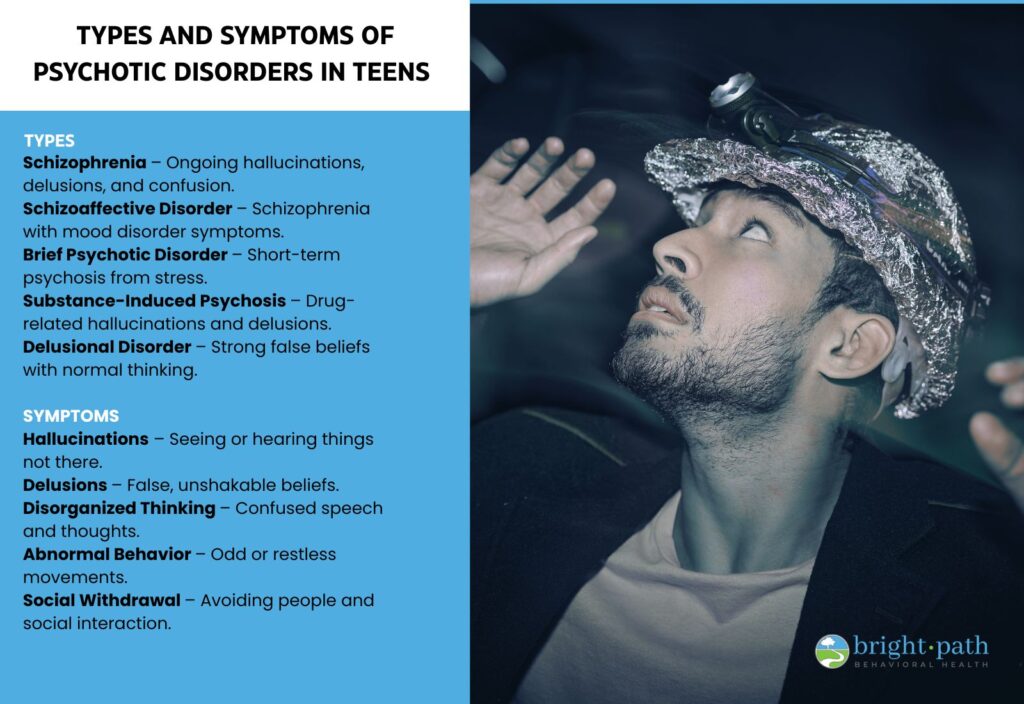
Listed below are the types and symptoms of psychotic disorders in teens.
- Schizophrenia: Persistent hallucinations, delusions, and disorganized thinking severely affecting daily life.
- Schizoaffective Disorder: Symptoms of schizophrenia combined with mood disorders like depression or bipolar disorder.
- Brief Psychotic Disorder: Sudden, short-lived episodes triggered by stress, resolving within a month.
- Substance-Induced Psychosis: Drug-induced psychotic symptoms, with cannabis use increasing the risk among teens.
- Delusional Disorder: Fixed false beliefs without major cognitive disruptions, but impairing judgment and behavior.
- Hallucinations: Seeing or hearing things that aren’t there.
- Delusions: Strong, false beliefs despite evidence to the contrary.
- Disorganized Thinking: Confused speech and trouble organizing thoughts.
- Abnormal Motor Behavior: Agitation, catatonia, or erratic movements.
- Social Withdrawal: Avoiding interactions with family and friends.
What causes psychotic disorders in teens?
The causes of psychotic disorders in teens include a combination of genetic vulnerability, neurochemical imbalances, environmental stressors, and substance use. Teens with a family history of schizophrenia or other psychotic disorders face higher risks. Research indicates that multiple genes, not one, contribute to psychosis risk, and factors like trauma, abuse, or extreme stress activate symptoms. Neurochemical imbalances, particularly involving dopamine and serotonin, are common biological contributors.
In North Carolina, 12.9% of teens experience a substance use disorder annually, with cannabis and hallucinogens directly linked to psychotic episodes. These substances pose heightened risks for genetically predisposed youth, accelerating symptom onset.
Diagnosis involves a full psychiatric assessment, including clinical interviews, brain imaging (CT or MRI), lab tests, and behavioral evaluations. Observations from parents, teachers, and caregivers help detect changes in academic performance or social functioning. Early diagnosis improves outcomes and minimizes long-term disruption, making early intervention crucial.
What are the treatments for psychotic disorders in teens?
The primary treatments for psychotic disorders in teens are partial hospitalization, psychotherapy, medication, and intensive outpatient programs. In Wake Forest, over 1.2 million North Carolinians go without needed substance or mental health treatment each year, These approaches provide critical support.
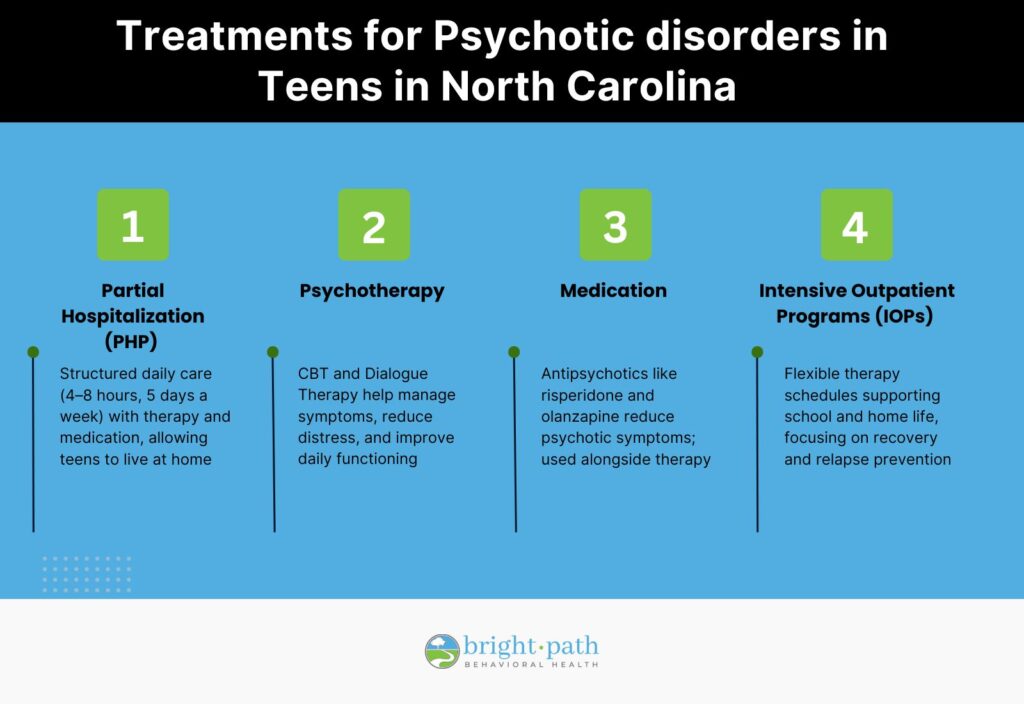
Listed below are the treatments for psychotic disorder in teens.
- Partial hospitalization: A partial hospitalization program offers teens daily structured care, 4 to 8 hours a day, 5 days a week, while allowing them to return home at night. It includes group therapy, coping skill development, and medication management in a safe clinical setting. PHPs are ideal for teens who need intensive care but don’t require full hospitalization.
- Psychotherapy: Cognitive behavioral therapy (CBT) is the most effective approach for teens with psychosis. It helps reframe delusions and hallucinations, reduce distress, and improve functioning. Dialogue Therapy has shown stronger symptom improvement and reduced hospital stays compared to standard psychiatric care.
- Medication: Antipsychotics like risperidone or olanzapine help reduce hallucinations, paranoia, and disorganized thinking. Second-generation antipsychotics are preferred for teens due to the lower risk of movement-related side effects. Medication is combined with therapy for long-term stability.
- Intensive outpatient programs (IOPs): IOPs are flexible, offering multiple therapy sessions weekly while teens maintain school or family routines. These programs focus on skill-building, medication compliance, and relapse prevention. In NC, access gaps are high, and IOPs serve as a critical step-down or alternative to inpatient care.
How long does a psychotic disorder last?
Psychotic disorders last from a few weeks to several years, depending on the type. Brief psychotic disorder resolves in under a month, while schizophrenia and schizoaffective disorder require lifelong management. A study by the North Carolina Behavioral Health Barometer (SAMHSA), titled “Behavioral Health Barometer: North Carolina, Volume 6,” in 2020, found that only 45.3% of adults with mental illness in North Carolina used any mental health service within the past year, despite meeting diagnostic criteria.
Schizophrenia is the most recognized psychotic disorder. It involves persistent hallucinations, delusions, and cognitive disorganization, and is diagnosed when symptoms last six months or longer, per DSM-5 criteria. Schizoaffective disorder, bipolar disorder, and severe depression also involve psychotic features during mood episodes. In North Carolina, over 24.9% of adults report depression or anxiety symptoms, and psychosis overlaps with mood instability, especially in teens under distress.
With early intervention, recovery is possible. Programs like cognitive behavioral therapy and medication compliance reduce hospitalizations and help teens return to school, work, or daily routines. Families in Wake Forest benefit from access to local treatment services that support long-term wellness without needing inpatient hospitalization.
Where to get psychotic disorder treatment for teens in Wake Forest, NC?
You can get treatment for psychotic disorder for teens at addiction and mental health centers in Wake Forest, NC. One key provider in the area offers partial hospitalization, intensive outpatient programs, and dual diagnosis care, all within a supportive, adolescent-focused environment. Their team of licensed professionals specializes in early psychosis, mood-related psychotic episodes, and substance-induced psychosis. Teens receive structured therapy, medication management, and family counseling in a compassionate, recovery-driven setting. Services include daily therapeutic programming, school coordination, and relapse prevention planning.
This center operates in Wake Forest and provides flexible scheduling, urgent assessment availability, and a safe space for youth navigating delusions, hallucinations, or cognitive disruptions. In NC, over 1.2 million residents needed but didn’t receive treatment in 2022; access to localized, walk-in care matters.
Does insurance cover psychotic disorder treatment in NC?
Yes, insurance covers psychotic disorder treatment in NC. Most private insurance plans and Medicaid include benefits for psychiatric evaluations, antipsychotic medications, and outpatient services. However, coverage varies, and families must alwaysverify insurance directly with the provider to confirm copays, session limits, and in-network access before starting treatment.