
-1.svg)
Intermittent Explosive Disorder (IED) is a mental illness marked by repeated, sudden episodes of impulsive aggression that exceed the situation’s provocation. IED differs from typical anger by frequency, intensity, and the lack of control during outbursts. Epidemiological data from the National Comorbidity Survey show IED affects approximately 7.3% of adults in the U.S. at some point in life, translating to over 11 million people. Primary symptoms of IED include verbal rages, physical aggression, irritability, and disproportionate anger responses.
Primary causes of IED involve a combination of genetic vulnerabilities, neurobiological dysfunction in serotonin regulation, and environmental factors such as childhood trauma or exposure to violence. Diagnosis of IED requires a clinical interview, behavioral history, and application of DSM-5 criteria confirming multiple aggressive episodes over a specified period.
Treatment for IED involves a combination of psychotherapy and medication. Cognitive Behavioral Therapy (CBT) ranks as the most effective method due to its ability to restructure aggressive thought patterns. Prognosis improves with consistent therapy and medication adherence but worsens when untreated. IED coexists with bipolar disorder, anxiety disorders, and Oppositional Defiant Disorder, increasing emotional instability and behavioral dysregulation.
Support for individuals with IED involves setting structured boundaries, encouraging therapy attendance, and avoiding escalating confrontations. Key impacts of IED include social isolation, damaged relationships, legal issues, and employment instability. Related mental health conditions frequently include substance use disorder, depression, and attention-deficit/hyperactivity disorder, which amplify the emotional volatility associated with IED.
What are the Symptoms of IED?
The symptoms of Intermittent Explosive Disorder (IED) include emotional dysregulation and uncontrolled physical reactions triggered by minor provocations. These episodes are marked by an abrupt onset and intense severity disproportionate to the situation. An IED episode typically lasts less than 30 minutes, with a rapid buildup and sudden release of aggressive behavior.
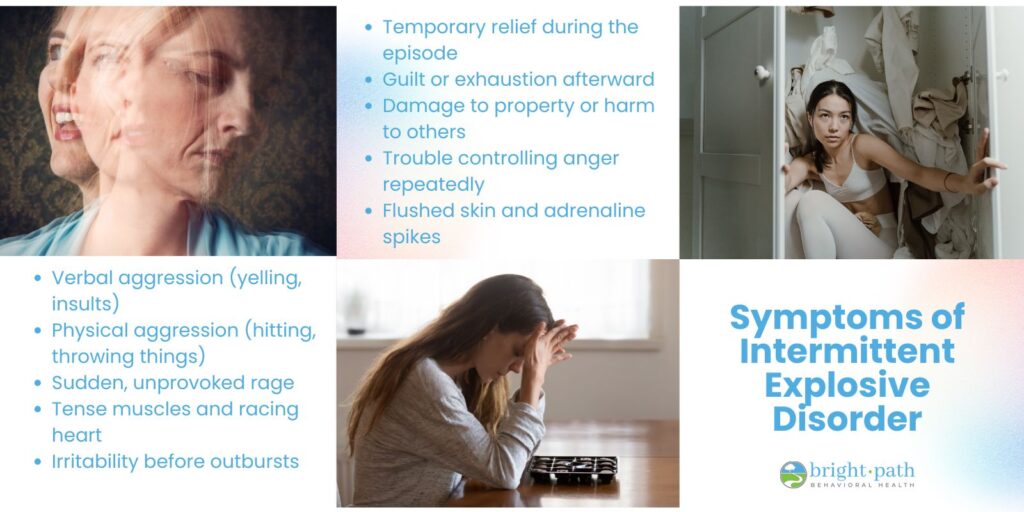
Below are the emotional and physical symptoms of IED:
- Verbal aggression such as shouting, screaming, and intense insults
- Physical aggression, including hitting, pushing, or throwing objects
- Racing heart and muscle tension during outbursts
- Irritability and restlessness prior to the episode
- Feelings of relief during the act of aggression
- Post-episode guilt, shame, or emotional exhaustion
- Sudden onset of rage without clear triggers
- Destruction of property or harm to animals and people without premeditation
- Persistent inability to control anger despite negative consequences
- Increased adrenaline and flushed skin during the episode
What Causes Intermittent Explosive Disorder?
The causes of Intermittent Explosive Disorder (IED) is a combination of genetic vulnerabilities, biological dysfunction, and environmental stressors. The disorder links closely with disrupted emotional regulation and aggressive reactivity due to impaired brain pathways.
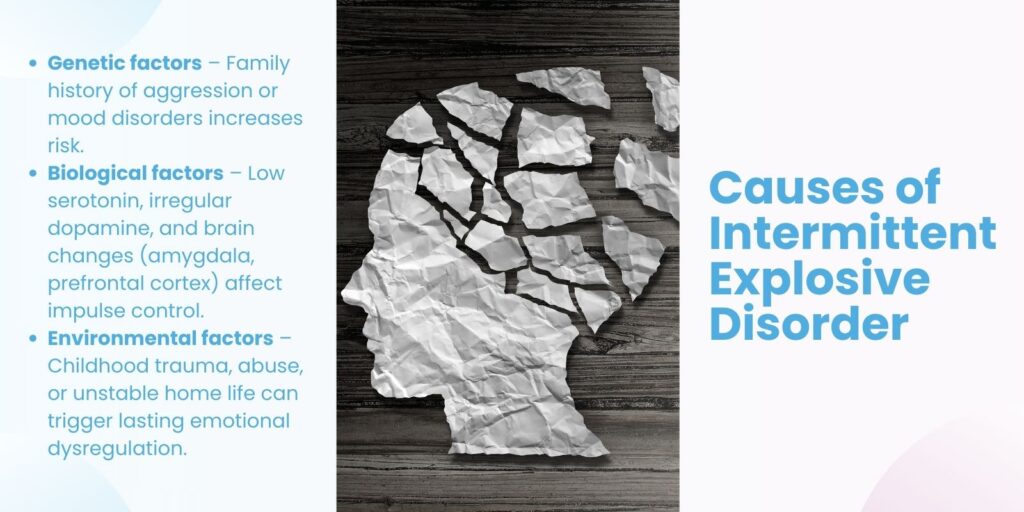
Below are the causes of Intermittent Explosive Disorder:
- Genetic Factors
IED has a hereditary basis. Individuals with a family history of mood disorders or aggressive behavior possess a higher risk due to inherited traits linked to impulse control. - Biological Factors: Neurotransmitter Imbalances
Low serotonin levels and irregular dopamine function alter emotional regulation and impulse suppression. Structural abnormalities in the amygdala and prefrontal cortex contribute to sudden rage responses. - Environmental Factors: Childhood Trauma
Exposure to physical abuse, neglect, or chaotic home environments during early development leads to maladaptive emotional responses and increased aggression in adulthood.
What Triggers Intermittent Explosive Disorder?
The triggers of Intermittent Explosive Disorder (IED) involve external stressors or internal emotional disturbances that overwhelm impulse control.
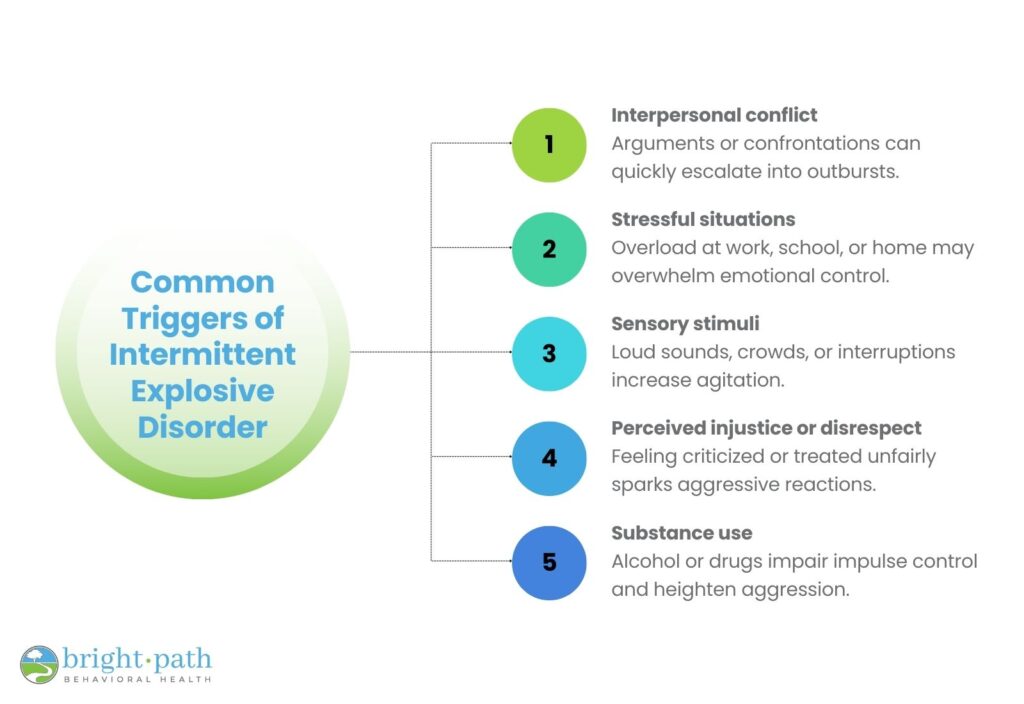
Below are common triggers of IED:
- Interpersonal Conflict
Arguments with family members, partners, or coworkers trigger sudden verbal or physical aggression. - Stressful Situations
High-pressure environments, overwhelming responsibilities, or perceived threats provoke uncontrollable anger episodes. - Sensory Stimuli
Loud noises, crowded places, or unexpected disruptions heighten irritability and trigger reactive outbursts. - Perceived Injustice or Disrespect
Situations involving rejection, criticism, or perceived unfairness lead to explosive responses. - Substance Use
Alcohol or stimulant use lowers inhibition and increases the frequency and intensity of aggressive reactions.
What are the Risk Factors of IED?
The risk factors of Intermittent Explosive Disorder (IED) include genetic, environmental, and psychological contributors that raise the likelihood of developing the condition. Other conditions like a head injury potentially contribute to the development of intermittent explosive disorder (IED). Damage to certain areas of the brain, particularly those involved in emotional regulation and impulse control, may increase the likelihood of aggressive outbursts associated with IED
Below are 7 the risk factors of IED.
- Family history of mental illness
A biological parent or sibling with a mood disorder or impulse-control condition increases susceptibility to IED through genetic inheritance and modeled behavior. - Exposure to violence in childhood
Individuals exposed to physical abuse, domestic conflict, or community violence during formative years develop impaired emotional regulation and heightened reactivity. - Mental health conditions
Coexisting conditions such as bipolar disorder, ADHD, anxiety disorders, or personality disorders frequently appear in individuals with IED, contributing to emotional instability. - Substance use
Chronic use of alcohol, stimulants, or other psychoactive substances disrupts impulse control and aggravates aggression. - Poor emotional regulation skills
Difficulty processing or expressing anger constructively results in explosive reactions to minor provocations. - Traumatic brain injury (TBI)
A head injury can cause Intermittent Explosive Disorder by damaging areas in the prefrontal cortex responsible for impulse control and emotional regulation. - Low socioeconomic status or social stress
Chronic exposure to stressors related to poverty, unemployment, or lack of support systems correlates with heightened impulsivity and aggression.
How is Intermittent Explosive Disorder Diagnosed?
Intermittent Explosive Disorder diagnosis involves structured clinical interviews, standardized psychological assessments, and strict alignment with DSM-5 criteria. Mental health professionals initiate evaluation through a detailed clinical interview to document the frequency, intensity, and duration of aggressive outbursts. Psychological evaluations follow, using behavior checklists, mood inventories, and impulse-control scales to assess emotional regulation patterns.
The Diagnostic and Statistical Manual of Mental Disorders, Fifth Edition (DSM-5), outlines the diagnostic criteria, recurrent aggressive outbursts disproportionate to provocation, occurring at least twice weekly over 3 months or three severe episodes over twelve months. Diagnostic exclusion requires ruling out other medical or psychiatric conditions such as bipolar disorder, substance use disorders, or neurological conditions. Intermittent Explosive Disorder diagnosis applies to individuals aged 6 years and above, provided symptoms exceed developmental expectations. Neuroimaging or EEG scans may assist if neurological involvement is suspected.
What are the Treatment Options for IED?
Intermittent Explosive Disorder (IED) is primarily managed through a combination of therapeutic interventions and medications. The goal of treatment is to reduce impulsivity, anger, and emotional dysregulation. The best treatment for behavioral disorders includes a combination of therapy, such as cognitive-behavioral therapy (CBT), and medications like stimulants, e.g., methylphenidate, or antidepressants, e.g., sertraline. Approaches are customized to individual needs, addressing both the psychological and biological aspects of the disorder.
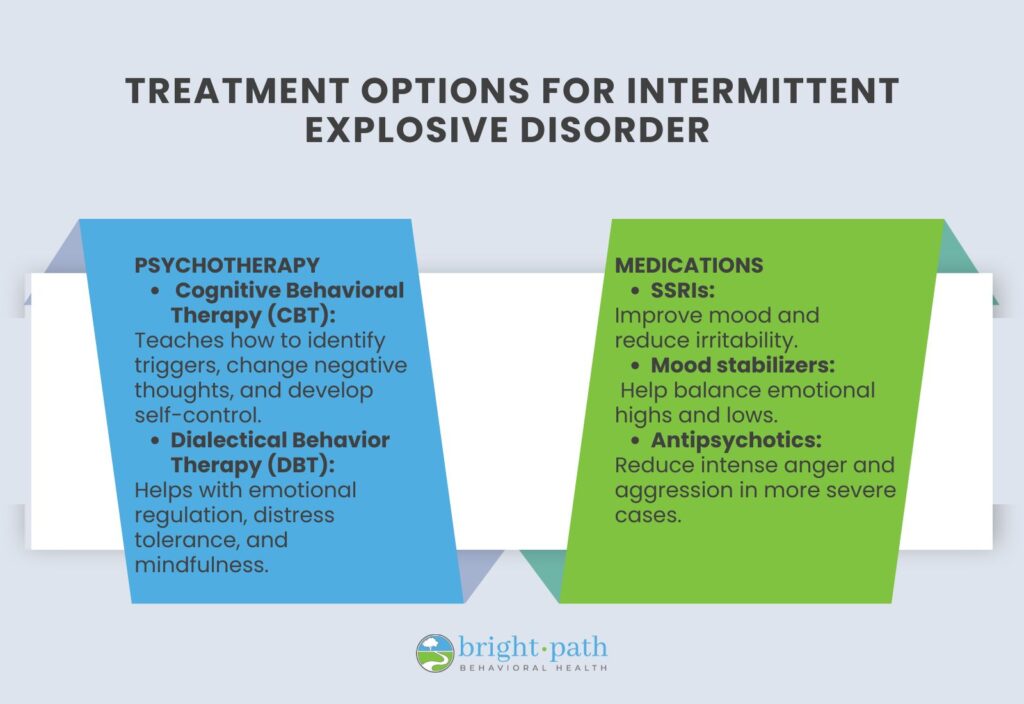
Below are the key treatment methods for IED:
- Psychotherapy
- Medications
Psychotherapy
Psychotherapy, particularly Cognitive Behavioral Therapy (CBT) and Dialectical Behavior Therapy (DBT), is widely supported as effective for treating Intermittent Explosive Disorder (IED). CBT focuses on identifying and changing maladaptive thought patterns that contribute to aggressive behavior. DBT is helpful in teaching emotional regulation, mindfulness, and coping skills. Therapy sessions aim to address the underlying triggers of anger, improve emotional control, and provide patients with strategies to manage impulsive outbursts.
A study by McCloskey et al., titled “Cognitive-behavioral therapy for intermittent explosive disorder: a pilot randomized clinical trial” in 2008, found that CBT reduced aggression, anger, and hostile thinking, with large post-treatment effect sizes. These improvements were sustained at a 3-month follow-up.
Also, a 2025 meta-analysis by Liu et al. found that CBT outperformed pharmacological treatments in achieving full remission from IED symptoms, while SSRIs were particularly useful for managing irritability. The combination of CBT and pharmacotherapy showed the greatest overall benefit.
Medications
Medications are prescribed in conjunction with psychotherapy to help manage the symptoms of IED, especially in more severe cases. A study by Coccaro et al., titled “A double-blind, randomized, placebo-controlled trial of fluoxetine in patients with intermittent explosive disorder,” in 2009 found that treatment with fluoxetine (an SSRI) led to a reduction in aggressive behavior, with 46% of patients achieving full or partial remission of impulsive aggression symptoms. Medications commonly prescribed for IED include.
- SSRIs (Selective Serotonin Reuptake Inhibitors): Used to regulate mood and reduce impulsivity. They help control anger and irritability.
- Mood stabilizers: Medications like lithium and valproate are used to stabilize mood fluctuations and reduce irritability.
- Antipsychotics: These medications help control aggression and manage symptoms of anger.
How to Treat IED Naturally?
Natural treatments for Intermittent Explosive Disorder (IED) focus on enhancing emotional regulation and reducing impulsive behaviors. Below are some of the natural methods to treat IED.
- Mindfulness: Techniques like meditation and deep-breathing exercises help individuals manage their emotions and prevent outbursts.
- Exercise: Physical activity, such as walking or yoga, reduces stress and promotes overall emotional well-being.
- Dietary Changes: A healthy diet with balanced nutrients can support brain function and emotional stability, potentially reducing irritability.
These natural treatments complement traditional therapies and medications, promoting holistic management of IED.
Can IED be cured?
No, Intermittent Explosive Disorder (IED) is not considered curable, but effective treatments enable individuals to manage and control the symptoms. IED is a chronic condition that requires ongoing management to reduce the frequency and intensity of outbursts.
Treatment options, including psychotherapy and medications, play a role in helping individuals with IED regulate impulsive behaviors and manage anger. While treatment helps control the symptoms, the disorder typically persists over time. Early intervention, combined with consistent therapy, improves the management of IED and reduces the severity of episodes.
What is the Prognosis for People with IED?
Intermittent Explosive Disorder (IED) presents long-term challenges for individuals, but early treatment, consistent therapy, and strong support systems improve prognosis. Effective management of IED hinges on timely interventions that address both emotional regulation and impulsivity.
If IED goes untreated, symptoms worsen, leading to more frequent and intense outbursts. Individuals with untreated IED may also experience heightened risks of developing co-occurring mental health conditions like depression and anxiety. IED is indeed a severe mental health disorder, as it can impact personal relationships, career success, and overall well-being. IED can worsen with age, with older individuals experiencing more intense anger episodes and difficulty in managing impulsivity.
How to Support Someone with IED?
Supporting individuals with Intermittent Explosive Disorder (IED) requires consistent emotional and practical involvement. Family and friends play a crucial role in managing the challenges that come with IED. A supportive environment contributes to emotional stability.
Open communication, empathy, and understanding are essential in navigating outbursts and preventing escalation. Encouraging adherence to treatment plans, including therapy and medication, ensures that individuals receive adequate support. Setting clear boundaries and fostering trust help maintain safety and reduce frustration. Active participation in coping strategies and promoting mindfulness techniques offers practical ways to manage emotional volatility.
How to Deal With Someone Who Has Intermittent Explosive Disorder?
To deal with someone with intermittent explosive disorder, remain calm, avoid triggering situations, set clear boundaries, encourage professional help, and consider therapy or support groups for effective communication and coping strategies.
Below are tips for managing conflict and de-escalating situations with someone who has IED.
- Stay calm: Maintain a composed demeanor to prevent escalating the situation.
- Listen actively: Pay attention to their concerns, acknowledging feelings without judgment.
- Set clear boundaries: Establish and maintain respectful limits to ensure safety.
- Avoid confrontation: Engage in non-confrontational dialogue, steering away from triggering language.
- Give space when needed: Allow time for cooling off to prevent further tension.
- Encourage therapy participation: Gently encourage involvement in ongoing therapy to address impulsivity.
- Practice patience: Understand that emotional regulation takes time and consistent effort.
How to Help a Child with IED?
To help a child with IED use therapy, consistent routines, positive reinforcement, and teaching coping strategies. Medication may also help in severe cases
Below are ways to support a child with IED.
- Establish consistent routines: Provide structure and predictability to help manage emotional regulation.
- Work with therapists: Collaborate with mental health professionals to develop effective strategies and coping skills.
- Set clear expectations: Define rules and consequences to guide behavior and promote self-control.
- Encourage emotional expression: Teach the child how to identify and express emotions in a healthy way.
- Reinforce positive behavior: Praise and reward moments of emotional control to build confidence.
- Provide a calm environment: Create a peaceful atmosphere to minimize stress and potential triggers.
- Be patient and understanding: Recognize that emotional regulation takes time and offer consistent support.
How to Prevent IED?
IED is prevented by managing stress, practicing relaxation techniques, improving communication, avoiding triggers, and sticking to therapy or treatment plans.
Below are 6 preventive measures for IED.
- Early intervention: Seek professional help at the first signs of emotional dysregulation to address underlying issues.
- Stress management techniques: Practice relaxation exercises like deep breathing, meditation, and mindfulness to reduce stress.
- Anger management programs: Enroll in programs designed to teach healthy coping mechanisms for managing anger.
- Build strong support systems: Foster a network of supportive relationships to provide emotional stability.
- Encourage physical activity: Regular exercise helps reduce stress and improve emotional well-being.
- Promote emotional awareness: Help individuals recognize and express emotions before they escalate into aggressive outbursts.
What Are the Impacts of Intermittent Explosive Disorder?
Intermittent Explosive Disorder (IED) has a broad impact on an individual’s life, affecting psychological, social, and physical well-being. Psychologically, individuals with IED experience low self-esteem and high levels of emotional distress, with frequent anger outbursts leading to feelings of frustration and helplessness.
Socially, relationships with family, friends, and colleagues suffer due to the unpredictable and intense nature of the outbursts. Job performance declines as individuals face challenges in impulse control, resulting in difficulties with productivity and workplace relationships. Physically, the stress and anger associated with IED increase the risk of hypertension and other cardiovascular issues. These impacts state the importance of early intervention and ongoing support in managing IED.
Do People with IED Feel Guilt or Remorse?
Yes, individuals with Intermittent Explosive Disorder (IED) experience guilt or remorse after outbursts. These emotional reactions are tied to the psychological impact of IED, where individuals struggle with anger control and impulsivity. After episodes of intense anger, individuals with IED frequently feel regret for the consequences of their actions, particularly when relationships and social connections are harmed. This guilt contributes to a negative self-image, further exacerbating the emotional strain.
Emotional distress, coupled with feelings of shame and frustration, impacts self-esteem and reinforces a cycle of emotional turmoil. These psychological effects state the need for consistent therapy and support for managing IED.
Do People with IED Have Empathy?
Yes, individuals with Intermittent Explosive Disorder (IED) possess empathy. Emotional recognition remains intact in individuals with IED, even when anger outbursts occur. Intermittent Explosive Disorder affects emotional regulation, not the capacity for emotional understanding or concern for others.
Emotional dysregulation in IED triggers impulsive aggression without reflecting a lack of compassion. Emotional empathy remains present, but impulsivity overrides the ability to respond constructively during high-arousal situations. Distinguishing between poor emotional control and emotional detachment clarifies the psychological profile of IED.
What Mental Health Conditions Are Related to Intermittent Explosive Disorder?
Intermittent Explosive Disorder (IED) coexists with other mental health conditions that influence mood regulation, impulse control, and emotional stability. These co-occurring disorders complicate diagnosis and treatment, requiring an integrated clinical approach. Without addressing these associated conditions, treatment for IED alone may not achieve long-term behavioral control.
Below are mental health conditions commonly linked with IED.
- Depression
- Anxiety Disorders
- Substance Use Disorders
- Attention-Deficit/Hyperactivity Disorder (ADHD)
- Post-Traumatic Stress Disorder (PTSD)
- Personality Disorders
A comprehensive treatment approach is necessary to manage overlapping symptoms, reduce relapse risk, and improve long-term outcomes. Accurate diagnosis of comorbid disorders enhances therapy customization and medication planning.
Is IED a Form of Bipolar?
No, Intermittent Explosive Disorder (IED) is not a form of bipolar disorder. The diagnostic framework for bipolar disorder involves alternating episodes of mania and depression with sustained mood shifts, while IED presents as sudden, impulsive aggression without prolonged affective phases. Individuals with IED display rapid-onset outbursts unlinked to cyclical mood patterns.
Adolescents with bipolar disorder experience distinct energy fluctuations, whereas individuals with IED show explosive behavior disconnected from mood elevation or depressive lows. The episodic nature of bipolar disorder involves broader mood dysregulation, while IED isolates to impulse control dysfunction.
Is IED Related to Autism?
No, Intermittent Explosive Disorder (IED) is not classified as part of Autism Spectrum Disorder (ASD). The diagnostic criteria for IED focus on recurrent aggressive outbursts driven by impulse control deficits, while Autism Spectrum Disorder centers on persistent social communication challenges and restricted behavioral patterns.
Emotional dysregulation appears in both disorders, but IED manifests with isolated explosive episodes, whereas ASD involves broader developmental delays. Some individuals with Autism Spectrum Disorder exhibit irritability, but the aggression in IED emerges independently of the core neurological characteristics of ASD.
Is IED Related to Anxiety?
Yes, Intermittent Explosive Disorder (IED) shares a direct link with elevated emotional states associated with the health disorder anxiety. Anxiety disorders increase baseline arousal and heighten emotional reactivity, which intensifies the frequency and severity of explosive outbursts.
Individuals diagnosed with IED consistently exhibit low frustration tolerance, which stress and anticipatory worry amplify. Anxiety-related hyperarousal triggers impulsive aggression, especially in unstructured or emotionally charged environments.
How is IED different from ODD and DMDD?
Intermittent Explosive Disorder (IED) differs from Oppositional Defiant Disorder (ODD) and Disruptive Mood Dysregulation Disorder (DMDD) in symptom expression, onset patterns, and emotional triggers.
The externalizing behavior associated with oppositional defiant disorder reflects consistent defiance and hostility toward authority figures, whereas IED features impulsive aggression without persistent oppositional behavior. The chronic irritability and temper outbursts linked to disruptive mood dysregulation disorder stem from mood instability, not episodic loss of control. IED episodes occur suddenly, triggered by minimal provocation, while ODD and DMDD symptoms display persistent patterns across time and context.