
-1.svg)
Disruptive Mood Dysregulation Disorder (DMDD) is a serious childhood mental health condition marked by frequent, severe temper outbursts and persistent irritability. In Wake Forest and across North Carolina, families struggle to understand why their child can’t control their anger, lashes out regularly, or remains constantly agitated, even in safe, supportive environments. For parents, this behavior feels exhausting and isolating. But when these symptoms occur most days for over a year, and in multiple settings like home, school, or public places, they signal DMDD.
Children with DMDD are more likely to face academic failure, social rejection, and emotional distress. A study by the Harnett County Department of Public Health, titled “Harnett County Community Health Assessment,” in 2022, found that 464 teens were diagnosed with disruptive behavior disorders, and an average of 16% of youth were diagnosed with a mental health disorder overall. In North Carolina, nearly 2 out of 3 teens with depression don’t receive care, and early intervention for mood-related disorders is critical.
Left untreated, DMDD leads to substance use, depression, and even suicidal ideation. But with the right diagnosis and treatment, such as therapy, medication, and family support, many children regain emotional control and function successfully at home and school.
What is Disruptive Mood Dysregulation Disorder (DMDD)?
Disruptive Mood Dysregulation Disorder (DMDD) is a childhood mental illness defined by chronic irritability and frequent, intense temper outbursts that are extreme for the child’s age or situation. These symptoms begin before age 10 and occur at least three times a week, across settings like home, school, or with peers. Unlike occasional moodiness, DMDD causes a persistently angry or irritable mood that affects daily life, school behavior, and family relationships.
Children with DMDD appear “on edge” all day. Outbursts are explosive, sometimes triggered by minor frustrations. The disorder does not continue into adulthood but is a strong predictor of future mental illness.
Without early support, children turn to drugs or alcohol to manage emotional pain. In North Carolina, 61,000 teens aged 12–17 struggled with substance use in 2022, as a response to emotional dysregulation. For Wake Forest families, knowing the early signs and seeking therapy before behaviors escalate prevents lasting harm.
What are the symptoms of Disruptive Mood Dysregulation Disorder in children?
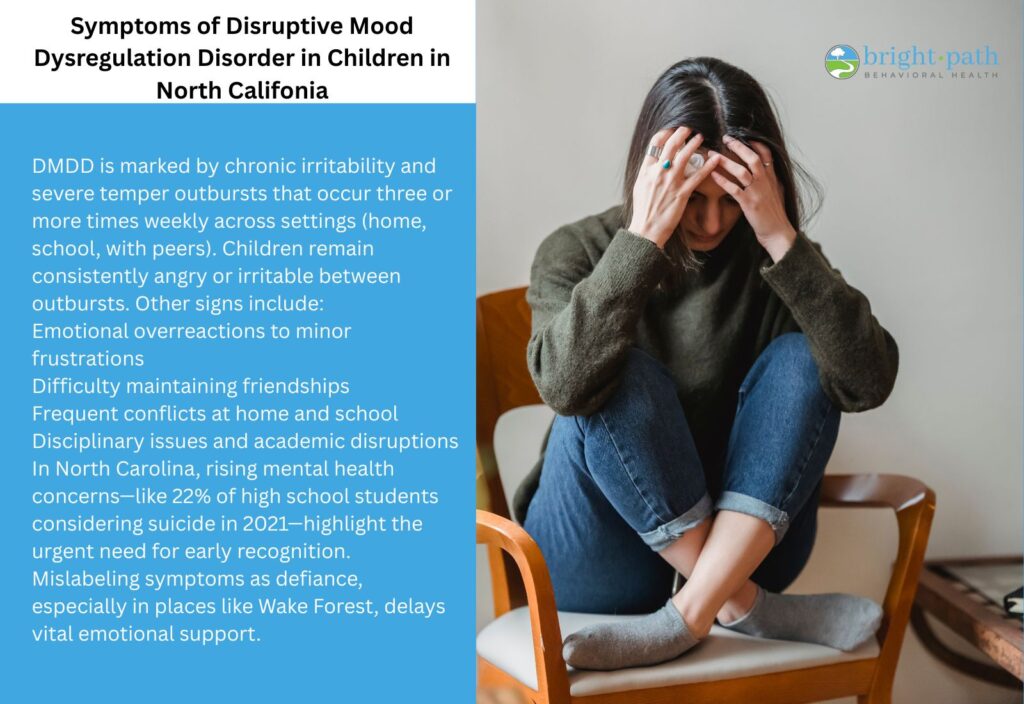
The symptoms of Disruptive Mood Dysregulation Disorder are persistent irritability and frequent, severe temper outbursts that occur three or more times per week. These outbursts are grossly out of proportion to the situation and are not limited to one setting; they occur at school, at home, and with peers. Outside of these outbursts, children with DMDD remain in a consistently angry or irritable mood nearly every day.
Other signs include mood instability, emotional outbursts triggered by minor frustrations, and frequent disciplinary problems. These children struggle to maintain friendships, experience frequent conflict at home, and face suspensions or academic disruptions. A 2016 study found that nearly 40% of children with DMDD had major disciplinary issues at school.
In North Carolina, youth mental health has become a critical concern. Nearly 22% of NC high school students seriously considered suicide in 2021, related to untreated mood disorders. In Wake Forest, these symptoms will be misread as defiance or stubbornness, delaying proper treatment. Recognizing patterns early allows for emotional regulation support before school performance, peer relationships, or self-worth deteriorate.
What causes Disruptive Mood Dysregulation Disorder in children?
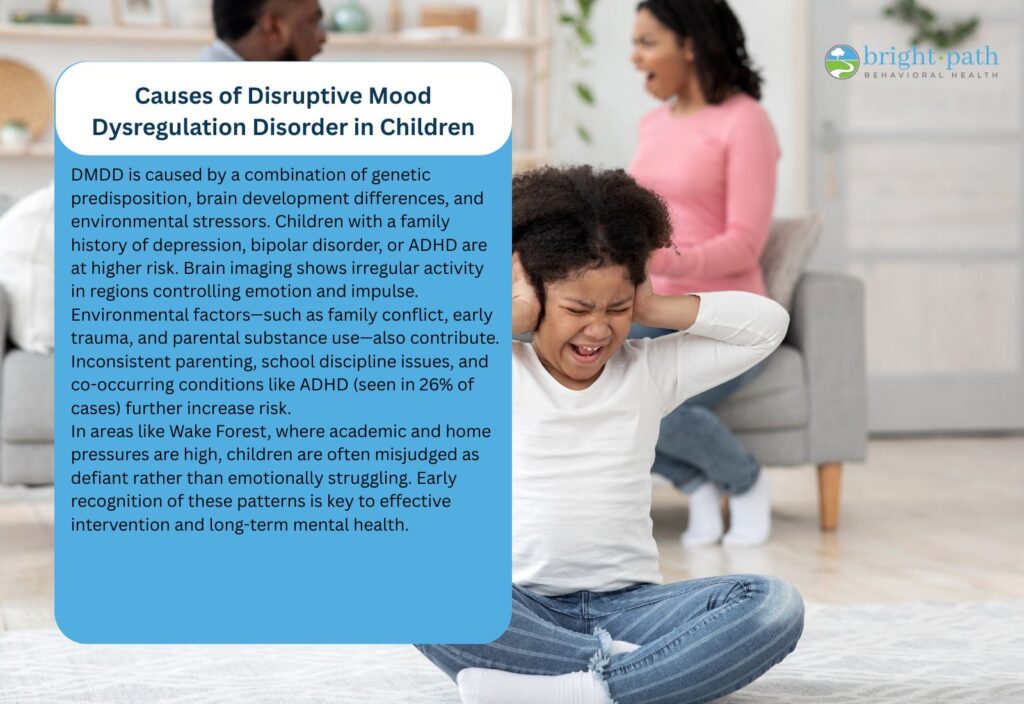
The causes of Disruptive Mood Dysregulation Disorder include a combination of genetic vulnerability, brain development differences, and environmental stressors. Children with a family history of depression, bipolar disorder, or ADHD are more likely to develop DMDD. Brain imaging studies show irregular activity in the amygdala and prefrontal cortex, regions involved in emotion regulation and impulse control.
Environmental stress also plays a major role. Chronic family conflict, early childhood trauma, or living with parents who struggle with substance use disorder increases the likelihood of mood dysregulation. In North Carolina, over 1.2 million residents needed but didn’t receive behavioral health treatment in 2022, leaving children without early emotional support. In these environments, frustration tolerance is low, and self-regulation skills never develop fully.
Other risk factors include inconsistent parenting, school discipline history, and co-occurring conditions like ADHD, present in about 26% of DMDD cases. In Wake Forest, where some students face both academic pressure and unstable home dynamics, children are labeled as troubled rather than emotionally overwhelmed.
Recognizing these risk patterns helps parents and providers create targeted, early interventions before behaviors escalate or result in long-term psychiatric complications.
How is DMDD diagnosed and treated in children?
Disruptive Mood Dysregulation Disorder is diagnosed through a clinical evaluation guided by DSM-5 criteria. A child must have severe temper outbursts, three or more times weekly, with persistent irritability between episodes for at least 12 months. These symptoms must begin before age 10 and occur across multiple settings. Providers rule out other mood disorders, like bipolar disorder, and confirm no presence of manic episodes. Early diagnosis enables more effective intervention and reduces long-term behavioral risks.
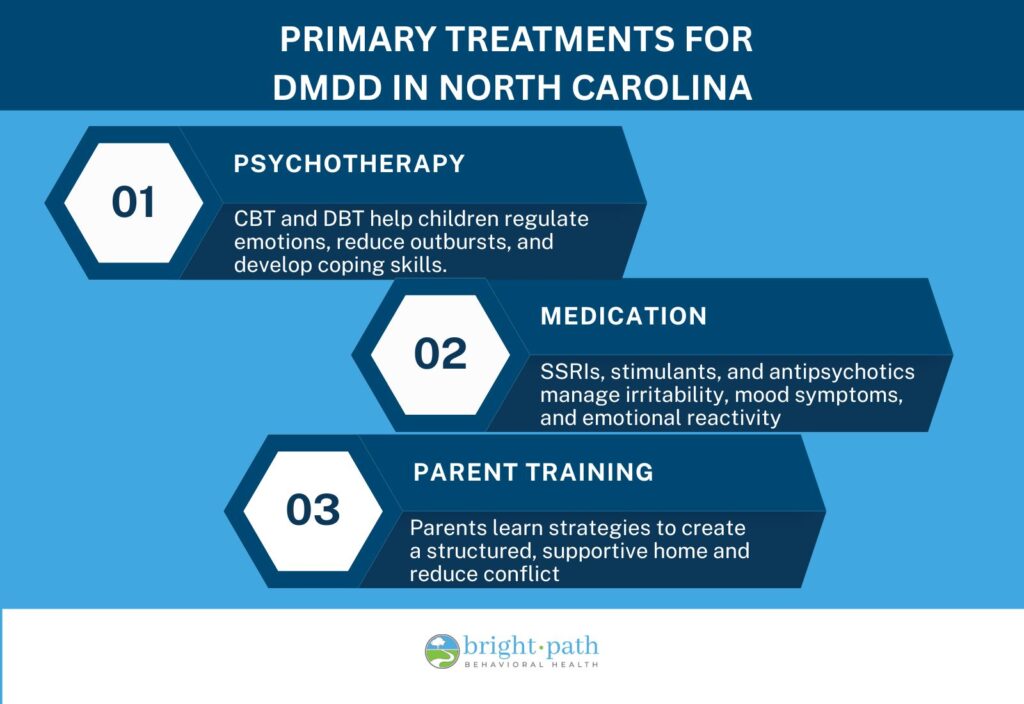
The primary treatments for DMDD are listed below.
- Psychotherapy: Cognitive behavioral therapy (CBT) and dialectical behavior therapy (DBT) help children manage emotions, reduce outbursts, and learn coping skills. These therapies address negative thought patterns and improve frustration tolerance. Group-based DBT also teaches mindfulness and emotional regulation, particularly for children prone to aggression.
- Medication: Antidepressants (SSRIs), stimulants, and antipsychotics are prescribed based on symptom severity. Medications like risperidone or aripiprazole reduce emotional reactivity, while SSRIs help manage chronic irritability and depressive symptoms.
- Parent Training: Parents learn consistent discipline, positive reinforcement, and communication tools to support the child’s emotional development. Training reduces family conflict and helps create a stable, structured home environment.
When combined, these treatments improve behavior, academic focus, and family dynamics over time.
What Are The Effects of Disruptive Mood Dysregulation Disorder?
Disruptive Mood Dysregulation Disorder (DMDD) affects emotional regulation, leading to mood swings, social struggles, and increased risk of substance use and suicidal thoughts. It disrupts daily functioning, making academic performance and relationships challenging. Early intervention is crucial to managing symptoms and reducing long-term consequences.
Listed below are the effects of DMDD.
- Mood Swings: Intense emotional shifts, from irritability to anger.
- Low Self-Esteem: Persistent negative feedback lowers confidence and motivation.
- Suicidal Thoughts: Heightened risk due to emotional distress and social rejection.
- Unhealthy Coping Mechanisms: Some turn to drugs or alcohol to manage symptoms.
- Sleep Problems: Insomnia and disrupted sleep worsen emotional instability.
- Headaches: Stress-related physical symptoms affecting concentration and well-being.
- Violent Outbursts: Frustration leads to conflicts and potential legal consequences.
- Social Isolation: Difficulty maintaining relationships due to unpredictable emotions.
What is The Difference Between DMDD and ODD?
Disruptive Mood Dysregulation Disorder (DMDD) and Oppositional Defiant Disorder (ODD) differ in symptoms and behavioral patterns. DMDD is marked by severe irritability, frequent temper outbursts, and persistent mood dysregulation across multiple settings. ODD, on the other hand, involves defiant, argumentative behavior, purposeful rule violations, and conflicts with authority figures.
DMDD focuses on emotional instability, while Oppositional Defiant Disorder (ODD) centers on oppositional behaviors. DMDD symptoms must persist for at least 12 months, whereas ODD requires a six-month duration for diagnosis. Children with DMDD are more prone to mood disorders, while those with ODD have a higher risk of conduct-related issues.
Why Do Patients With Disruptive Mood Dysregulation Disorder Turn to Alcohol?
Patients with Disruptive Mood Dysregulation Disorder (DMDD) turn to alcohol to cope with chronic irritability, mood swings, and emotional distress. Alcohol provides temporary relief by numbing emotions and reducing stress, making it appealing for those struggling with persistent turmoil.
However, reliance on alcohol leads to increased consumption, worsening emotional instability, and behavioral difficulties. Over time, this pattern contributes to alcohol use disorders, further complicating mental health challenges. Early intervention is crucial to breaking this cycle and promoting healthier coping strategies.
Where to get Disruptive Mood Dysregulation Disorder (DMDD) treatment for children in Wake Forest, NC?
You can get treatment for Disruptive Mood Dysregulation Disorder (DMDD) for children at youth-focused mental health centers in Wake Forest, NC. These centers provide evidence-based care for childhood mood disorders, offering psychotherapy, medication management, and structured family support programs. One trusted local provider offers both partial hospitalization and intensive outpatient services designed specifically for emotional dysregulation and co-occurring conditions like ADHD or anxiety.
Their licensed therapists and child psychiatrists help children learn emotional regulation skills while working with parents to improve communication and reduce household conflict. Programs are flexible, with after-school scheduling, and include social skills groups, medication monitoring, and trauma-informed care, all in a safe, stigma-free environment focused on long-term behavioral success.
Does insurance cover DMDD treatment in NC?
Yes, insurance covers DMDD treatment in NC. Most private plans and Medicaid include coverage for psychiatric evaluations, medications, therapy, and behavioral programs. However, coverage varies by provider and plan, so it is essential to verify insurance before starting treatment to confirm eligibility, copays, and service availability.