
-1.svg)
Anxiety can naturally decrease with age in teens, but the outcome depends on the type of anxiety disorder, brain development, coping skills, and environmental support.
Among adolescents in the United States, mental health challenges, substance use, and suicide remain pressing concerns. Data from 2021-2023 show that 20% of teens aged 12-17 reported symptoms of anxiety and 18% reported symptoms of depression within the past two weeks. Among high school students in 2023, 40% experienced persistent feelings of sadness or hopelessness during the year, 20% seriously considered suicide, 16% made a suicide plan, and 9% attempted suicide. Substance use also adds to the concern, with 22% reporting alcohol consumption in the past 30 days, 17% using marijuana, 4% misusing prescription pain medication, and 10% having tried illicit drugs (Centers for Disease Control, 2025).
Anxiety in teenagers is a complex mental health condition that fluctuates with developmental changes. Some forms, such as Separation Anxiety Disorder, lessen as adolescents mature, while others, like Social Anxiety Disorder and Generalized Anxiety Disorder, persist or intensify.
What Is Anxiety in Teens?
Teen anxiety is a psychological condition marked by excessive worry, fear, or nervousness that interferes with daily life. Unlike typical stress responses, anxiety disorders are persistent and disrupt school performance, relationships, and overall well-being. Common forms in adolescents include Generalized Anxiety Disorder (GAD), Social Anxiety Disorder, Panic Disorder, and Separation Anxiety Disorder.
Symptoms in teenagers are restlessness, irritability, difficulty concentrating, muscle tension, excessive worrying, and physical complaints like stomachaches or headaches.
Between 2019 and 2021, teen mental health challenges intensified, with nearly two-thirds of adolescents experiencing depression going untreated and 22% of high school students seriously considering suicide in 2021, according to NC Child. Anxiety-related concerns were also evident, as the Youth Risk Behavior Survey (YRBS) reported that 30% of North Carolina high school students felt persistent sadness or hopelessness, and 33% experienced loneliness.
Does Anxiety Naturally Decrease With Age?
Perspectively, anxiety does not naturally decrease with age; for instance, its trajectory in adolescents does not follow a uniform pattern. For some teens, symptoms lessen as they mature because of improved coping skills, neurological development, and greater autonomy. However, for others, anxiety persists into adulthood or even intensifies if left untreated.
Some anxiety disorders, such as Separation Anxiety Disorder, decline with age, while others, like Social Anxiety Disorder, emerge or worsen during adolescence. This suggests that age alone is not always a protective factor, but development influences the course of anxiety in varied ways.
National Health Interview Survey data from the US show that symptoms of anxiety typically decrease with age among adults, with the highest prevalence in young adults (18-29), and lower rates in older adults.
Globally, the highest incidence and pervasiveness of anxiety disorders occur in adolescents and young adults (ages 10-24), especially in the 10-14 and 15-19 age groups, with prevalence increasing over time until early adulthood, after which it declines, as investigated by Bie et al. 2024 in “Rising Global Burden of Anxiety Disorders Among Adolescents and Young Adults: Trends, Risk Factors, and the Impact of Socioeconomic Disparities and COVID-19 from 1990 to 2021.”
Biological Changes During Adolescence and Their Effect on Anxiety
Adolescence is marked by significant neurological changes, including the development of the prefrontal cortex and refinement of the amygdala, both of which regulate emotions and fear responses. As these brain regions mature, teens gain better control over emotional regulation, which reduces anxiety symptoms.
Hormonal fluctuations during puberty also contribute to heightened sensitivity to stress. Progressively, hormonal balance stabilizes, potentially minimizing the intensity of anxious responses.
Psychological Growth and Coping Mechanisms
Teenagers gradually learn new strategies for handling stress and uncertainty. Cognitive development during adolescence allows for improved problem-solving, abstract thinking, and self-reflection. These skills enable teens to reframe anxious thoughts and lessen the impact of stressors.
Engagement in therapy, mindfulness practices, or structured school support accelerates the adoption of healthier coping mechanisms, making anxiety less overwhelming as teens grow older.
The Role of Social Development
Social environments play a foundational role in shaping anxiety. Younger teens struggle with separation from parents or escalated sensitivity to peer evaluation. As they mature, many teens become more confident in navigating social interactions, which naturally decreases anxiety levels.
Social anxiety does grow for others as academic pressures, social comparison, and identity development peak during high school years. This demonstrates that while some social growth lowers anxiety, other factors simultaneously exacerbate it.
What Are the Anxiety Disorders That Tend to Decline with Age?
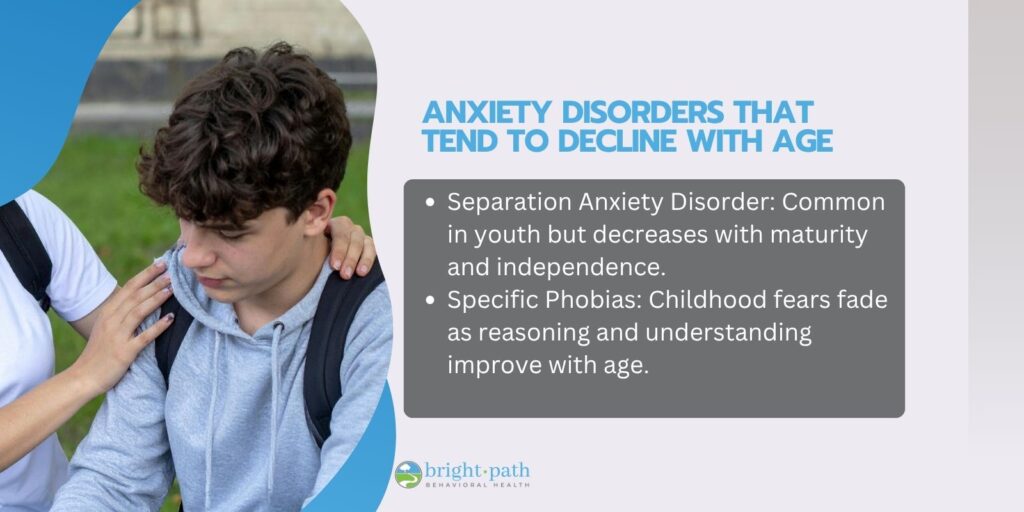
The anxiety disorders that tend to decline with age are as follows:
- Separation Anxiety Disorder: More common in children and younger teens, symptoms diminish with maturity and increased independence.
- Specific Phobias: Fears such as darkness or monsters go down as cognitive reasoning gets better with age.
Anxiety Disorders That Abide or Emerge in Older Teens
Anxiety disorders that endure or emerge in older teens are:
- Social Anxiety Disorder: This becomes more pronounced in mid-to-late adolescence as peer acceptance and identity formation take center stage.
- Generalized Anxiety Disorder (GAD): Holds into adulthood without intervention due to ingrained worrying patterns.
- Panic Disorder: Sometimes arises later in adolescence, linked to towering stress and hormonal changes.
Long-Term Outcomes of Teenage Anxiety
If anxiety is left untreated, it transitions into adulthood and breeds chronic mental health conditions. Adolescents with persistent anxiety are at greater risk of depression, substance abuse, and academic underachievement. Conversely, early identification and support alter the bearing, curbing the likelihood of long-term impairment.
Can Lifestyle and Environment Influence Natural Decrease?
Yes, lifestyle and environmental as external factors that strongly influence whether anxiety diminishes with age. Supportive family relationships, access to mental health resources, balanced nutrition, physical activity, and healthy sleep habits all encourage better resilience. Environments that curtail stress and inspire open communication foster excellent mental health results for teenagers.
The Role of Resilience in Anxiety Reduction
Resilience refers to the ability to adapt positively despite adversity. Teens who build resilience through strong support systems, problem-solving skills, and healthy self-esteem are more likely to experience a natural decline in anxiety as they age. Schools, families, and communities that inculcate resilience development deliver a protective buffer against anxiety disorders.
What Are Gender Differences in Anxiety Trends?
The gender differences in anxiety trends are marked by higher regularity rates among female teens compared to males, influenced by hormonal changes, social pressures, and cultural expectations. Adolescent girls report more frequent symptoms of worry, sadness, and social anxiety, while boys underreport due to stigma. These differences emphasize the need for gender-sensitive approaches in identifying and addressing anxiety during the teenage years.
While both genders see improvements with age, females are more prone to prevailing or recurring anxiety symptoms into adulthood.
For specific anxiety disorders, women experience higher rates than men in panic disorder (5.0% vs. 2.0%), agoraphobia (7.0% vs. 3.5%), and specific phobias (15.7% vs. 6.7%), while social anxiety disorder shows similar prevalence across genders, as in by McLean in “Gender Differences in Anxiety Disorders: Prevalence, Course of Illness, Comorbidity and Burden of Illness.”
When Does Anxiety Require Professional Intervention?
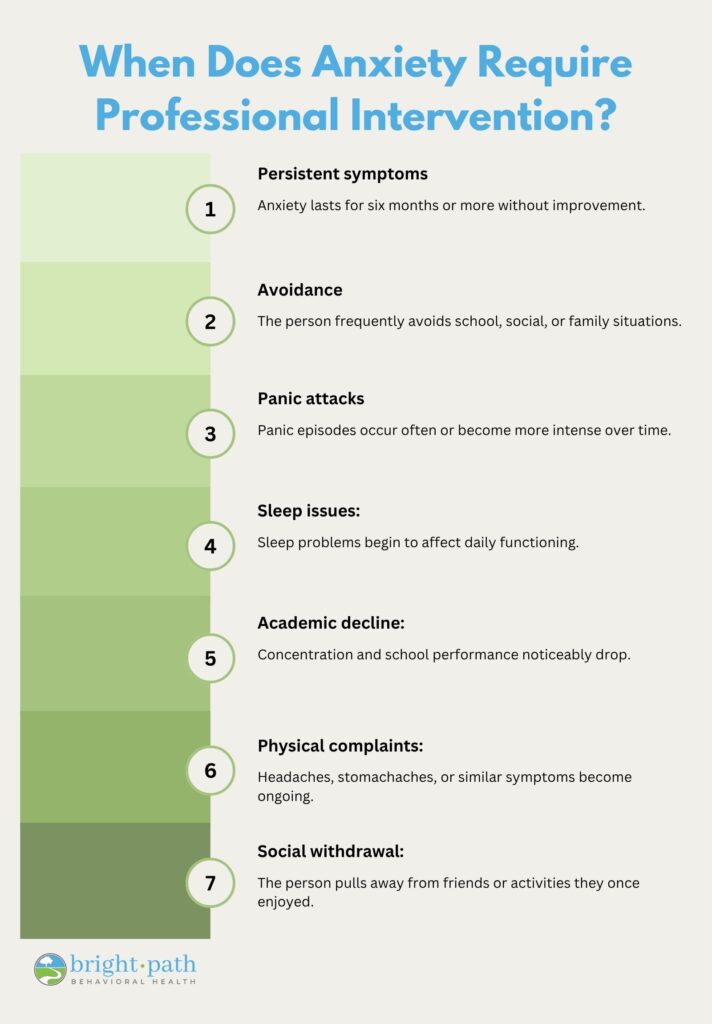
Anxiety requires professional intervention when:
- Symptoms persist for six months or longer without improvement
- Avoidance of school, social, or family situations becomes frequent
- Panic attacks happen regularly or increase in severity
- Sleep disturbances interfere with daily functioning
- Academic performance or concentration declines noticeably
- Physical complaints such as headaches or stomachaches become chronic
- Anxiety leads to withdrawal from friendships or activities once enjoyed
Professional treatments comprise Cognitive Behavioral Therapy (CBT), medication when appropriate, and family-based therapy.
Can Natural Remedies Help Anxiety Decline in Teens?
Yes, natural remedies help anxiety decline in teens by supporting emotional regulation and resilience without relying solely on medication. Approaches such as mindfulness meditation, regular physical activity, balanced nutrition, consistent sleep routines, breathing exercises, and journaling bring down stress levels and improve mood stability. Indeed, these strategies are effective in easing symptoms, but they work best as supportive methods alongside professional care when anxiety is severe or persistent.
What Is the Importance of Early Intervention for Teenage Anxiety?
The importance of early intervention for teenage anxiety lies in reducing the risk of long-term complications and improving recovery outcomes. Although some anxiety conditions fall off naturally, relying on age alone delays critical support.
Detecting symptoms early allows teens to build coping strategies before anxiety becomes entrenched, cutting the chances of progression into chronic conditions such as depression or substance use disorders. Early support through therapy, school programs, and family involvement also assists in safeguarding academic performance, strengthening relationships, and building resilience that underpins mental health into adulthood.