
-1.svg)
For a North Carolina family witnessing chronic worry, avoidance, or fear in a member, acting early with support is crucial. Anxiety disorders are mental health conditions marked by overwhelming fear or worry that disrupt daily life. In North Carolina, these disorders are increasingly common among youth and adults alike. By 2022, 11% of NC children aged 3–17 had received a diagnosis for anxiety or depression, a 48.7% increase from 2016. Among LGBTQ youth, 74% reported anxiety symptoms, and the rate rose to 81% for transgender and nonbinary youth.
Anxiety disorders go far beyond occasional nervousness. Whether it’s constant worry as in generalized anxiety disorder, sudden panic attacks, or social avoidance, untreated anxiety can severely limit a person’s ability to work, study, or maintain relationships. In February 2023, nearly 25% of NC adults reported anxiety or depression symptoms, slightly below the national average. But with more than 2.67 million North Carolinians living in areas lacking mental health professionals, many go without support.
Anxiety disorders can be treated, managed, and even prevented from worsening through therapy, lifestyle changes, and the right support systems.
What Are Anxiety Disorders?
Anxiety disorders are mental health conditions involving persistent, excessive fear or worry that interferes with daily functioning. They differ from normal stress responses by their intensity and duration.
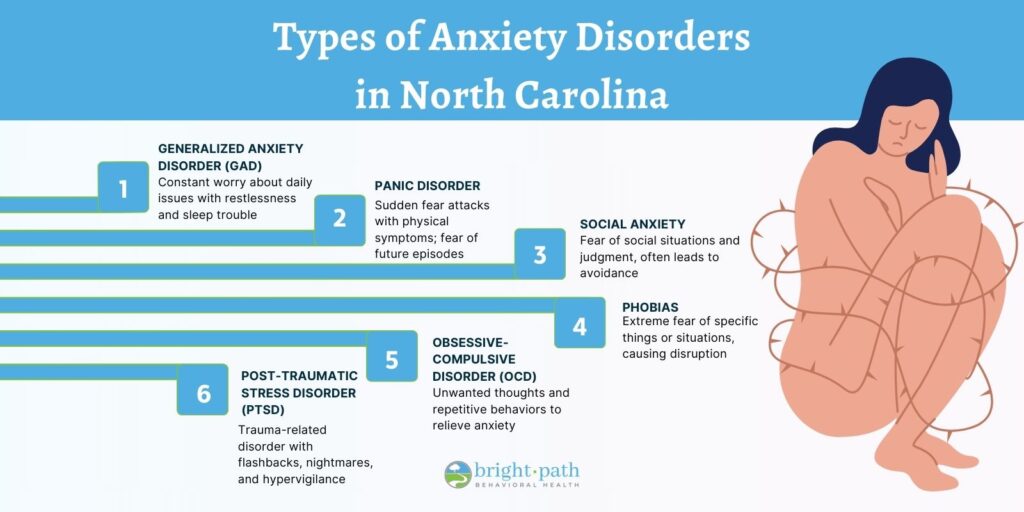
The main types of anxiety disorders are listed below.
- Generalized Anxiety Disorder (GAD): Chronic worry about everyday concerns like health or finances.
- Panic Disorder: Sudden, intense episodes of fear with physical symptoms like chest pain or dizziness.
- Social Anxiety Disorder: Fear of social judgment or embarrassment.
- Phobias: Irrational fears of specific objects or situations.
- Obsessive-Compulsive Disorder (OCD): Repetitive, intrusive thoughts and behaviors.
- Post-Traumatic Stress Disorder (PTSD): Persistent distress after trauma.
Each type varies in cause and presentation but shares the common feature of disrupting work, school, and relationships.
What Is Anxiety?
Anxiety is a normal response to stress involving worry or nervousness, often accompanied by physical symptoms like rapid heartbeat or tense muscles. In healthy amounts, it helps you stay alert and avoid danger. But when anxiety becomes constant and uncontrollable, it turns into a disorder that requires clinical attention. The difference between anxiety and fear lies in their triggers and focus. Fear is an immediate response to a present threat, causing physical reactions like a racing heart. For example, encountering a barking dog triggers fear. Anxiety, on the other hand, involves worry about potential future threats, such as concerns about an upcoming exam. While fear responds to specific dangers, anxiety reflects a broader apprehension about uncertain events.
What Are the Types of Anxiety Disorders?
The types of anxiety disorders include generalized anxiety disorder (GAD), panic disorder, social anxiety disorder, phobias, OCD, and PTSD. Each presents with distinct but overlapping symptoms that affect how a person thinks, feels, and functions.
1. Generalized Anxiety Disorder (GAD)
Marked by chronic worry about everyday things like health, finances, or family. Symptoms include:
- Restlessness, fatigue
- Trouble concentrating
- Muscle tension and poor sleep
2. Panic Disorder
Sudden panic attacks with intense fear, shortness of breath, and heart palpitations. Individuals often fear future attacks, limiting their independence. In NC, over 2 in 5 high schoolers reported feeling persistent sadness in 2021, a known risk factor for panic and anxiety.
3. Social Anxiety Disorder
A deep fear of embarrassment in social settings. Teens especially struggle here, with many avoiding school or public activities altogether.
4. Specific Phobias
Extreme fear of objects or situations (e.g., heights, spiders) causing avoidance that interferes with normal routines.
5. Obsessive-Compulsive Disorder (OCD)
Repetitive, intrusive thoughts (obsessions) and ritualistic behaviors (compulsions) aimed at reducing distress.
6. Post-Traumatic Stress Disorder (PTSD)
Triggered by trauma, symptoms include nightmares, flashbacks, irritability, and hypervigilance.
What are the Symptoms of Anxiety Disorders
Symptoms of anxiety disorder are Constant fear, dread, or intrusive worry, etc. According to a study by NC DETECT titled Stories from the Dashboard: Emergency Department Visits Related to Suicidal Ideation Among North Carolinian Youth in 2021, youth emergency visits for suicide-related behaviors in North Carolina increased fivefold between 2011 and 2020, with anxiety as a key contributing factor
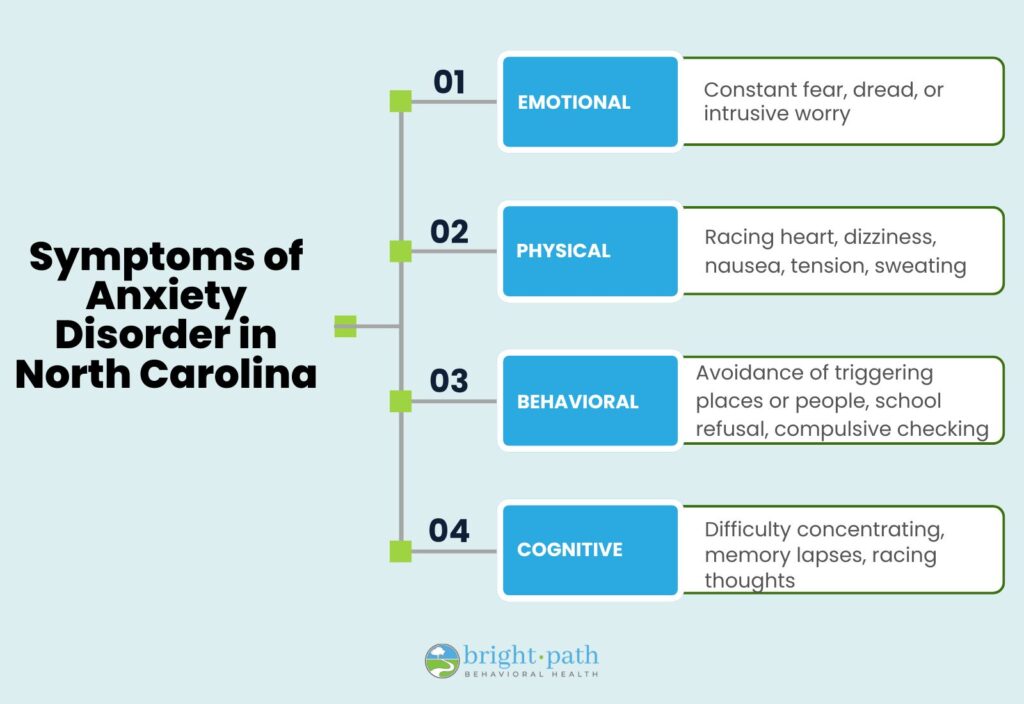
Listed below are symptoms of anxiety disorder.
- Emotional: Constant fear, dread, or intrusive worry
- Physical: Racing heart, dizziness, nausea, tension, sweating
- Behavioral: Avoidance of triggering places or people, school refusal, compulsive checking
- Cognitive: Difficulty concentrating, memory lapses, racing thoughts
What Causes Anxiety Disorders?
Anxiety disorders are caused by a combination of genetic, neurochemical, psychological, and environmental factors. These causes interact with personal risk factors to raise vulnerability.
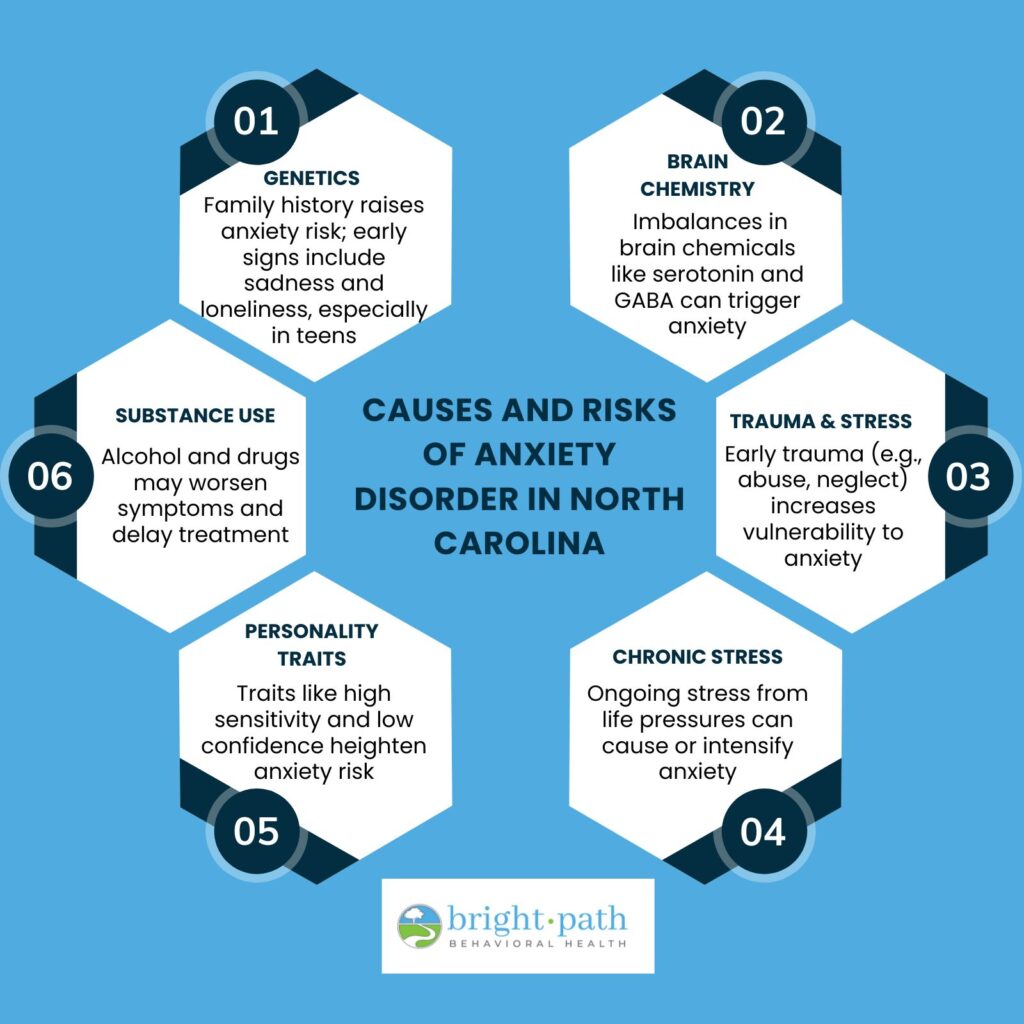
Listed below are the Causes and risks of anxiety disorder.
- Genetics: Family history increases the chance of developing anxiety. A study by the North Carolina Youth Risk Behavior Survey, titled “2021 North Carolina YRBS Report,” in 2021, found that 43% of high school students reported persistent feelings of sadness or hopelessness, and 33% reported experiencing frequent loneliness, which are both common early markers of anxiety disorders.
- Brain Chemistry: Imbalances in serotonin, norepinephrine, and GABA disrupt mood regulation and emotional processing, contributing to heightened anxiety.
- Trauma & Stress: Exposure to traumatic events, especially in childhood, such as neglect, abuse, or loss, triggers anxiety in genetically or emotionally vulnerable individuals.
- Chronic Stress: Prolonged stress from academic pressure, financial hardship, caregiving roles, or health issues causes or worsens anxiety disorders over time.
- Personality Traits: High neuroticism, low self-efficacy, and low extroversion increase the likelihood of anxiety.
- Substance Use: Alcohol and drugs can both worsen and mask anxiety symptoms, leading to delayed diagnosis and higher relapse risk.
In North Carolina, youth mental health challenges are. In 2022, 11% of NC children aged 3–17 were diagnosed with depression or anxiety, a 48.7% increase from 2016. Nearly 23% of children in the state have faced at least one behavioral or developmental challenge.
How are Anxiety Disorders Diagnosed?
Anxiety disorders are diagnosed using criteria from the DSM-5, which requires persistent symptoms lasting at least 6 months for disorders like Generalized Anxiety Disorder (GAD).
Listed below are how Anxiety Disorders are Diagnosed.
- GAD-7 and HAM-A scales: Self-reported tools that measure anxiety severity.
- ADIS (Anxiety Disorders Interview Schedule): A structured interview to assess the presence and overlap of anxiety-related conditions.
North Carolina providers rely on these tools in outpatient, school-based, and primary care settings to identify teens and adults who may otherwise go untreated. Early diagnosis is key to successful intervention.
How Are Anxiety Disorders Treated in North Carolina?
Anxiety disorders are treated through therapy, medication, and lifestyle changes. In North Carolina, many residents experience lasting relief with early, structured care. While anxiety recurs for some, most individuals respond well to treatment and can manage symptoms long term.
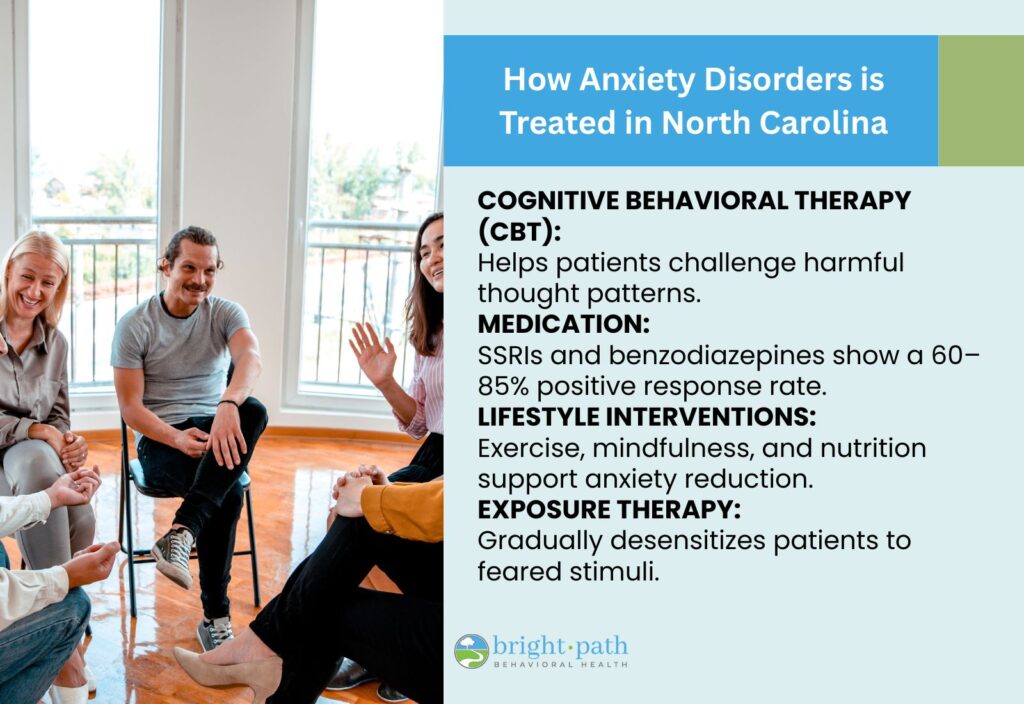
Listed below are Evidence-Based Treatments in NC.
- Cognitive Behavioral Therapy (CBT): Helps patients challenge harmful thought patterns.
- Medication: SSRIs and benzodiazepines show a 60–85% positive response rate.
- Lifestyle Interventions: Exercise, mindfulness, and nutrition support anxiety reduction.
- Exposure Therapy: Gradually desensitizes patients to feared stimuli.
Can Anxiety Be Cured?
Yes, anxiety disorders can be cured or controlled with proper care. However, anxiety returns under stress, making ongoing therapy and self-care essential for sustained relief.
A study by the North Carolina Youth Risk Behavior Survey, titled “2021 North Carolina YRBS Report,” in 2021, found that 22.3% of high school students seriously considered attempting suicide, and 10.1% reported a suicide attempt, a 23.2% increase from 2017.
In North Carolina, ongoing support from outpatient providers and mental health centers, including access through Medicaid and public programs, helps maintain recovery. Patients are encouraged to seek early help and commit to structured care plans for long-term success.
What Are the Long-Term Effects of Anxiety Disorders?
The long-term effects of anxiety disorders include cardiovascular issues, mental health decline, and cognitive impairment.
Cardiovascular Issues
Long-term anxiety leads to significant heart-related problems, including high blood pressure and heart disease.
High Blood Pressure: A 2023 study by Rohan M. in High Blood Pressure & Cardiovascular Prevention found that low-income adults with daily anxiety symptoms had 2.28 times higher odds of hypertension (95% CI 1.22–4.24; P = 0.021). Those on anxiety meds had 2.50 times higher odds (95% CI 1.42–4.41; P = 0.006).
Heart Disease: Persistent anxiety worsens cardiovascular risk through poor health habits and chronic stress.
Mental Health Decline
Anxiety disorders contribute to a deterioration in mental health, often causing co-occurring depression and increased suicide risk.
Depression: Anxiety commonly coexists with depression, complicating recovery.
Suicide Risk: A 2023 study by Nicholas P. in Current Psychiatry Reports reported that 18–33% of patients with SAD or PD had attempted suicide, and 16–32% reported recent suicidal ideation.
Cognitive Impairment
Chronic anxiety negatively affects memory and concentration.
Memory Problems: Anxiety interferes with memory retention and recall.
Poor Concentration: Difficulty focusing impacts productivity and daily functioning.
How Do Anxiety Disorders Affect Teens and Mental Health?
Anxiety disorders affect the daily life of teens by disrupting their emotional well-being, academic performance, social connections, and overall sense of safety. In 2021, only 49% of NC high school students reported feeling good about themselves, down from 80% in 2011. Teens often experience physical symptoms (e.g., headaches, stomachaches), sleep issues, and persistent worry, which interfere with socialization, school engagement, and self-esteem.
Anxiety disorders impact mental health by creating a complex interplay with other psychological conditions, most notably depression, sleep disorders, and the risk of self-harm.
- Depression Comorbidity: A 2018 NAMI study found that up to 60% of individuals with anxiety also have depression, worsening symptoms, and complicating treatment.
- Sleep Disruption: Anxiety causes insomnia and fatigue. Affected individuals are 2–3 times more likely to experience sleep disturbances, fueling a vicious cycle of anxiety and poor sleep.
Can Anxiety Be Prevented or Managed Through Lifestyle Changes?
Yes, anxiety disorders can be prevented through a combination of effective prevention strategies that focus on stress management, healthy coping mechanisms, and early intervention. Prevention Methods include building resilience through social support and teaching coping skills, like mindfulness and early intervention, to reduce risk. Programs across North Carolina support teens through emotional education and stress-reduction techniques.
Lifestyle changes help manage anxiety disorders through the implementation of exercise, healthy dieting, mindfulness, and adequate sleep.
- Exercise: Releases endorphins, improves mood, and reduces anxiety.
- Healthy Diet: Nutrients support brain chemistry and mood stability.
- Mindfulness: Enhances emotional regulation and reduces stress.
- Sleep: Good sleep hygiene stabilizes mood and prevents anxiety escalation.
Where Can You Get Anxiety Disorder Treatment in Wake Forest, NC?
You can get treatment for anxiety disorders at various mental health centers in Wake Forest, NC. These facilities offer specialized care for anxiety, including cognitive behavioral therapy (CBT), medication support, and holistic approaches like mindfulness and stress management. These centers provide outpatient services tailored to the needs of Wake County residents, ensuring accessible and effective treatment.
Does Insurance Cover Anxiety Disorder Treatment in North Carolina?
Yes, insurance covers anxiety disorder treatment in North Carolina. Most plans, including Medicaid, Blue Cross Blue Shield, Cigna, and UnitedHealthcare, provide benefits for therapy, psychiatric evaluation, and medication management. The Mental Health Parity Act ensures that mental health services receive the same level of coverage as physical health care.
However, coverage specifics vary by provider, so it’s essential to verify your insurance to understand your out-of-pocket costs.