
-1.svg)
Autism is still misunderstood in many circles as something broken, instead of something beautifully different. Across social networks, classrooms, and even clinical spaces, outdated narratives continue to frame autism through a deficit-based lens, ignoring the richness of neurodiverse thought and experience. These stigmas not only isolate autistic individuals, they distort what autism truly is.
Autism is not a flaw. It is a variation of the human mind, one that brings with it unique ways of thinking, feeling, creating, and connecting. For too long, the conversation around autism has focused on what’s missing instead of what’s possible. It’s time to change that.
The latest data from the CDC show that 1 in 31 children in the United States, about 3.2%, have been identified with autism spectrum disorder (ASD) as of 2022. These stats are not just numbers, they are people who need our support. By embracing neurodiversity, we open the door to more compassionate care, inclusive communities, and a society that truly values every mind.
What is Autism?
Autism, or Autism Spectrum Disorder (ASD), is a neurodevelopmental condition that affects how a person experiences the world, including how they communicate, process information, and interact with others. It is called a “spectrum” because it includes a wide range of characteristics and abilities that vary greatly from one individual to another. Some autistic individuals may require substantial support, while others live independently and thrive with minimal assistance. Autism is not a disease or something to be cured, it is a different way of being, rooted in brain development, and present from early childhood.
What Stigma Surrounds Autism Today?
The stigma that surrounds autism is rooted in outdated beliefs and misinformation. Autistic individuals are often portrayed as broken, less capable, or in need of fixing, particularly in social media and traditional systems of care. These narratives create harmful stereotypes that lead to exclusion, misunderstanding, and reduced opportunities. By challenging these assumptions and embracing neurodiversity, we help dismantle stigma and promote true inclusion.
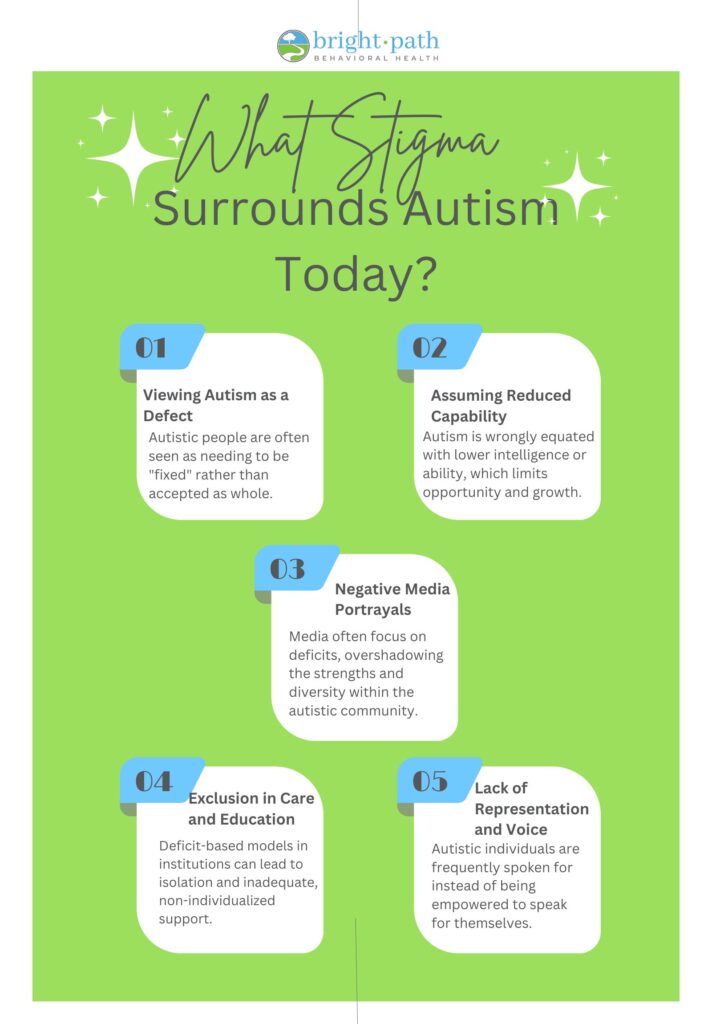
The stigma that surrounds autism stems from outdated beliefs and misinformation. Some of the most harmful ideas include:
- Viewing autism as a defect: Autistic individuals are too often portrayed as broken or in need of fixing rather than as whole, capable people.
- Assuming reduced capability: There is a common misconception that being autistic means being less intelligent or less capable of success.
- Negative media portrayals: Social media and traditional outlets frequently highlight deficits rather than strengths, reinforcing limiting stereotypes.
- Exclusion in systems of care and education: Many systems still operate from a deficit-based model, which can lead to isolation and lack of appropriate support.
- Lack of representation and voice: Autistic individuals are often spoken for rather than listened to, which reinforces invisibility and misunderstanding.
Is Autism a Mental Health Disorder?
No, autism is not a mental health disorder. Autism, or Autism Spectrum Disorder (ASD), is a neurodevelopmental condition, meaning it affects how the brain develops and functions from an early age. While autistic individuals could experience co-occurring mental health conditions such as anxiety or depression, autism itself is not a mental illness. It reflects a natural variation in how people think, process, and experience the world.
What Co-occurring Disorders are Common with Autism?
The co-occurring disorders common with autism in North Carolina include ADHD, anxiety, depression, epilepsy, and bipolar disorder. According to the CDC, about 1 in 36 children in the U.S. is diagnosed with Autism Spectrum Disorder, and many also experience additional mental health or developmental conditions. These overlapping conditions make diagnosis and support more complex, emphasizing the need for integrated, personalized care approaches.
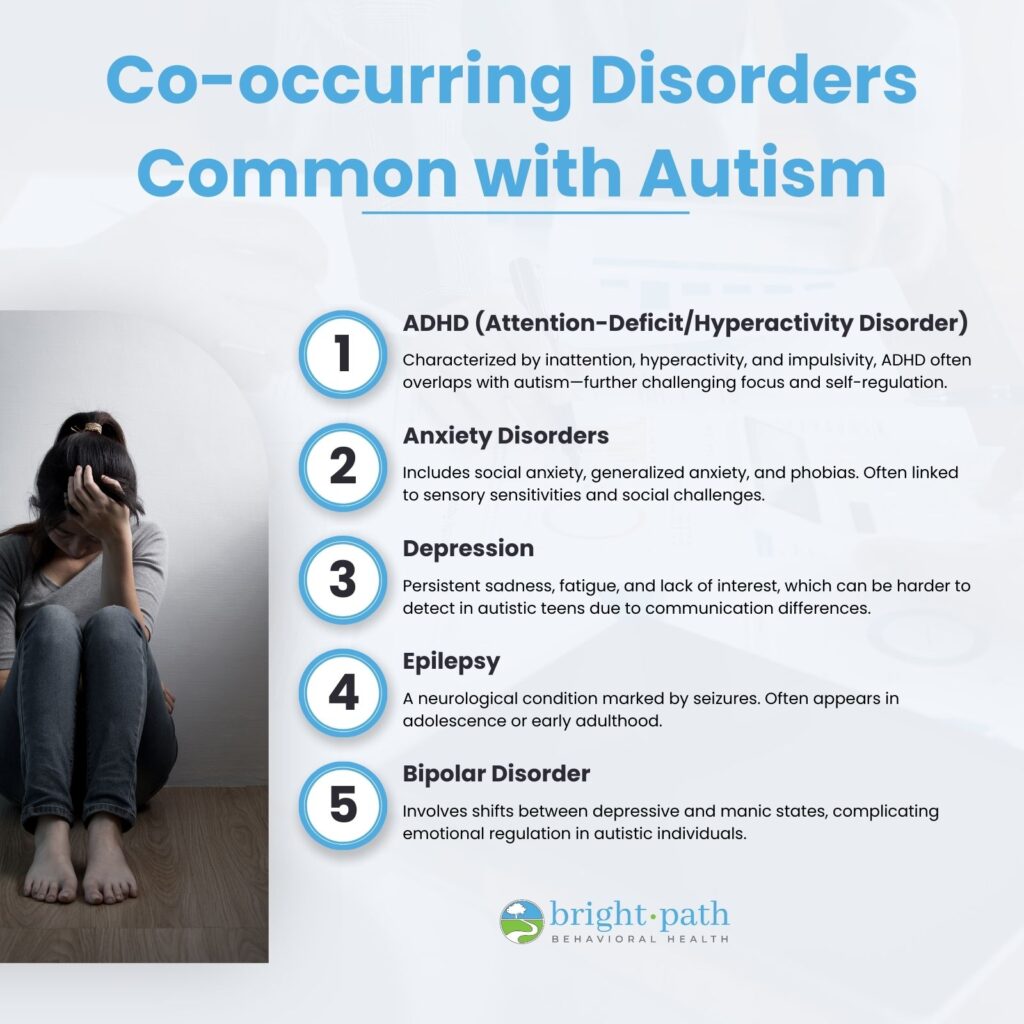
The following co-occurring disorders are common in people with Autism:
ADHD (Attention-Deficit/Hyperactivity Disorder):
A neurodevelopmental disorder marked by inattention, hyperactivity, and impulsivity. It frequently overlaps with autism, making focus and regulation even more challenging. Prevalence estimates for ADHD in individuals with autism range from 28% (meta-analysis) to 35.3% (large cohort study), and up to 50–70% in some clinical samples according to “Prevalence of co-occurring mental health diagnoses in the autism population: a systematic review and meta-analysis” published by Lancet Psychiatry.
Anxiety Disorders
A group of mental health conditions characterized by excessive fear, worry, or nervousness. Teens with autism often experience social anxiety or generalized anxiety due to sensory sensitivities or social difficulties. About 20–30% of people with autism have an anxiety disorder, compared to 10% in the general population according to the York College of Pennsylvania in “The Prevalence of Comorbidities in Autism: Consideration of Comorbidity in Intervention and Treatment Response”
Depression
A mood disorder involving persistent sadness, low energy, and loss of interest. Teens with autism may struggle to express these emotions, making depression harder to detect. Prevalence of depression is 11–26% in individuals with autism, versus 10% in the general population according to Lai, M et. al. 2019 in the Lancet Psychiatry.
Epilepsy
A neurological disorder where abnormal brain activity causes seizures. Seizures are more common in autistic individuals, particularly during adolescence. Epilepsy co-occurs in about 5% of autistic children according to Autism Speaks.
Bipolar Disorder
A mental health condition involving extreme mood swings from depressive lows to manic highs. Though less common, bipolar disorder can co-occur with autism and complicate emotional regulation. Bipolar disorder affects 5–11% of people with autism, compared to 2% in the general population according to Autism Spectrum News.
Why Must We Listen to Autistic Voices?
We must listen to autistic voices because they offer firsthand insight into the autistic experience. Autistic individuals are the true experts on what support, inclusion, and respect should look like. By elevating their perspectives, we can build more compassionate systems, design better mental health care, and challenge the narratives that have excluded them for too long.
Why Is Affirming Support So Important for Autistic Individuals?
Affirming support is important for autistic individuals because it reinforces their value and helps them develop a positive sense of identity. When care is respectful, strengths-based, and personalized, it not only improves outcomes, it helps individuals thrive emotionally, socially, and academically. Support should aim to empower, not to correct who someone is.
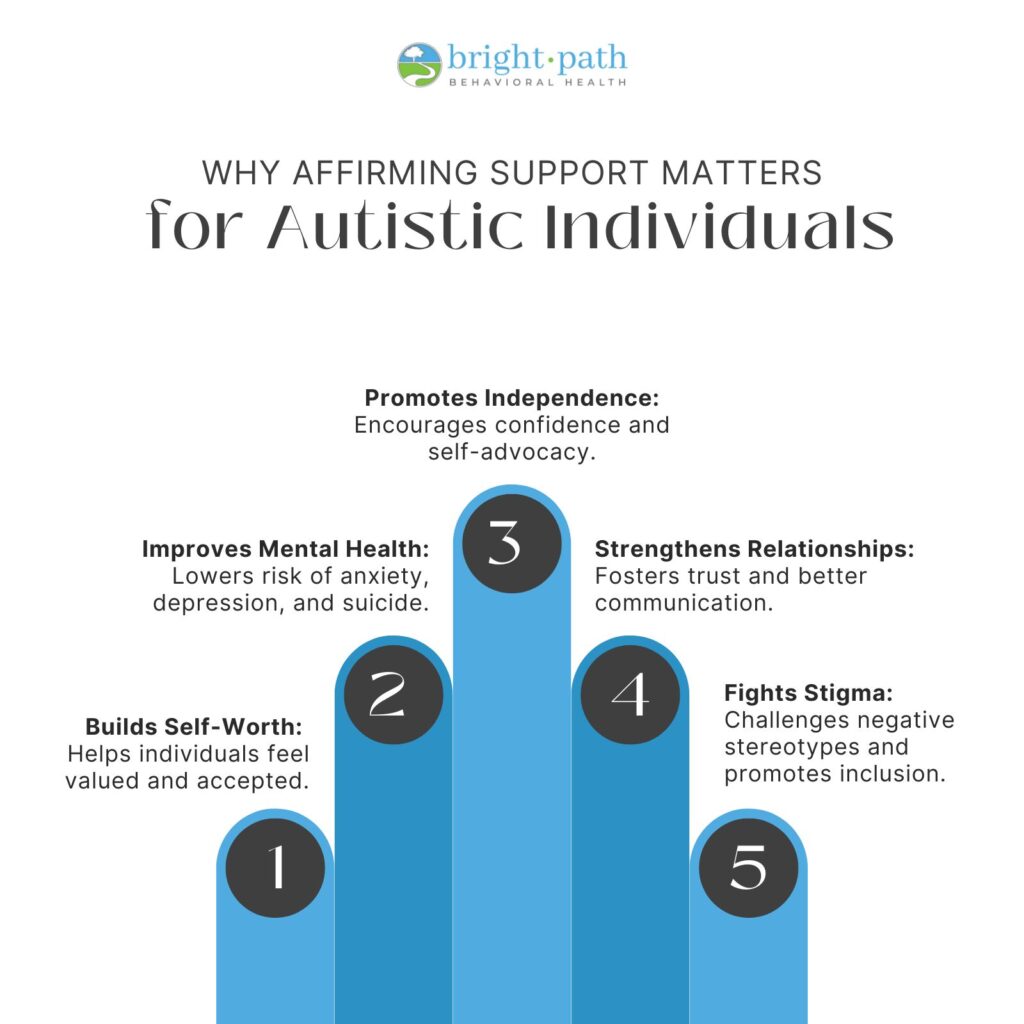
Here’s why affirming support matters:
- It fosters self-worth: When people are accepted as they are, they learn that they are not broken or in need of fixing.
- It reduces mental health risks: Autistic individuals who receive affirming support report lower rates of anxiety, depression, and suicidal ideation.
- It encourages independence: Support rooted in understanding helps individuals build self-advocacy skills and navigate the world confidently.
- It improves relationships: Affirming environments promote communication, trust, and connection between autistic individuals and their families, peers, and providers.
- It counters stigma: By centering support on dignity and inclusion, we actively push back against harmful stereotypes and social narratives.
What is Autism Acceptance Month?
Autism Acceptance Month is recognized every April and is dedicated to promoting inclusion, understanding, and respect for individuals on the autism spectrum. Unlike earlier awareness-focused campaigns, Autism Acceptance Month shifts the narrative away from viewing autism as a problem to be solved and toward embracing it as a natural and valuable part of human diversity.
This observance began evolving from Autism Awareness Month into Autism Acceptance Month around 2011, led by advocacy from autistic individuals and organizations like the Autistic Self Advocacy Network. The goal is not just to inform, but to foster genuine acceptance and create a society where autistic people are welcomed, understood, and supported in all areas of life, from education and healthcare to employment and community involvement.
Throughout April, events, educational campaigns, and social media movements encourage others to listen to autistic voices, challenge stigma, and take action to make spaces more accessible and affirming.
What is Bright Path’s Stance on Autism?
A message from our CEO regarding Bright Path’s stance on Autism.
At Bright Path Behavioral Health, we honor neurodiversity and stand proudly with this community, not to change who anyone is, but to celebrate each person as they are.
We believe that neurological differences like autism are a natural and valuable part of the human experience. At the heart of our work is a deep commitment to person-centered, affirming care, care that sees beyond labels and diagnoses to the whole, complex, and brilliant individual in front of us.
Teens with autism and their families are part of our community, not as people to be “fixed,” but as voices to be uplifted, perspectives to be included, and lives to be celebrated.
We know that affirming neurodiversity requires more than kind words. It demands that we challenge outdated systems, reject deficit-based narratives, and continuously reimagine what inclusive mental health care looks like. We are committed to being part of that change, within our practice, in our partnerships, and across our broader community.
During Autism Acceptance Month, and every day, we choose to listen, learn, and act in ways that promote belonging, equity, and respect. We call on others, providers, parents, educators, and peers, to do the same.
At Bright Path, we are building a future where all neurodivergent youth are empowered to thrive, not in spite of who they are, but because of it. This is our promise. This is our path forward.